- Animals
- ›Chordates
- ›Vertebrates
- ›Ray-finned Fishes
- ›Spiny-rayed fishes
- ›Perches, Scorpionfishes, Sticklebacks, and Allies
- ›Eelpouts and allies
- ›Pricklebacks
- ›Xiphisterinae
- ›Anoplarchus
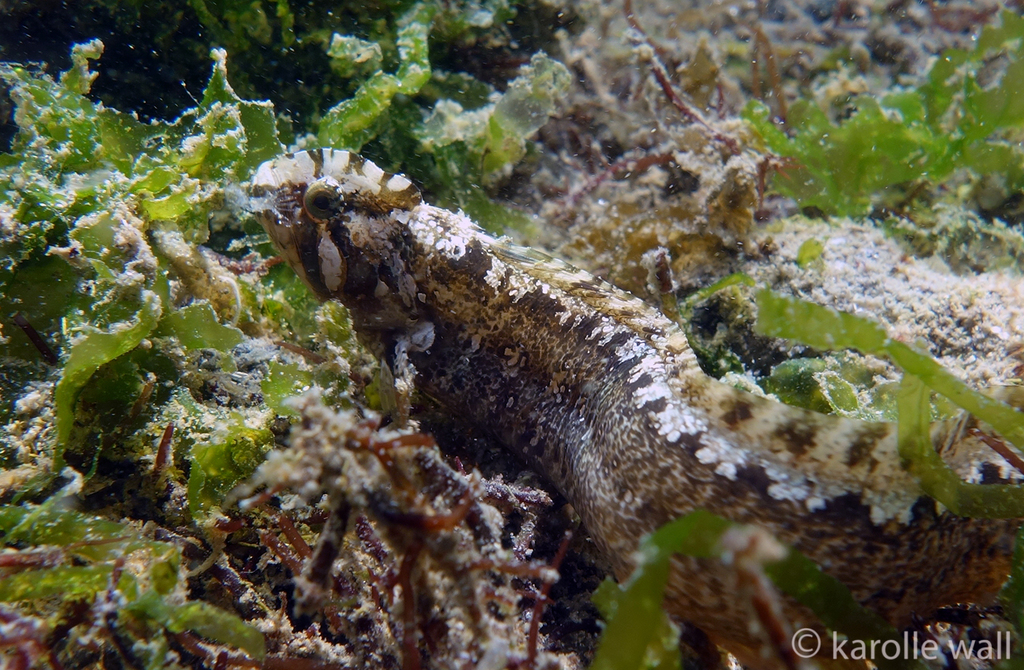
High Cockscomb
Anoplarchus purpurescens
Anoplarchus purpurescens, commonly known as the high cockscomb, is a species of fish in the family Stichaeidae. A single subspecies, Anoplarchus purpurescens archolepis was proposed by Hubbs in 1927, but was rejected.
From the article Anoplarchus purpurescens on Wikipedia (CC BY-SA), quoted section by section
Description
This long-bodied fish may be grey, with olive overtones, or brown, potentially with reddish overtones. This species is sexually dimorphic. Females have more subdued colors, but show more green or brown patterns. Females have a yellow speckled cockscomb and lower surface of the head. In males these areas are pale and lack speckles. During breeding season males develop bright orange and reddish coloration on the fins.
Range & habitat
It is found in the Pacific Ocean, from the Pribilof Islands in the north to Santa Rosa Island in the south (66°N - 32°N). It inhabits coastal areas, no deeper than 30 meters below the surface. It lives near the ocean floor and in the intertidal zone. This species can breathe air, allowing it to survive for 15–25 hours out of water if moist.
Wikipedia: “Range”
Where it lives
Recorded sightings
—
geo-referenced records in GBIF, from museums, herbaria and field observers.
Drag the globe to turn it. Dots are where records exist, not a range map; darker means more records.
In the stacks
Searching the stacks…
Every page naming Anoplarchus purpurescens in the Biodiversity Heritage Library →
This page is assembled live from iNaturalist, GBIF, Wikipedia, the Source Library and the Internet Archive. It is not yet part of the hand-edited codex. iNaturalist taxon 67316.