
Pythons
Pythonidae
The Pythonidae, commonly known as pythons, are a family of non-venomous snakes found in Africa, Asia, and Australia. Among its members are some of the largest snakes in the world. Ten genera and 39 species are currently recognized. Being naturally non-venomous, pythons must constrict their prey to induce cardiac arrest prior to consumption. Pythons will typically strike at and bite their prey of choice to gain hold of it; they then must use physical strength to constrict their prey, by coiling their muscular bodies around the animal, effectively suffocating it before swallowing whole. This is in stark contrast to venomous snakes such as the rattlesnake, for example, which delivers a swift, venomous bite but releases, waiting as the prey succumbs to envenomation before being consumed. Collectively, the pythons are well-documented and studied as constrictors, much like other non-venomous snakes, including the boas and even kingsnakes of the New World.
Pythons are indigenous to the tropics of the Old World, including sub-Saharan Africa, subtropical to tropical Asia, and Australia, Pythons are ambush predators that primarily kill prey by constriction, causing cardiac arrest. Pythons are oviparous, laying eggs that females incubate until they hatch. They possess premaxillary teeth, with the exception of adults in the Australian genus Aspidites. While many species are available in the exotic pet trade, caution is needed with larger species due to potential danger.
11 branches of this family, most-observed first · about 38 known species

Carpet Pythons
genusMorelia

Common Pythons
genusPython

Malay Pythons
genusMalayopython

Children's Pythons
genusAntaresia

Scrub Pythons
genusSimalia

Water Pythons
genusLiasis

Shield-bearing Pythons
genusAspidites

White-lipped Pythons
genusLeiopython
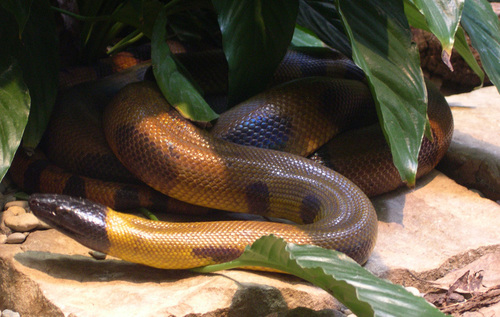
Whitelip Pythons
genusBothrochilus

Irian Pythons
genusApodora

Oenpelli Rock Pythons
genusNyctophilopython
Where it lives
Recorded sightings
—
geo-referenced records in GBIF, from museums, herbaria and field observers.
Drag the globe to turn it. Dots are where records exist, not a range map; darker means more records.
In the stacks
Searching the stacks…
Every page naming Pythonidae in the Biodiversity Heritage Library →
This page is assembled live from iNaturalist, GBIF, Wikipedia, the Source Library and the Internet Archive. It is not yet part of the hand-edited codex. iNaturalist taxon 67532.