- Animals
- ›Chordates
- ›Vertebrates
- ›Mammals
- ›Therians
- ›Placental Mammals
- ›Primates, Rodents, and Allies
- ›Primates
- ›Monkeys, Apes, and Tarsiers
- ›Monkeys and Apes
- ›Apes and Old World Monkeys
- ›Apes
- ›Gibbons
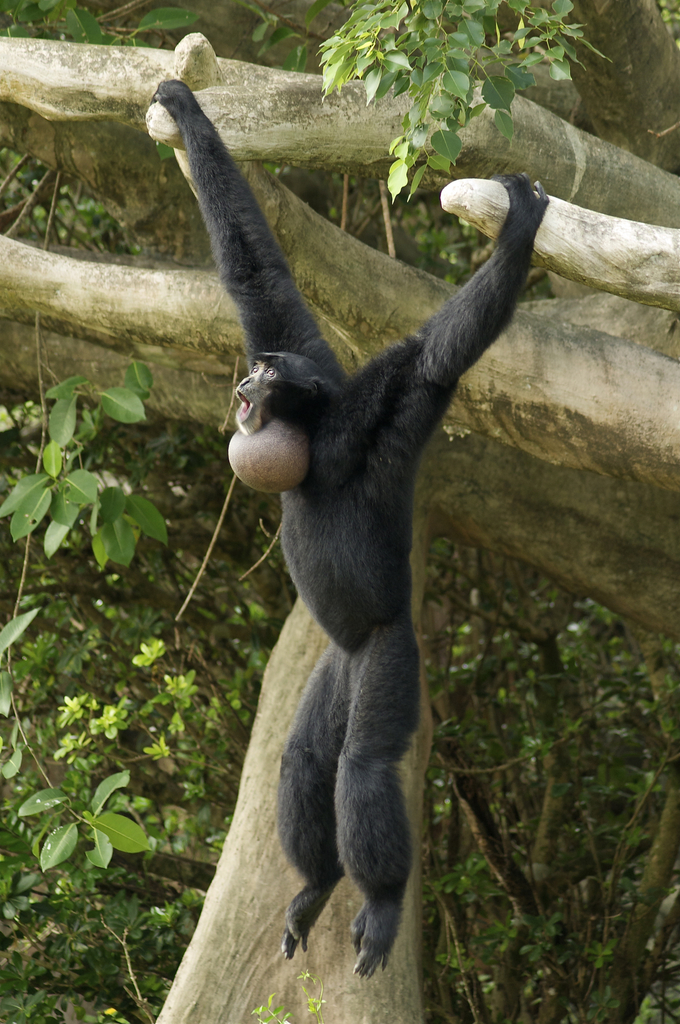
Siamangs
Symphalangus
The siamang (, also UK: ; Symphalangus syndactylus) is an endangered arboreal, black-furred gibbon native to the tropical rainforests of Indonesia, Malaysia, and Thailand. The largest of the gibbons, the siamang can be twice the size of other gibbons, reaching 1 m (3.3 ft) in height, and weighing up to 14 kg (31 lb). It is the only species in the genus Symphalangus. Fossils of siamangs date back to the Middle Pleistocene.
Two features distinguish the siamang from other gibbons. First, two digits on each foot—the second and third toes—are partially joined by a membrane, hence the specific name syndactylus, from the Ancient Greek σύν, sun-, "with" + δάκτυλος, daktulos, "finger". Second, a large gular sac (throat pouch), found in both males and females of the species, can be inflated to the size of the siamang's head, allowing it to make resonating calls.
1 branches of this genus, most-observed first · about 1 known species
See this branch on the Wheel of Life →
Where it lives
Recorded sightings
—
geo-referenced records in GBIF, from museums, herbaria and field observers.
Drag the globe to turn it. Dots are where records exist, not a range map; darker means more records.
In the stacks
Searching the stacks…
Every page naming Symphalangus in the Biodiversity Heritage Library →
This page is assembled live from iNaturalist, GBIF, Wikipedia, the Source Library and the Internet Archive. It is not yet part of the hand-edited codex. iNaturalist taxon 71924.