- Animals
- ›Chordates
- ›Vertebrates
- ›Mammals
- ›Therians
- ›Placental Mammals
- ›Primates, Rodents, and Allies
- ›Primates
- ›Monkeys, Apes, and Tarsiers
- ›Monkeys and Apes
- ›Apes and Old World Monkeys
- ›Old World Monkeys
- ›Colobines
- ›Langurs, Surilis, and Lutungs
- ›Presbytis
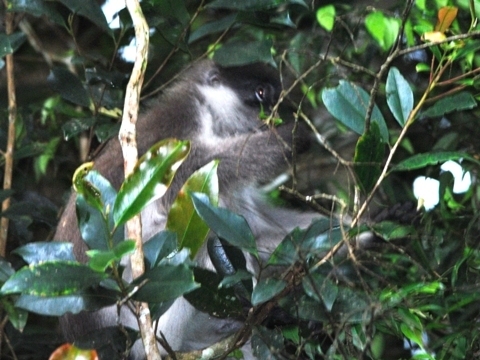
White-thighed Surili
Presbytis siamensis
The white-thighed surili (Presbytis siamensis) is a species of primate from the family of old world monkeys (Cercopithecidae). This species lives arboreal amongst the sub-montane forests. It is endemic to the Thai-Malay Peninsula, the Riau Archipelago and Sumatra. In addition, the white-thighed surili contain four subspecies: siamensis (nominate), cana, paenulata and rhionis, are recognized here. Furthermore, they are characterized by the white patches located on the outside of their legs, which is what gives them their name. Additionally, they can be referred to as pale-thighed langur/surili. These primates are an important species for the diversity of forest environments in the Malaysian area.
From the article White-thighed surili on Wikipedia (CC BY-SA), quoted section by section
Range & habitat
As an arboreal species, P. siamensis live in subtropical/tropical forest environments. They have been found to occupy moist lowland or swamp areas. In fact, they can even be inhabitants of terrestrial environments; for example, rural gardens. They can be located mainly on the Malay Peninsula, but are also found in Sumatra, as well as some parts of Thailand.
Wikipedia: “Habitat”
Listen
Looking for field recordings…
Where it lives
Recorded sightings
—
geo-referenced records in GBIF, from museums, herbaria and field observers.
Drag the globe to turn it. Dots are where records exist, not a range map; darker means more records.
In the stacks
Searching the stacks…
Every page naming Presbytis siamensis in the Biodiversity Heritage Library →
This page is assembled live from iNaturalist, GBIF, Wikipedia, the Source Library and the Internet Archive. It is not yet part of the hand-edited codex. iNaturalist taxon 74946.