On eBird ↗
Clarion Wren
Live sightings near you, the range map, bar charts of when it is seen, and Macaulay Library photos and recordings.
Clarión Wren
Troglodytes tanneri
The Clarión wren (Troglodytes tanneri) is a species of bird in the family Troglodytidae. The species is endemic to Clarión Island off Pacific Mexico.
From the article Clarión wren on Wikipedia (CC BY-SA), quoted section by section
Description
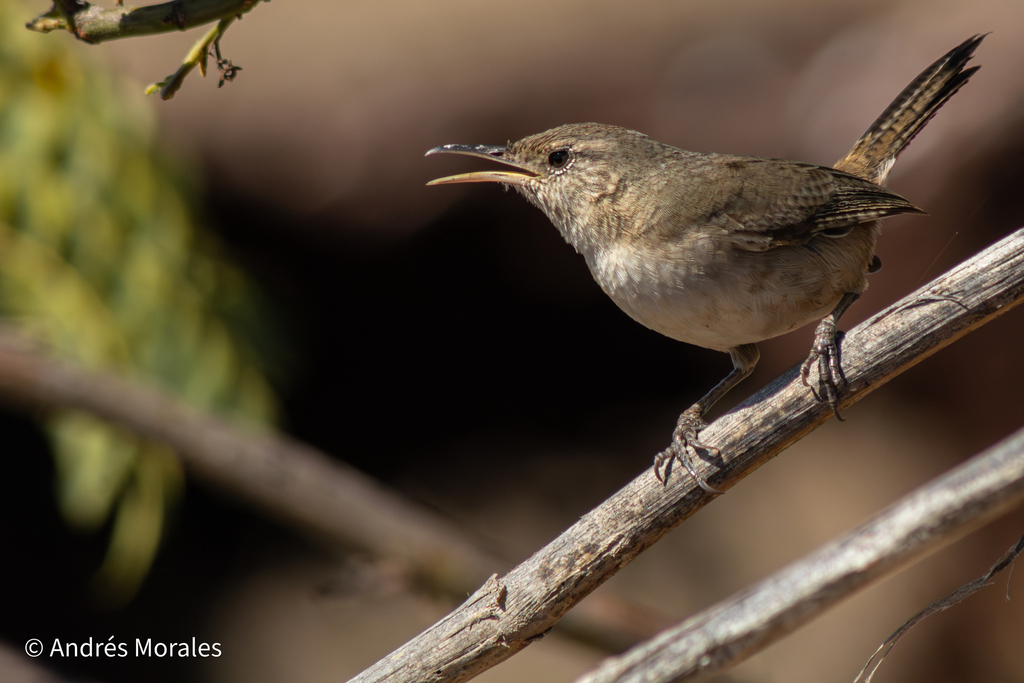
The Clarión wren looks much like a house wren but is larger with a prominently longer bill, somewhat approaching the Carolina wren in form.
Range & habitat
The natural habitats of the Clarión wren are the less arid patches of shrubland, notably thickets of Ipomoea halierca morning glory. It also appears to occur in the garrison buildings and garden at Sulfur Bay, but usually avoids the rocky shores and other exposed areas. In dense undergrowth, territories are some 10 meters (30–40 ft) in diameter.
Wikipedia: “Habitat”
What it does
In late March 1953, Clarión wren males were found to be singing and threatening intruding competitors. Egg laying takes place between mid-March and mid-April. The eggs are similar to those of the house wren, but larger and more elongated. They measure approximately 20 x 14 mm (0.79 x 0.55 in) and also are colored basically like those of house wrens but with fewer and crisper markings noticeably denser at the blunt end.
== References ==
Wikipedia: “Reproduction”
In human culture
The specific name, tanneri, is in honor of United States Navy officer Zera Luther Tanner, commander of the research vessel USS Albatross.
Wikipedia: “Etymology”
Listen
Looking for field recordings…
Where it lives
Recorded sightings
—
geo-referenced records in GBIF, from museums, herbaria and field observers.
Drag the globe to turn it. Dots are where records exist, not a range map; darker means more records.
In the stacks
Searching the stacks…
Every page naming Troglodytes tanneri in the Biodiversity Heritage Library →
This page is assembled live from iNaturalist, GBIF, Wikipedia, the Source Library and the Internet Archive. It is not yet part of the hand-edited codex. iNaturalist taxon 7569.