- Animals
- ›Flatworms
- ›Rhabditophora
- ›Neodermata
- ›tapeworms
- ›Eucestoda
- ›Diphyllobothriidea
- ›Diphyllobothriidae
- ›Ligula
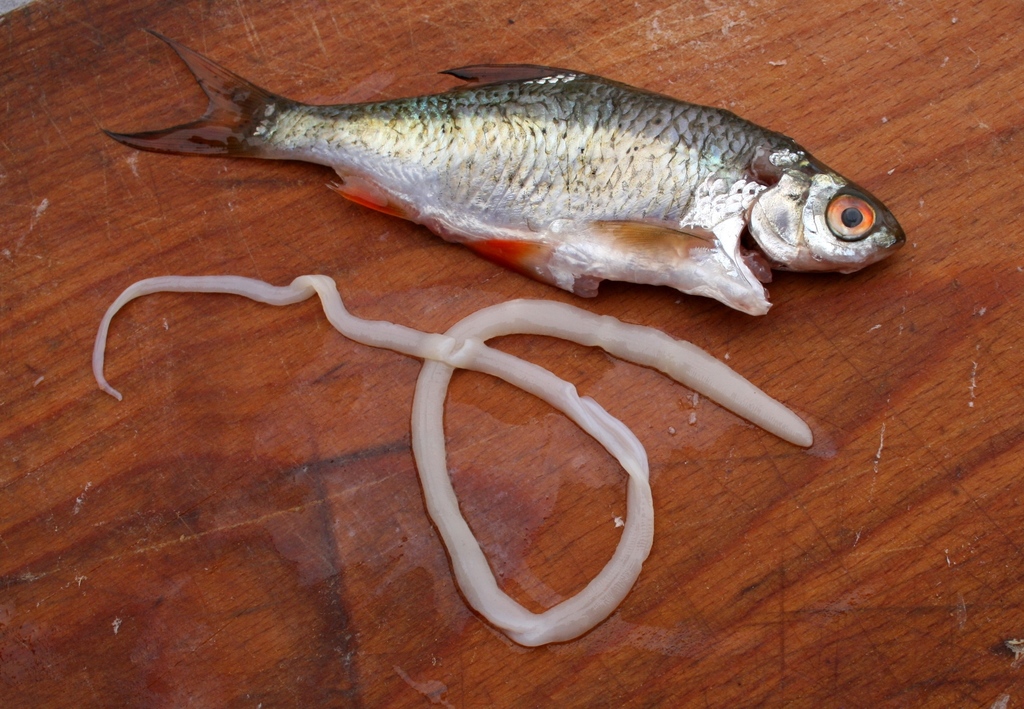
Ligula intestinalis
Ligula intestinalis is a tapeworm of fish, fish-eating birds and copepods, with species from each group featuring in its complex life cycle. It is a parasite that changes its intermediate host's behavior to become more vulnerable to its predators. In this case, it uses copepods and cyprinid fish as their intermediate host and develops inside of them to get to its final destination which is fish-eating birds. Plerocercoids, Ligula intestinalis larvae, influence secondary intermediate hosts’ behavior, health, and fecundity. Additionally, this species can cause the gonads of fish to remain undeveloped.
== References ==
Where it lives
Recorded sightings
—
geo-referenced records in GBIF, from museums, herbaria and field observers.
Drag the globe to turn it. Dots are where records exist, not a range map; darker means more records.
In the stacks
Searching the stacks…
Every page naming Ligula intestinalis in the Biodiversity Heritage Library →
This page is assembled live from iNaturalist, GBIF, Wikipedia, the Source Library and the Internet Archive. It is not yet part of the hand-edited codex. iNaturalist taxon 791971.