- Animals
- ›Echinoderms
- ›sea urchins and sea cucumbers
- ›Sea Cucumbers
- ›Actinopoda
- ›Filtering sea cucumbers
- ›Psolidae
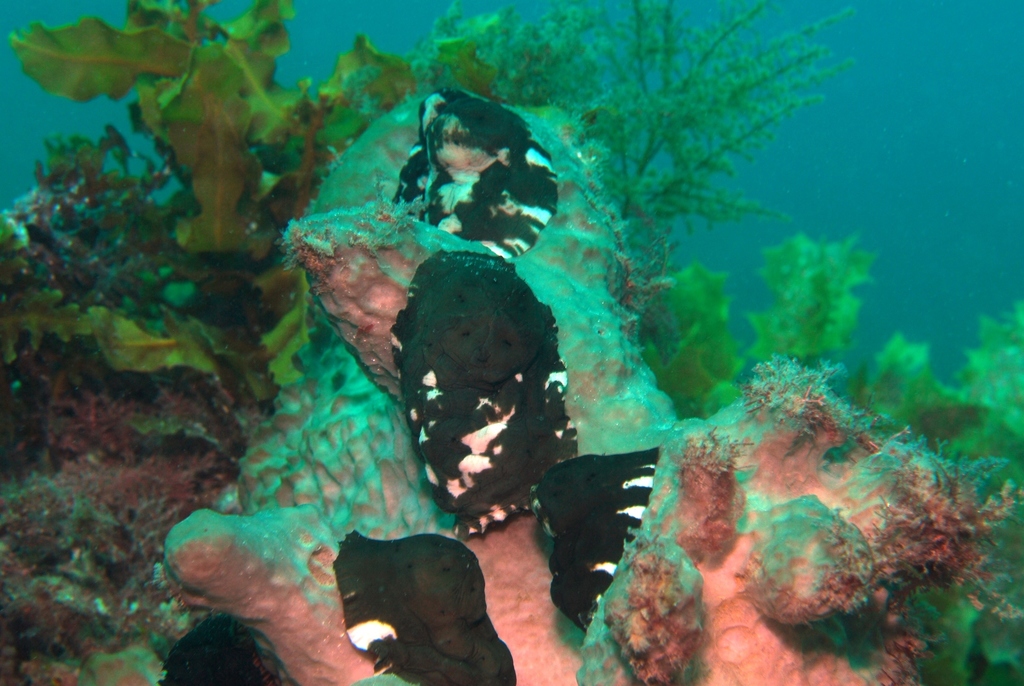
Ceto
Ceto (/ˈsiːtoʊ/; Ancient Greek: Κητώ, romanized: Kētṓ, lit. 'sea monster') is a primordial sea goddess in Greek mythology, the daughter of Pontus and his mother, Gaia. As a mythological figure, she is considered to be one of the most ancient deities, and bore a host of monstrous children fathered by Phorcys, another child of Gaia and Pontus. The small Solar System body 65489 Ceto was named after her, and its satellite after Phorcys.
1 branches of this genus, most-observed first
See this branch on the Wheel of Life →
Where it lives
Recorded sightings
—
geo-referenced records in GBIF, from museums, herbaria and field observers.
Drag the globe to turn it. Dots are where records exist, not a range map; darker means more records.
In the old herbals & bestiaries

Notable Commentaries on the History of Plants
Leonhart Fuchs · 1542 · p.163

Living Images of Plants
Otto Brunfels · 1532 · p.411

Hortus Eystettensis
Basilius Besler · 1640 · p.119

Latin Herbal with German Synonyms
1484 · p.51

Herbarius
1485 · p.22

Herbarius latinus (with French synonyms)
1486 · p.23

Herbarius latinus (with Dutch synonyms)
1486 · p.19

The Book of Health: The Art of Distillation
Brunschwig, Hieronymus · 1505 · p.78

Garden of Health
1507 · p.9

Notable Commentaries on the History of Plants
Leonhart Fuchs · 1549 · p.161

Commentaries on the Six Books of Dioscorides on Medical Matter
Pietro Andrea Mattioli · 1563 · p.544

Commentaries on the Six Books of Pedanius Dioscorides on Medical Matter
Pietro Andrea Mattioli · 1565 · p.981
In the stacks
Searching the stacks…
Every page naming Ceto in the Biodiversity Heritage Library →
This page is assembled live from iNaturalist, GBIF, Wikipedia, the Source Library and the Internet Archive. It is not yet part of the hand-edited codex. iNaturalist taxon 830647.