- Animals
- ›Chordates
- ›Vertebrates
- ›Mammals
- ›Therians
- ›Placental Mammals
- ›Primates, Rodents, and Allies
- ›Rodents
- ›Ctenohystricans
- ›Hystricognaths
- ›Degus, Hutias, Tuco-tucos, and Allies
- ›Spiny Rats and Hutias
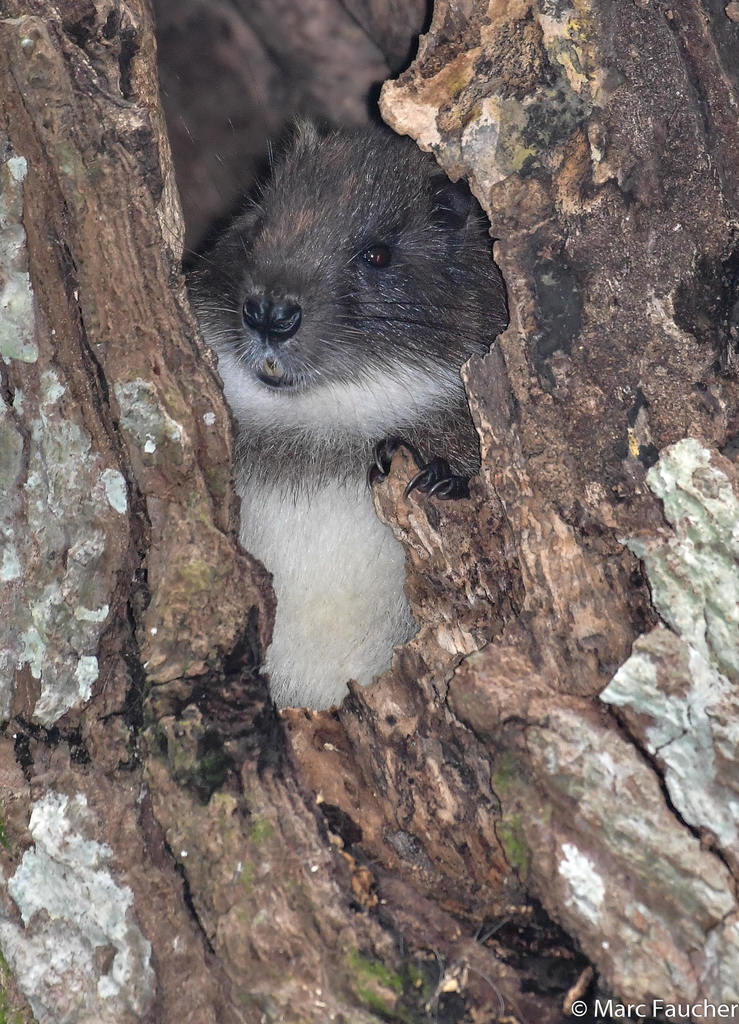
Hutias
Capromyinae
Hutias (known in Spanish as jutía) are moderately large cavy-like rodents of the subfamily Capromyinae (from Ancient Greek κάπρος (kápros), meaning "pig, boar", and μῦς (mûs), meaning "mouse, rat") that inhabit the Caribbean islands. Most species are restricted to Cuba, but species are known from all of the Greater Antilles, as well as the Bahamas and (formerly) Little Swan Island off Honduras.
Twenty species of hutia have been identified, but at least half are extinct. Only Desmarest's hutia and the prehensile-tailed hutia remain common and widespread; all other extant species are considered threatened by the IUCN.
4 branches of this subfamily, most-observed first · about 12 known species

Ground Hutias
tribeCapromyini

Hispaniolan Hutias
tribePlagiodontini

Isolobodon
genusIsolobodon
Impostor Hutia
genusHexolobodon
Where it lives
Recorded sightings
—
geo-referenced records in GBIF, from museums, herbaria and field observers.
Drag the globe to turn it. Dots are where records exist, not a range map; darker means more records.
In the stacks
Searching the stacks…
Every page naming Capromyinae in the Biodiversity Heritage Library →
This page is assembled live from iNaturalist, GBIF, Wikipedia, the Source Library and the Internet Archive. It is not yet part of the hand-edited codex. iNaturalist taxon 846211.