- Animals
- ›Chordates
- ›Vertebrates
- ›Mammals
- ›Therians
- ›Placental Mammals
- ›Ungulates, Carnivorans, and Allies
- ›Carnivorans
- ›Skunks and Stink-badgers
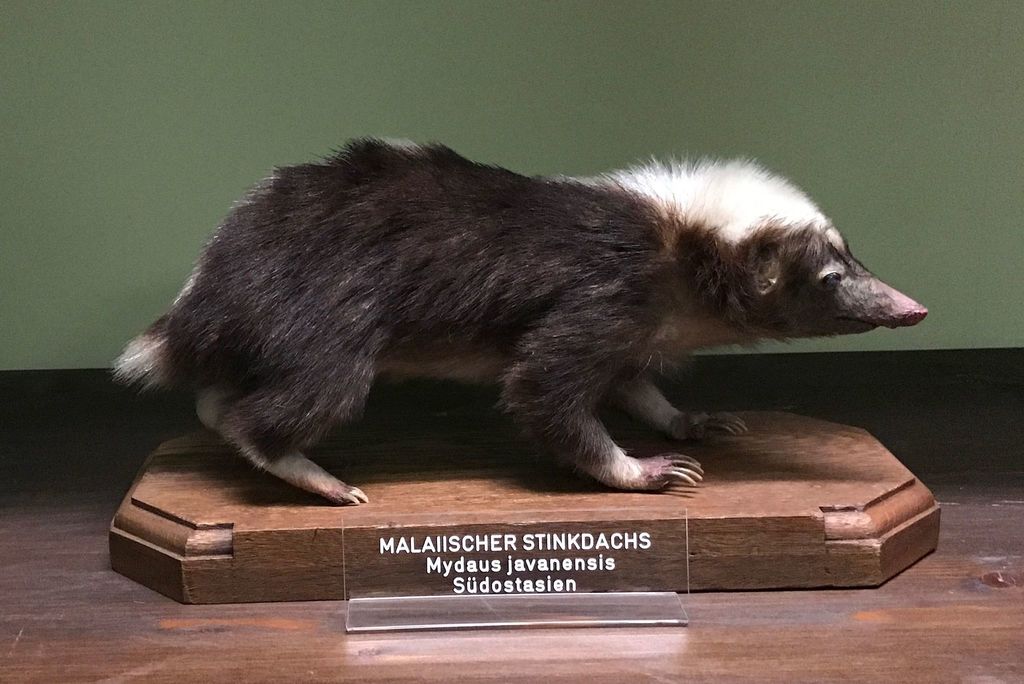
Stink-badgers
Myadinae
Stink badgers or false badgers are the species of the genus Mydaus of the skunk family of carnivorans, the Mephitidae. They resemble the better-known members of the family Mustelidae also termed 'badgers' (which are themselves a polyphyletic group). There are two extant species – the Palawan stink badger or pantot (M. marchei), and the Sunda stink badger or teledu (M. javanensis). They live west of the Wallace Line; the Sunda species on islands of the Greater Sunda Islands, being Sumatra, Java, and Borneo; in Borneo the badger is found in Indonesia, Malaysia and Brunei. The Palawan species lives in the Philippine island of Palawan as well as the islands surrounding it.
Stink badgers are named for their resemblance to other badgers and for the foul-smelling secretions that they expel from anal glands in self-defense. The secretions are stronger in the Sunda stink badger.
1 branches of this subfamily, most-observed first · about 2 known species
See this branch on the Wheel of Life →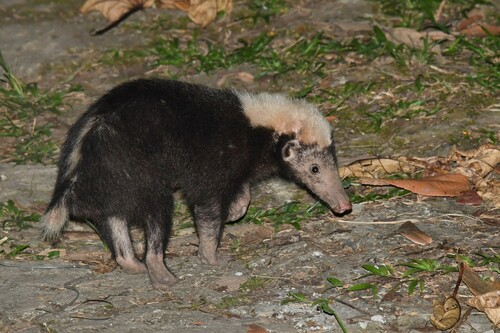
Where it lives
Recorded sightings
—
geo-referenced records in GBIF, from museums, herbaria and field observers.
Drag the globe to turn it. Dots are where records exist, not a range map; darker means more records.
In the stacks
Searching the stacks…
Every page naming Myadinae in the Biodiversity Heritage Library →
This page is assembled live from iNaturalist, GBIF, Wikipedia, the Source Library and the Internet Archive. It is not yet part of the hand-edited codex. iNaturalist taxon 846268.