- Animals
- ›Chordates
- ›Vertebrates
- ›Mammals
- ›Therians
- ›Placental Mammals
- ›Primates, Rodents, and Allies
- ›Rodents
- ›Ctenohystricans
- ›Hystricognaths
- ›Degus, Hutias, Tuco-tucos, and Allies
- ›Spiny Rats and Hutias
- ›Atlantic Spiny Rats
- ›Clyomys
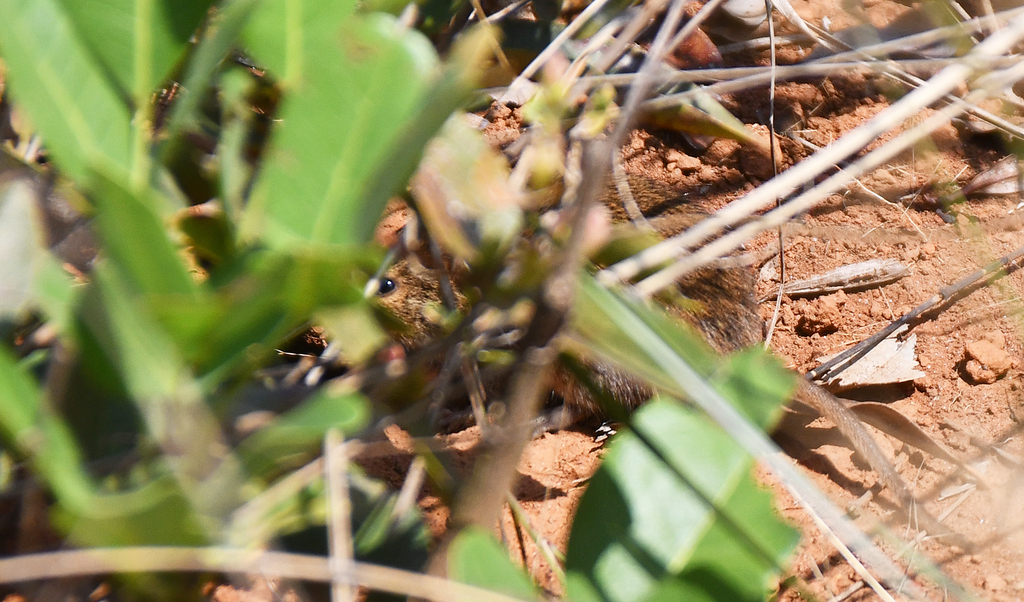
Broad-headed Spiny Rat
Clyomys laticeps
The broad-headed spiny rat (Clyomys laticeps) is a spiny rat species from Brazil and Paraguay. The etymology of the species name is the Latin word laticeps meaning "wide-headed".
From the article Broad-headed spiny rat on Wikipedia (CC BY-SA), quoted section by section
Description
The species has a head-body length that ranges from 15 to 30 cm (5.9 to 11.8 in), with a tail 5 to 9 cm (2.0 to 3.5 in) long, and weigh between 180 and 334 g (6.3 and 11.8 oz). They have short ears and limbs, and feet with powerful claws adapted for digging. The fur is interspersed with spines; it is grizzled reddish or yellowish and black over most of the body, and paler grey to almost white on the underparts.
Range & habitat
Broad-headed spiny rats are native to southern Brazil and eastern Paraguay, where they inhabit open cerrado habitats at elevations up to 1,100 m (3,600 ft). Within this region, they are found only in unflooded grasslands and open-canopy savannah woodlands, where the soil is soft and suitable for burrowing.
Wikipedia: “Distribution and habitat”
What it does
These rats live in colonies and spend much of their life underground. The burrows can be large and relatively complex, with tunnels 8 to 9 cm (3.1 to 3.5 in) wide, spiralling down as much as 85 cm (33 in) to one or more nests lined with grass or containing food stocks. They are herbivorous, and feed mainly on monocots. Births are probably seasonal, with one or two young being born each year, and weaned by the end of the wet season.
== References ==
Wikipedia: “Biology and behaviour”
Listen
Looking for field recordings…
Where it lives
Recorded sightings
—
geo-referenced records in GBIF, from museums, herbaria and field observers.
Drag the globe to turn it. Dots are where records exist, not a range map; darker means more records.
In the stacks
Searching the stacks…
Every page naming Clyomys laticeps in the Biodiversity Heritage Library →
This page is assembled live from iNaturalist, GBIF, Wikipedia, the Source Library and the Internet Archive. It is not yet part of the hand-edited codex. iNaturalist taxon 852341.