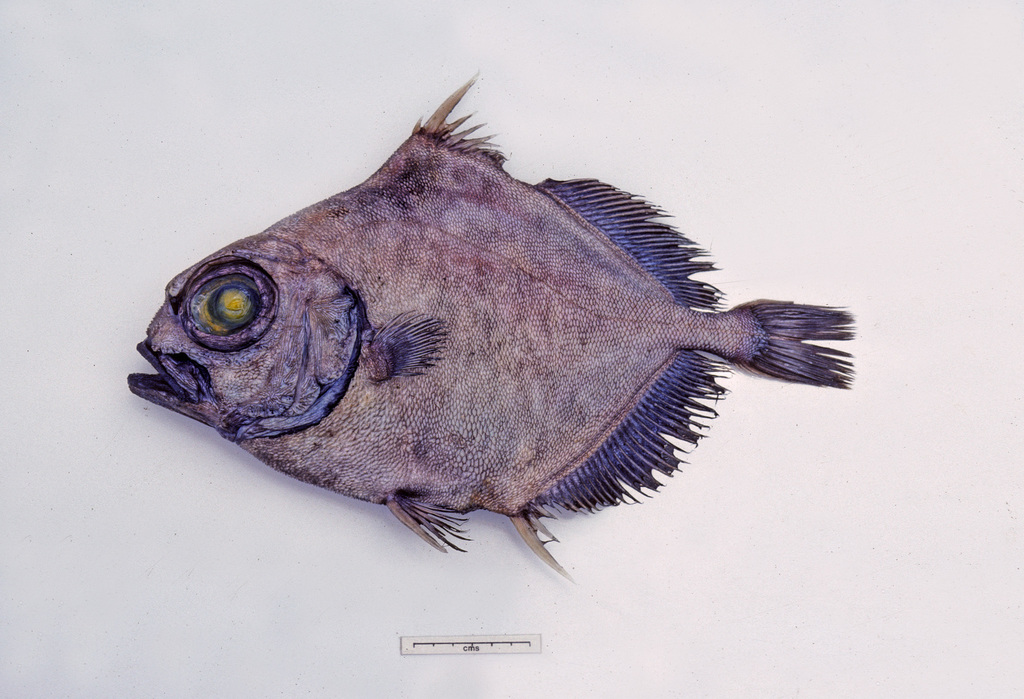
Oreos
Oreosomatidae
Oreosomatidae, the oreos, are a family of marine fish. Most species are found in the Southern Hemisphere, inhabiting continental slopes down to about 1,000 m (3,300 ft) deep. Most of them are 43 cm at most, with the largest species reaching a length of 60 cm. Though they are small, they often have incredibly elongated lifespans, probable result of living in the deep sea (a trait shared with other unrelated fishes like the orange roughy). The warty oreo is able to live for up to 210 years, which puts it at one of the longest living vertebrates on Earth. They borrow their name from the Greek oreos (mountain) and somas (backs) for the shape of their backs. They are very flattened vertically-laterally, with 5 to 8 rays on their dorsal fin, and 2 to 4 on the anal fin, and only 1 spine in the pelvic fins. The upper part of the mouth is protractile, allowing them to snatch up little fishes, copepods, amphypods, shrimp, krill, and small cephalopods, their main diet.
== References ==
2 branches of this family, most-observed first · about 10 known species
See this branch on the Wheel of Life →

Where it lives
Recorded sightings
—
geo-referenced records in GBIF, from museums, herbaria and field observers.
Drag the globe to turn it. Dots are where records exist, not a range map; darker means more records.
In the stacks
Searching the stacks…
Every page naming Oreosomatidae in the Biodiversity Heritage Library →
This page is assembled live from iNaturalist, GBIF, Wikipedia, the Source Library and the Internet Archive. It is not yet part of the hand-edited codex. iNaturalist taxon 85947.