- Animals
- ›Chordates
- ›Vertebrates
- ›Ray-finned Fishes
- ›Tarpons, Eels, and Allies
- ›True Eels
- ›Congroidei
- ›Congers and Garden Eels
- ›Garden Eels

Gorgasia
Gorgasia is one of the two genera that belong to the subfamily Heterocongrinae (common name: garden eels). This genus is classified by the behavioral pattern of burrowing 75% of their bodies in the sandy substrate they live in and protruding their upper body into the water current above, giving the appearance that they are planted into the ground (origin of common name). This protruding behavior serves a multipurpose functionality to their survival.
The first function serves as a method of collection of their prey. Most members of this genus prey on zooplankton floating in the passing current, while some species (i.e. G. hawaiiensis) will prey on small fish eggs. The second function of the burrowing behavior allows for avoidance of predation. Whenever in the presence of a predator, most commonly the Pacific snake eel (Ophichthus triserialis), garden eels will retreat back into their burrows and hide. Similarly, during the night hours (non-light hours) when zooplankton populations are low, these eels will return to their burrows and cap them off while they sleep.
14 branches of this genus, most-observed first · about 14 known species

Splendid garden eel
speciesGorgasia preclara
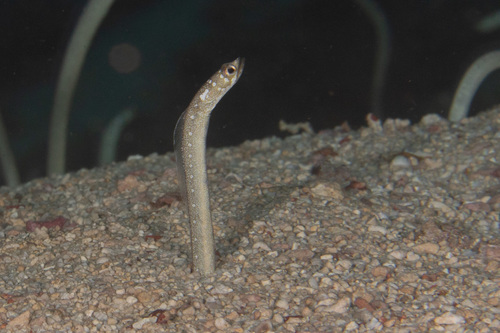
Spaghetti Garden Eel
speciesGorgasia maculata
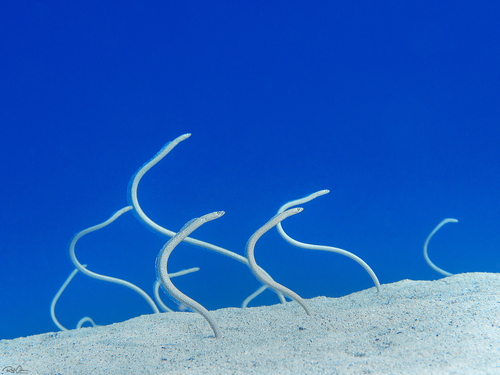
Red Sea Garden Eel
speciesGorgasia sillneri

Barnes' Garden Eel
speciesGorgasia barnesi

Hawaiian Garden Eel
speciesGorgasia hawaiiensis
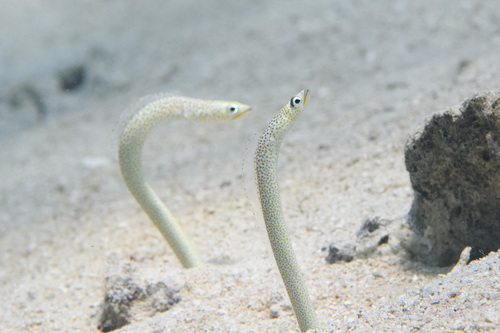
Speckled Garden Eel
speciesGorgasia galzini

Gorgasia taiwanensis
speciesGorgasia taiwanensis
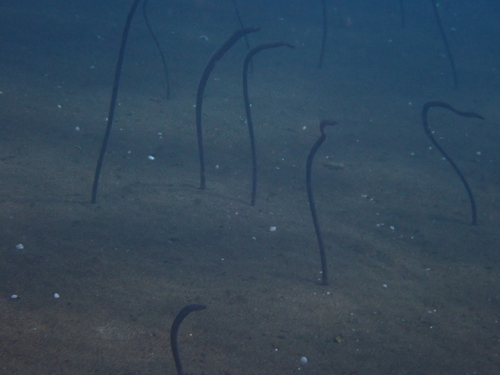
Japanese Garden Eel
speciesGorgasia japonica

Gorgasia punctata
speciesGorgasia punctata
Gorgasia inferomaculata
speciesGorgasia inferomaculata

Freckled Garden Eel
speciesGorgasia naeocepaea
Gorgasia klausewitzi
speciesGorgasia klausewitzi
Gorgasia thamani
speciesGorgasia thamani
Gorgasia cotroneii
speciesGorgasia cotroneii
Where it lives
Recorded sightings
—
geo-referenced records in GBIF, from museums, herbaria and field observers.
Drag the globe to turn it. Dots are where records exist, not a range map; darker means more records.
In the stacks
Searching the stacks…
Every page naming Gorgasia in the Biodiversity Heritage Library →
This page is assembled live from iNaturalist, GBIF, Wikipedia, the Source Library and the Internet Archive. It is not yet part of the hand-edited codex. iNaturalist taxon 88588.