- Animals
- ›Chordates
- ›Vertebrates
- ›Ray-finned Fishes
- ›Spiny-rayed fishes
- ›Gobies, cardinalfishes and allies
- ›Gobies and allies
- ›Mudskippers and Allies
- ›Estuarine Gobies
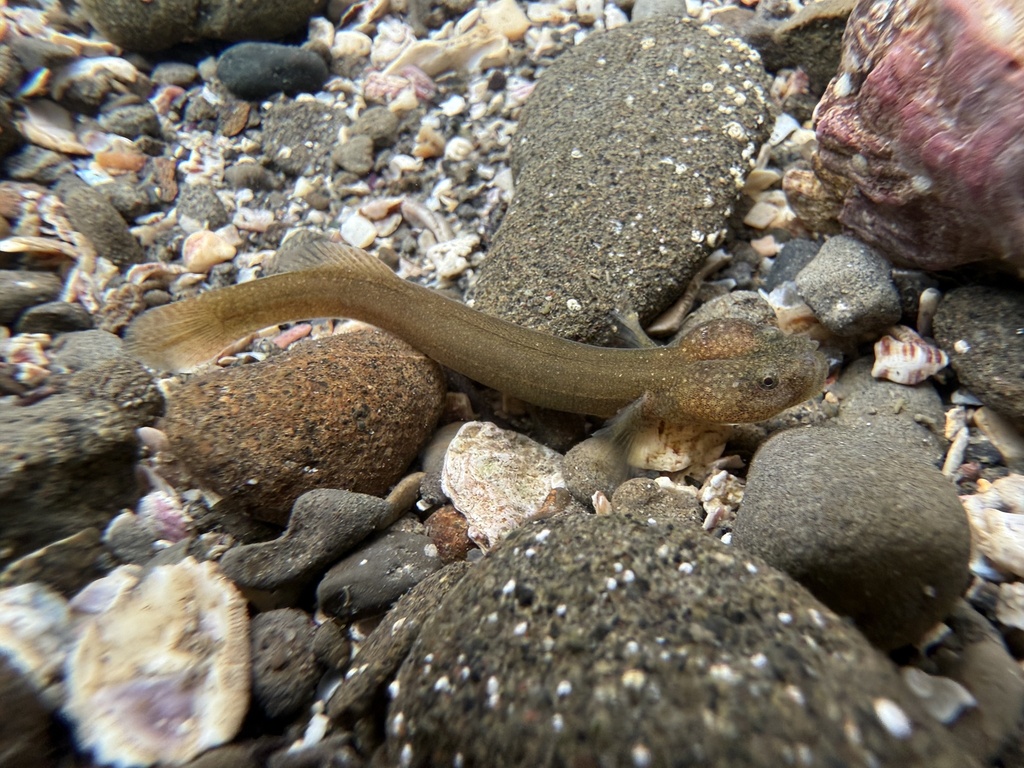
Luciogobius
Luciogobius is a genus of goby in the subfamily of Oxudercidae, commonly called worm gobies. It is distributed along the coast of northeastern Asia, where species can be found in Korea, China, Taiwan, Vietnam, and Japan. Most species occur in Japan, and several are endemic.
These gobies are unusual in appearance and habitat preference. They are relatively small fish, about 2 to 14 cm (0.8–5.5 in) long, with very elongated bodies. The vertebral column is flexible and finely segmented, with many more vertebrae than most other fish in the family; they have up to 50 vertebrae, whereas most gobies have about 26. This extra-segmented spine helps Luciogobius species burrow in their common habitat, gravel beaches. Most vertebrates would have difficulty living in gravel that is constantly stirred by tidal action, but the flexibility of the bodies of Luciogobius is likely an adaptation to this environment. They also lack scales and the first dorsal fin. Two species, L. albus and L. pallidus, are cave-adapted and live in anchialine waters.
18 branches of this genus, most-observed first · about 18 known species
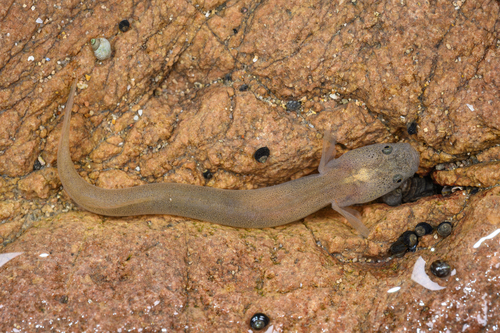
Flat-headed Goby
speciesLuciogobius guttatus

Luciogobius martellii
speciesLuciogobius martellii
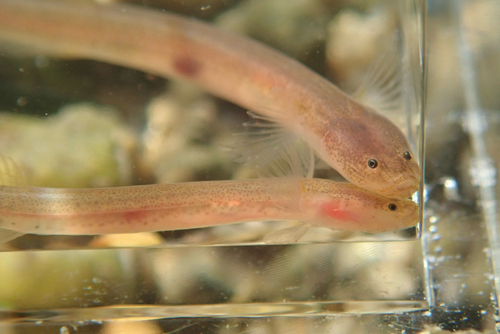
Well Earthworm Goby
speciesLuciogobius pallidus

Luciogobius grandis
speciesLuciogobius grandis
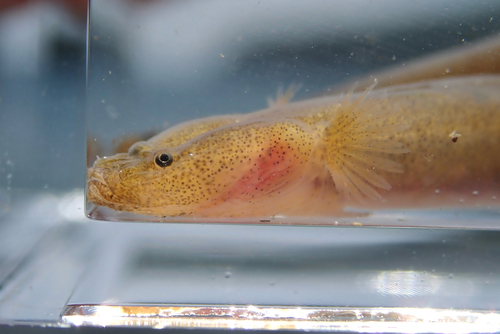
Luciogobius platycephalus
speciesLuciogobius platycephalus
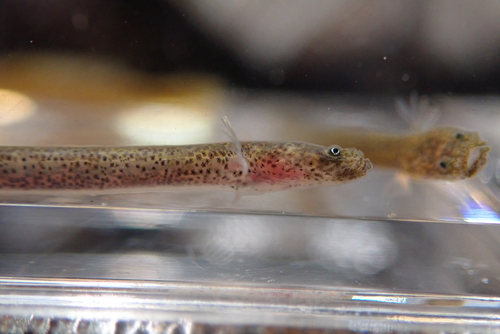
Luciogobius elongatus
speciesLuciogobius elongatus
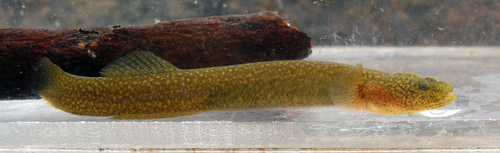
Luciogobius ryukyuensis
speciesLuciogobius ryukyuensis
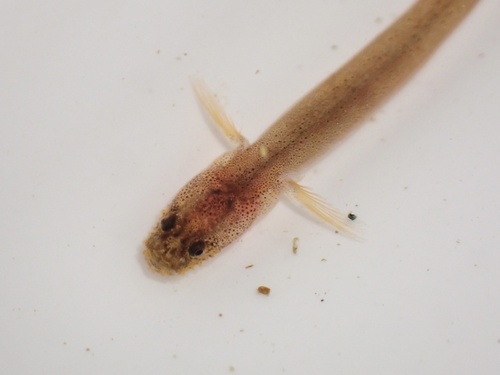
Luciogobius yubai
speciesLuciogobius yubai
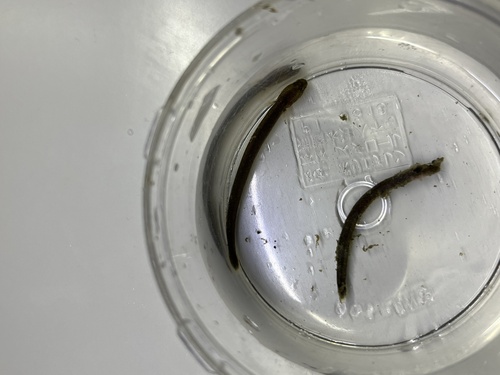
Luciogobius parvulus
speciesLuciogobius parvulus
Luciogobius opisthoproctus
speciesLuciogobius opisthoproctus
Luciogobius griseus
speciesLuciogobius griseus
Luciogobius punctilineatus
speciesLuciogobius punctilineatus
Luciogobius adapel
speciesLuciogobius adapel
Luciogobius fluvialis
speciesLuciogobius fluvialis
Luciogobius fonticola
speciesLuciogobius fonticola
Luciogobius albus
speciesLuciogobius albus
Luciogobius dormitoris
speciesLuciogobius dormitoris
Luciogobius brevipterus
speciesLuciogobius brevipterus
Where it lives
Recorded sightings
—
geo-referenced records in GBIF, from museums, herbaria and field observers.
Drag the globe to turn it. Dots are where records exist, not a range map; darker means more records.
In the stacks
Searching the stacks…
Every page naming Luciogobius in the Biodiversity Heritage Library →
This page is assembled live from iNaturalist, GBIF, Wikipedia, the Source Library and the Internet Archive. It is not yet part of the hand-edited codex. iNaturalist taxon 89636.