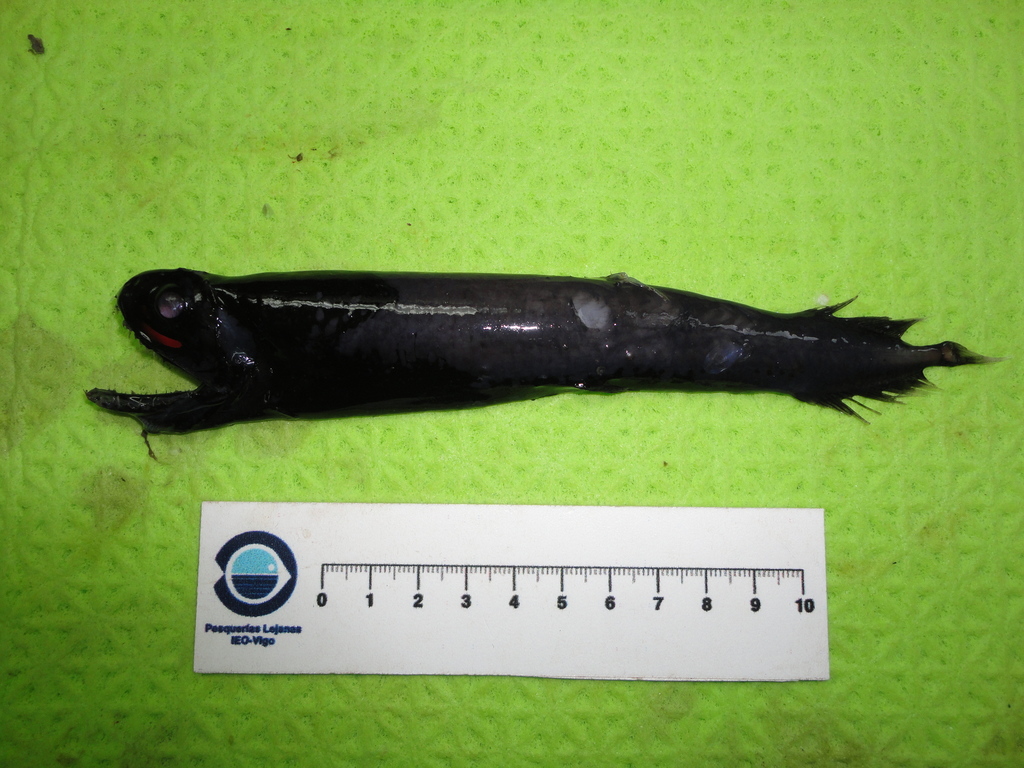
Stoplight Loosejaws
Malacosteus
The stoplight loosejaws are small, deep-sea dragonfishes of the genus Malacosteus, classified either within the subfamily Malacosteinae of the family Stomiidae, or in the separate family Malacosteidae. They are found worldwide, outside of the Arctic and Subantarctic, in the mesopelagic and bathypelagic zones, below a depth of 500 meters (1,600 feet). This genus once contained three nominal species: M. niger (the type), M. choristodactylus, and M. danae, with the validity of the latter two species being challenged by different authors at various times. In 2007, Kenaley examined over 450 stoplight loosejaw specimens and revised the genus to contain two species, M. niger and the new M. australis.
Malacosteus and the related genera Aristostomias, Chirostomias and Pachystomias are the only fishes that produce red bioluminescence. As most of their prey organisms are not capable of perceiving light at those wavelengths, this allows Malacosteus to hunt with an essentially invisible beam of light. Furthermore, Malacosteus is unique amongst animals in using a chlorophyll derivative to perceive red light. The name Malacosteus is derived from the Greek malakos meaning "soft" and osteon meaning "bone". Another common name for these fishes is "rat-trap fish", from the unusual open structure of their jaws.
2 branches of this genus, most-observed first · about 2 known species
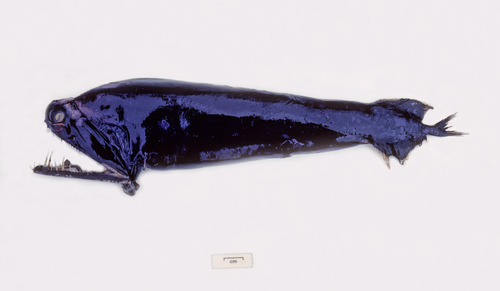
Northern Stoplight Loosejaw
speciesMalacosteus niger

Southern stoplight loosejaw
speciesMalacosteus australis
Where it lives
Recorded sightings
—
geo-referenced records in GBIF, from museums, herbaria and field observers.
Drag the globe to turn it. Dots are where records exist, not a range map; darker means more records.
In the stacks
Searching the stacks…
Every page naming Malacosteus in the Biodiversity Heritage Library →
This page is assembled live from iNaturalist, GBIF, Wikipedia, the Source Library and the Internet Archive. It is not yet part of the hand-edited codex. iNaturalist taxon 89721.