On eBird ↗
Ochre-rumped Bunting
Live sightings near you, the range map, bar charts of when it is seen, and Macaulay Library photos and recordings.
Ochre-rumped Bunting
Emberiza yessoensis
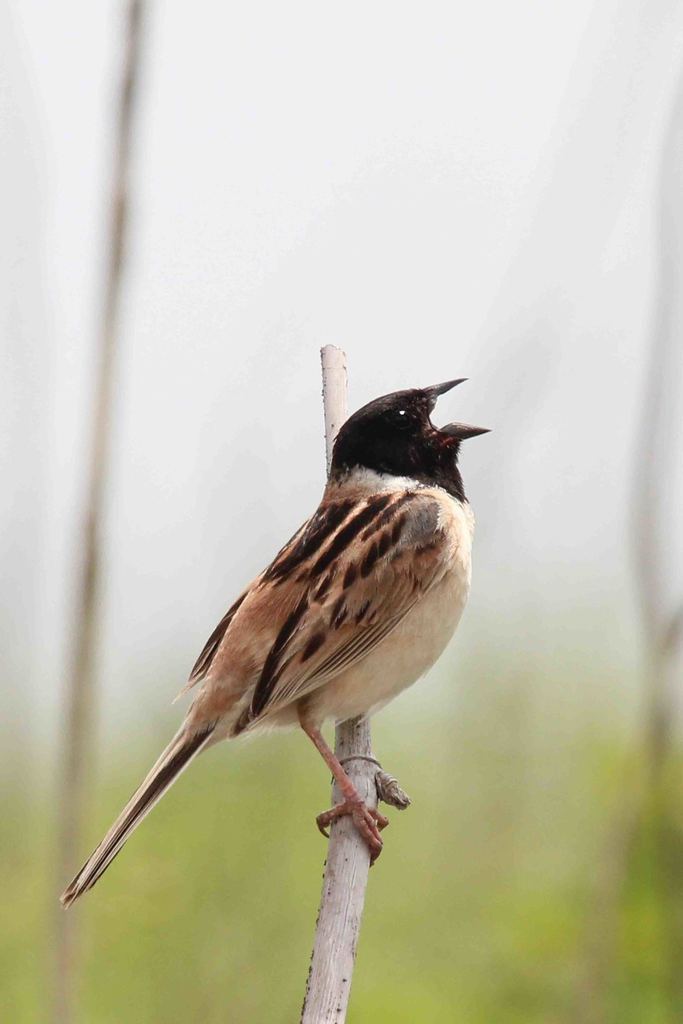
The ochre-rumped bunting (Emberiza yessoensis), also known as the Japanese reed bunting, is a bird in the family Emberizidae. It is found in Manchuria, Korea and Japan. Its natural habitats are temperate grassland and swamps. It is threatened by habitat loss. In South Korea it is classified as an endangered species.
From the article Ochre-rumped bunting on Wikipedia (CC BY-SA), quoted section by section
Description
It is 15 cm in length. Typically, it is the richest-coloured of the reed buntings, with the pinkest legs and bill in winter. Adult males have a dark back, chestnut upperparts, and are striped black and buff on the breast and sides. They have a brown nape, and the sides of neck are whitish. Females have a buffy submoustachial and throat, black malar stripes, and a dark brown crown with pale streaking. Juveniles have a pale greyish-brown central crown stripe and a yellowish brown rump. The calls of the ochre-rumped bunting can be transcribed as 'sur-swee-ik' and 'tik'.
== References ==
Listen
Looking for field recordings…
Where it lives
Recorded sightings
—
geo-referenced records in GBIF, from museums, herbaria and field observers.
Drag the globe to turn it. Dots are where records exist, not a range map; darker means more records.
In the stacks
Searching the stacks…
Every page naming Emberiza yessoensis in the Biodiversity Heritage Library →
This page is assembled live from iNaturalist, GBIF, Wikipedia, the Source Library and the Internet Archive. It is not yet part of the hand-edited codex. iNaturalist taxon 9218.