On eBird ↗
Tibetan Bunting
Live sightings near you, the range map, bar charts of when it is seen, and Macaulay Library photos and recordings.
Tibetan Bunting
Emberiza koslowi
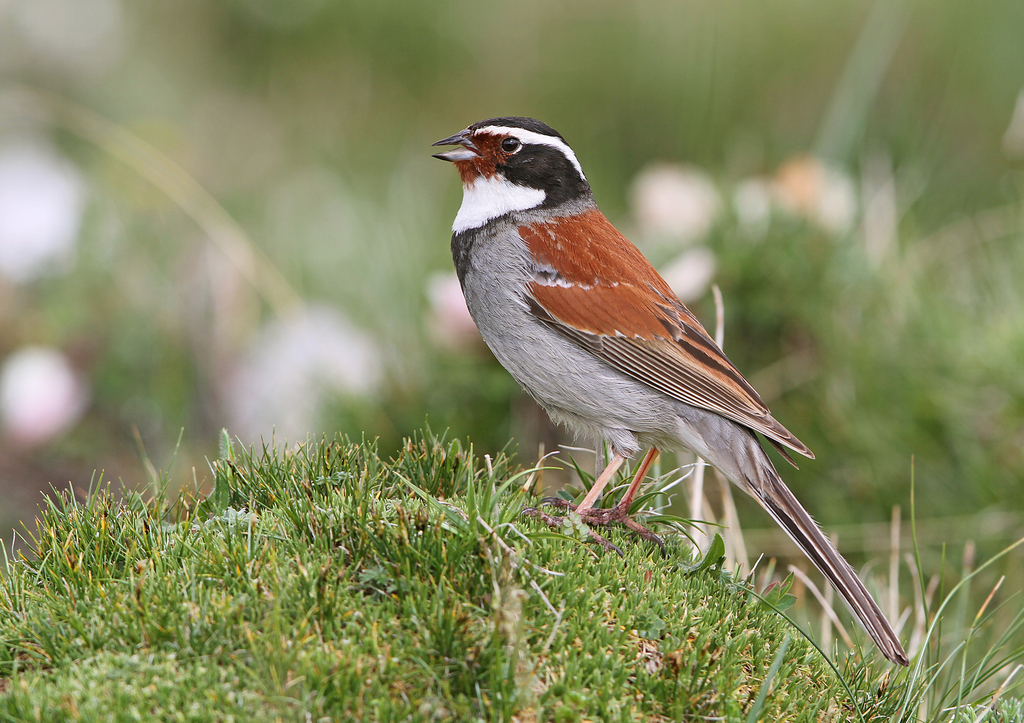
The Tibetan bunting (Emberiza koslowi) is a species of bird in the Emberizidae family. It is endemic to eastern side of the Tibetan Plateau.
From the article Tibetan bunting on Wikipedia (CC BY-SA), quoted section by section
Description
The crown is black and there are white stripes at the head. The back is chestnut coloured.
What it does
The domed nest structure of this species appears to be unique amongst the Emberizinae buntings which have open nest structures. Female lays 3 or 4 eggs. They eat grains in winter and insects, like butterflies, grasshoppers and beetles, in summer. Main predators of Tibetan bunting are birds of prey like falcons and owls and mammals like foxes, weasels and badgers.
Wikipedia: “Behaviour”
In human culture
The specific name "koslowi" for this species was given after Russian explorer Pyotr Kozlov.
Wikipedia: “Etymology”
Listen
Looking for field recordings…
Where it lives
Recorded sightings
—
geo-referenced records in GBIF, from museums, herbaria and field observers.
Drag the globe to turn it. Dots are where records exist, not a range map; darker means more records.
In the stacks
Searching the stacks…
Every page naming Emberiza koslowi in the Biodiversity Heritage Library →
This page is assembled live from iNaturalist, GBIF, Wikipedia, the Source Library and the Internet Archive. It is not yet part of the hand-edited codex. iNaturalist taxon 9219.