- Animals
- ›Chordates
- ›Vertebrates
- ›Ray-finned Fishes
- ›Carps, Characins, Catfishes and Allies
- ›Minnows, Suckers, Carps, and Loaches
- ›Carps and Minnows
- ›True Minnows
- ›Old World Minnows
- ›Ballerus
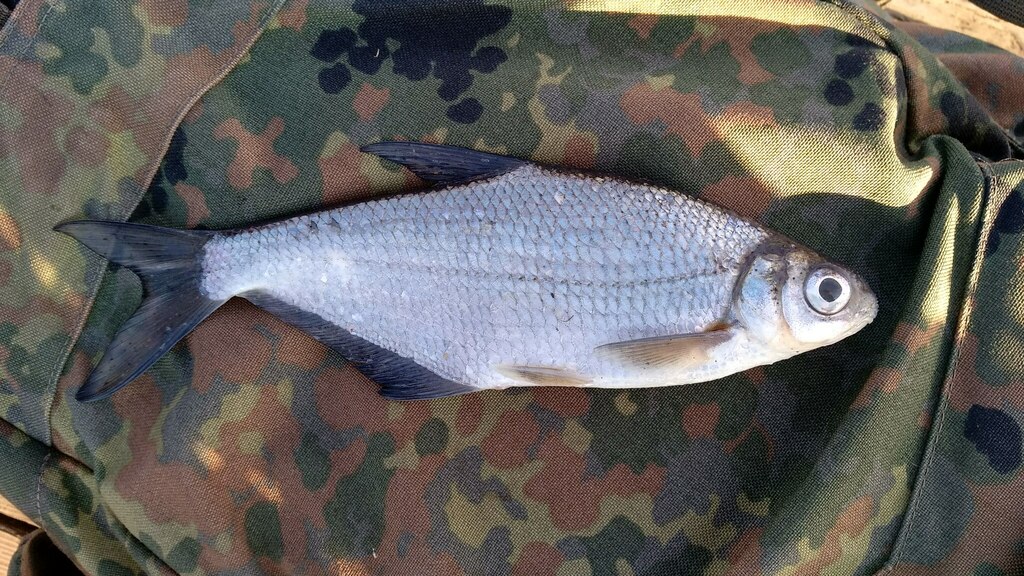
White-eye Bream
Ballerus sapa
White-eye bream (Ballerus sapa) is a fish species of the family Cyprinidae. It is widespread in many large rivers in Europe and Asia in drainages of the Black Sea, Caspian Sea, and Aral Sea. It was introduced to several rivers in northern Russia, in Rhine (in 1995) and invasive in Vistula drainage, coming from the Black Sea basin through the Dnieper–Bug Canal. Freshwater fish are up to 35 cm long.
From the article White-eye bream on Wikipedia (CC BY-SA), quoted section by section
Range & habitat
The white eyed bream is native to central and eastern Europe and western Asia in rivers that drain into the Black, Azov, Caspian and Aral Seas. It has been introduced to Lake Ladoga, the northern part of the Dvina system, the Rhine and some of the rivers draining into the Baltic Sea. It has invaded the Vistula river system by Lessepsian migration through the Dnieper–Bug Canal. This species occurs in large fast flowing lowland rivers and estuaries. The eastern, brackish populations enter the lower reach of rivers for spawning.
Wikipedia: “Distribution and habitat”
In human culture
The white-eye bream is classified within the genus Ballerus, a name which Heckel used tautonymously from Cyprinus ballerus, ballerus being derived from the Greek word baléros, the ancient name for the zope (B. ballerus) first written down by Aristotle. The specific name sapa which is a common name for this species in Russian.
Wikipedia: “Etymology”
Where it lives
Recorded sightings
—
geo-referenced records in GBIF, from museums, herbaria and field observers.
Drag the globe to turn it. Dots are where records exist, not a range map; darker means more records.
In the stacks
Searching the stacks…
Every page naming Ballerus sapa in the Biodiversity Heritage Library →
This page is assembled live from iNaturalist, GBIF, Wikipedia, the Source Library and the Internet Archive. It is not yet part of the hand-edited codex. iNaturalist taxon 95072.