- Animals
- ›Chordates
- ›Vertebrates
- ›Ray-finned Fishes
- ›Carps, Characins, Catfishes and Allies
- ›Characins
- ›Characoidei
- ›African Tetras
- ›Brycinus
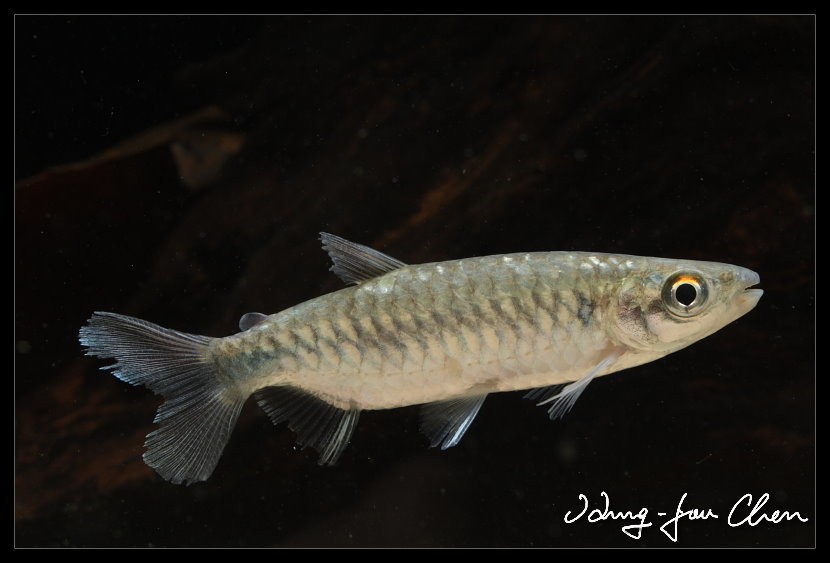
True big-scale tetra
Brycinus macrolepidotus
Brycinus macrolepidotus, the true big-scale tetra or largescale robber, is a species of freshwater ray-finned fish belonging to the family Alestidae, the African tetras. This fish is widespread in tropical Africa.
From the article Brycinus macrolepidotus on Wikipedia (CC BY-SA), quoted section by section
Description
Brycinus macrolepidotus has a fusiform, or torpedo, shaped body with its depth being the equivalent of one third of the standard length. The anal fin has 13 soft rays and no spines while the origin of the dorsal fin is clearly posterior to the pelvic fins. The maximum standard length for this species is 52 cm (20 in).
Range & habitat
Brycinus macrolepidotus is found throughout much of tropical Africa, although it is absent from the drainage system of the Gambia River. It has been recorded throughout the Congo River drainage system, and that of the Nile, as well as the catchments of Omo, the Senegal, Niger, Lake Chad, Volta drainages and the coastal basins of West Africa between Sierra Leone to Cameroon. It is no longer found in Egypt. This is a pelagic potamodromous species which is more numerous in river than in lakes
== References ==
Wikipedia: “Distribution and habitat”
In human culture
Brycinus macrolepidotus is the type species of the genus Brycinus, a name for which Valenciennes did not explain its etymology but it may be a reference to the similarity of this fish to the fishes in the Neotropical genus Brycon, these taxa being considered to be members of the same family at the time, with the suffix -inus being adjectival. Brycon us derived from the Greek word brycho which means "to bite", "gnash teeth" or "guzzle", a reference to the large teeth in both jaws. The specific name macrolepidotus means "large scaled", the scales being described by Valenciennes as being "trés grande".
Wikipedia: “Etymology”
Where it lives
Recorded sightings
—
geo-referenced records in GBIF, from museums, herbaria and field observers.
Drag the globe to turn it. Dots are where records exist, not a range map; darker means more records.
In the stacks
Searching the stacks…
Every page naming Brycinus macrolepidotus in the Biodiversity Heritage Library →
This page is assembled live from iNaturalist, GBIF, Wikipedia, the Source Library and the Internet Archive. It is not yet part of the hand-edited codex. iNaturalist taxon 96092.