- Animals
- ›Chordates
- ›Vertebrates
- ›Ray-finned Fishes
- ›Carps, Characins, Catfishes and Allies
- ›Minnows, Suckers, Carps, and Loaches
- ›Suckers
- ›Suckers
- ›Typical Suckers
- ›Catostomus
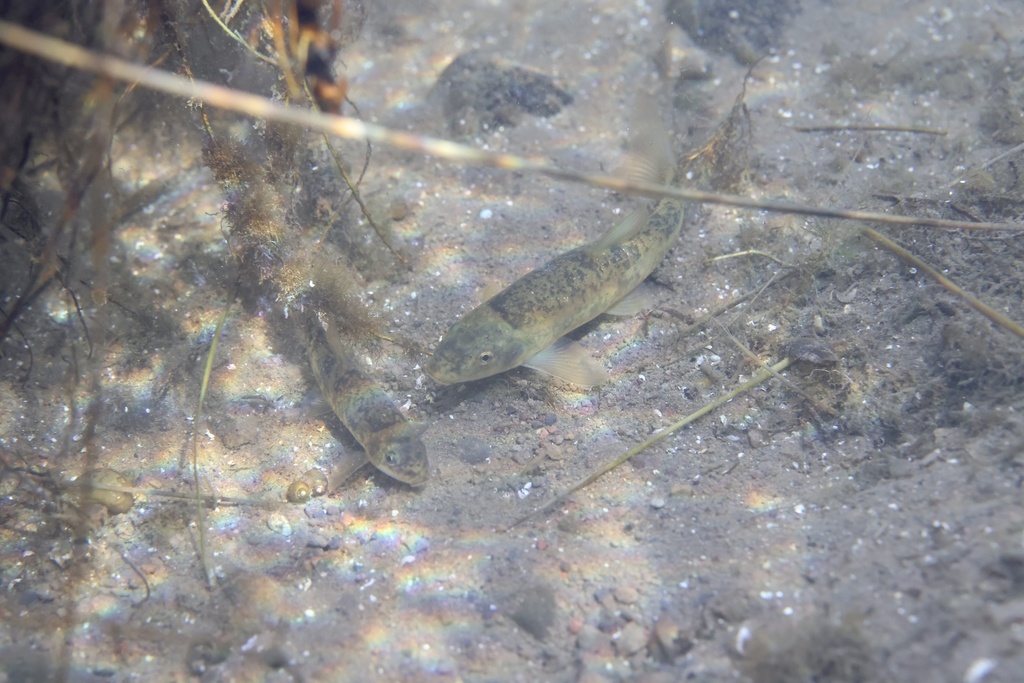
Warner Sucker
Catostomus warnerensis
The Warner sucker (Catostomus warnerensis) is a rare species of freshwater ray-finned fish in the family Catostomidae. Native to Oregon in the United States and found only in the Warner Basin, its distribution extends just into Nevada and California. It is a federally listed threatened species. Its other common name is redhorse. The International Union for Conservation of Nature has rated this fish as an endangered species because of its small extent of occurrence, the small number of locations in which it is found, and the extreme fluctuations in area of occupancy resulting from drought and water abstraction. Conservation efforts have been put in place.
From the article Warner sucker on Wikipedia (CC BY-SA), quoted section by section
Description
This sucker is up to about 15+3⁄4 inches (40 cm) in length. It has a dark back and sides and a white belly. The male and some females take on a bright red wash along the sides during the spawning season. The fish spawns in the creeks when they are full in the spring, as well as in canals and on lakeshores. The fish can reach the age of twenty. It becomes sexually mature at three or four.
Range & habitat
This fish is native to shallow lakes and associated marshes and intermittent lakes and creeks in the Warner Valley of Lake County, Oregon. It has been seen in Twelvemile Creek just over the border in Nevada and West Barrel Creek within California state lines. It was historically quite abundant in the valley. There is only one metapopulation of the fish, made up of several subpopulations. There are two morphs, one that lives in the lakes and one that stays in stream habitat past spawning time. The lake-dwelling morph is generally larger in size. The stream morph may be the only one that is now experiencing recruitment.
Wikipedia: “Distribution”
Where it lives
Recorded sightings
—
geo-referenced records in GBIF, from museums, herbaria and field observers.
Drag the globe to turn it. Dots are where records exist, not a range map; darker means more records.
In the stacks
Searching the stacks…
Every page naming Catostomus warnerensis in the Biodiversity Heritage Library →
This page is assembled live from iNaturalist, GBIF, Wikipedia, the Source Library and the Internet Archive. It is not yet part of the hand-edited codex. iNaturalist taxon 96876.