On eBird ↗
Altamira Yellowthroat
Live sightings near you, the range map, bar charts of when it is seen, and Macaulay Library photos and recordings.
Altamira Yellowthroat
Geothlypis flavovelata
The Altamira yellowthroat (Geothlypis flavovelata) is a New World warbler. It is a resident breeding bird endemic to the Gulf slope of north-eastern Mexico.
From the article Altamira yellowthroat on Wikipedia (CC BY-SA), quoted section by section
Description
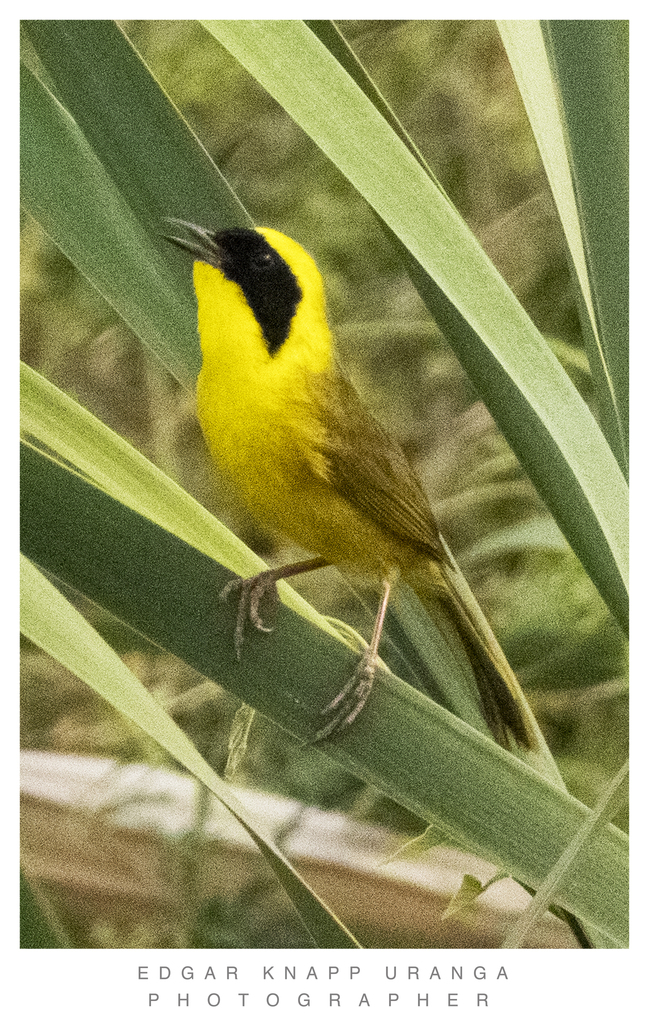
The Altamira yellowthroat is 13 cm (5.1 in) long and has a yellow-green back and bright yellow belly. The adult male has a black face mask and yellow crown. Females are similar, but lack the black mask and have an olive crown. This species is easily distinguished from wintering common yellowthroats by its uniform yellow underparts, in contrast to common's white belly. Males' yellow forehead bands are diagnostic. Vocalizations are very similar to those of common yellowthroat and are not readily distinguishable to the human ear. Altamira and common yellowthroats, however, do not respond to tapes of one another's songs.
What it does
The species is resident in freshwater marshes (including canals and drainage ditches), especially those with cattails. Little is known of its breeding or feeding habits, but other yellowthroats build a cup nest low in vegetation and feed on insects, usually captured in dense vegetation, so it is likely that the Altamira yellowthroat does the same.
Wikipedia: “Ecology and behaviour”
Listen
Looking for field recordings…
Where it lives
Recorded sightings
—
geo-referenced records in GBIF, from museums, herbaria and field observers.
Drag the globe to turn it. Dots are where records exist, not a range map; darker means more records.
In the stacks
Searching the stacks…
Every page naming Geothlypis flavovelata in the Biodiversity Heritage Library →
This page is assembled live from iNaturalist, GBIF, Wikipedia, the Source Library and the Internet Archive. It is not yet part of the hand-edited codex. iNaturalist taxon 9719.