- Animals
- ›Chordates
- ›Vertebrates
- ›Ray-finned Fishes
- ›Spiny-rayed fishes
- ›Perches, Scorpionfishes, Sticklebacks, and Allies
- ›Sculpins and Allies
- ›Typical Sculpins
- ›Cottus
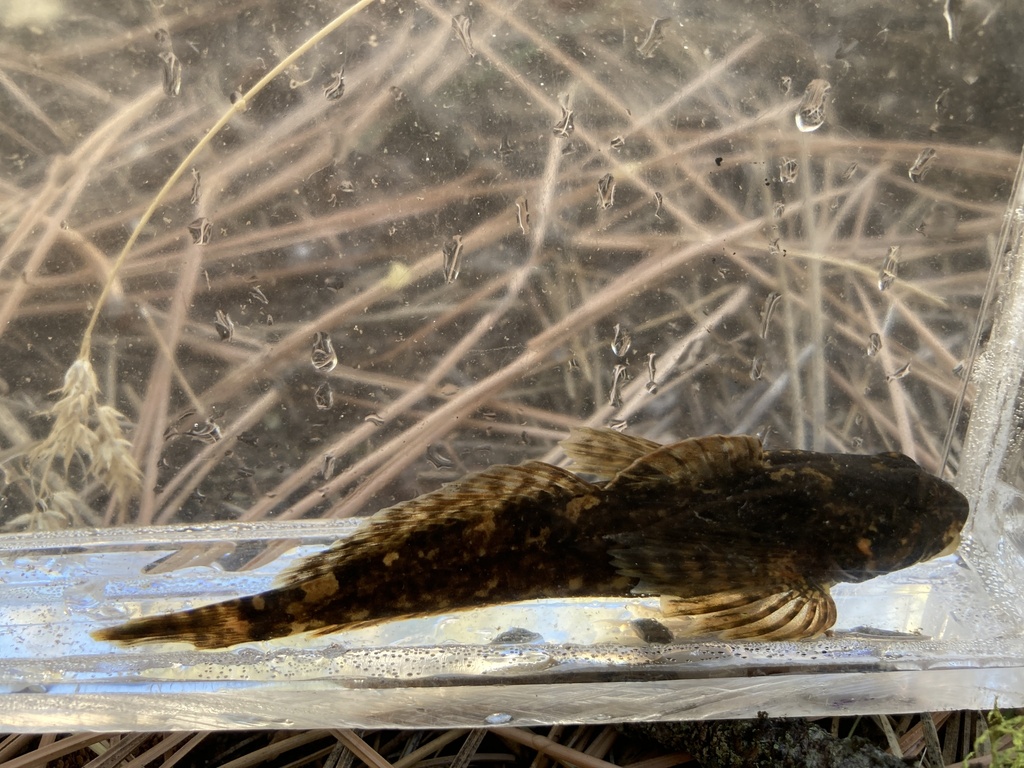
Pit Sculpin
Cottus pitensis
The Pit sculpin (Cottus pitensis) is an endemic species of freshwater ray-finned fish belonging to the family Cottidae, the typical sculpins. It is found in the United States, inhabiting the Pit and upper Sacramento river systems in Oregon and California. It reaches a maximum length of 13.0 cm. It prefers rubble and gravel riffles.
From the article Pit sculpin on Wikipedia (CC BY-SA), quoted section by section
Range & habitat
Morphology-based misidentification with cryptic species in historical literature led to a long-standing overestimation of the Pit sculpin's range; however, recent molecular and phylogeographic studies have refined its distribution to the Pit River watershed, a tributary of the upper Sacramento River. Earlier accounts had attributed specimens from across the Sacramento drainage and adjacent basins to Cottus pitensis, largely due to overlapping meristic traits and subtle morphological differences among western Cottus species. Advances in genetic analyses, particularly the use of mitochondrial DNA and multilocus sequencing, have since clarified that many of these populations belong instead to closely related taxa such as the riffle sculpin (C. gulosus) and prickly sculpin (C. asper). The Pit sculpin's historical range is believed to have extended into the lower Sacramento Basin, but this distribution was truncated following the construction of Shasta Dam in the 1940s, which formed an impassable barrier between the Pit River and downstream habitats. In addition to restricting gene flow, impoundment altered temperature regimes, sediment transport, and flow variability, further reducing suitable habitat for the species below the dam. Today, C. …
Wikipedia: “Geographic distribution”
What it does
Pit sculpins reside in shallow areas of rivers that have high velocity flows and coarse sediment. With a preference for high oxygen levels and water temperatures of 25 °C or below, they have a broad temperature tolerance, with relatively high tolerance for warmer temperatures in comparison to other sculpin species. They are considered to be a eurythermal fish species. Feeding primarily in earlier times of day, their diet consists mainly of aquatic insects. Pit sculpins are also known to be potentially aggressive, at times excluding other fish species from the riffles they inhabit. They feed selectively on the larvae of aquatic insects, including stonefly nymphs and certain mayfly larvae, while largely avoiding aquatic macroinvertebrates with hard shells. Fish species that Pit sculpins share these stream habitats with include Sacramento sucker, rainbow trout, and speckled dace. To this day, Pit sculpins are common in the Pit River and are considered a sensitive species in Oregon because of their limited distribution.
Wikipedia: “Ecology”
In human culture
Pit sculpins mature in their second year, with a typical life span of 5 years and relatively low fecundity. Females have about 61 to 320 eggs per breeding season. Spawning season ranges from February to March annually. Male Pit sculpins attract female mates by building rock caves, who will select a cave to lay their eggs in. Males then return to fertilize the eggs. After hatching, the larval spawn stay close to the rock cave for their early life. At the start of the spawning period, male Pit sculpin individuals undergo both physical and behavioral changes; their coloration darkens, they develop an orange mark on both dorsal fins, and they defend their nesting caves against other males. Pit sculpins are most abundant in the lower order streams such as Rush and Ash Creeks of the Pit River watershed, preferring cool, oxygenated water to the warmer conditions found in the lower Pit River basin. While genomic and phylogeographic differences have been observed between the Pit sculpin and its sister taxa, behavioral and life history differences across species are less understood. They feed primarily on aquatic invertebrates, and have demonstrated a high degree of prey selectivity in stomach content analyses.
Wikipedia: “Life history”
Where it lives
Recorded sightings
—
geo-referenced records in GBIF, from museums, herbaria and field observers.
Drag the globe to turn it. Dots are where records exist, not a range map; darker means more records.
In the stacks
Searching the stacks…
Every page naming Cottus pitensis in the Biodiversity Heritage Library →
This page is assembled live from iNaturalist, GBIF, Wikipedia, the Source Library and the Internet Archive. It is not yet part of the hand-edited codex. iNaturalist taxon 98583.