- Animals
- ›Arthropods
- ›Hexapods
- ›Insects
- ›Winged and Once-winged Insects
- ›Dragonflies and Damselflies
- ›Dragonflies
- ›Libelluloidea
- ›Skimmers
- ›Brachymesia
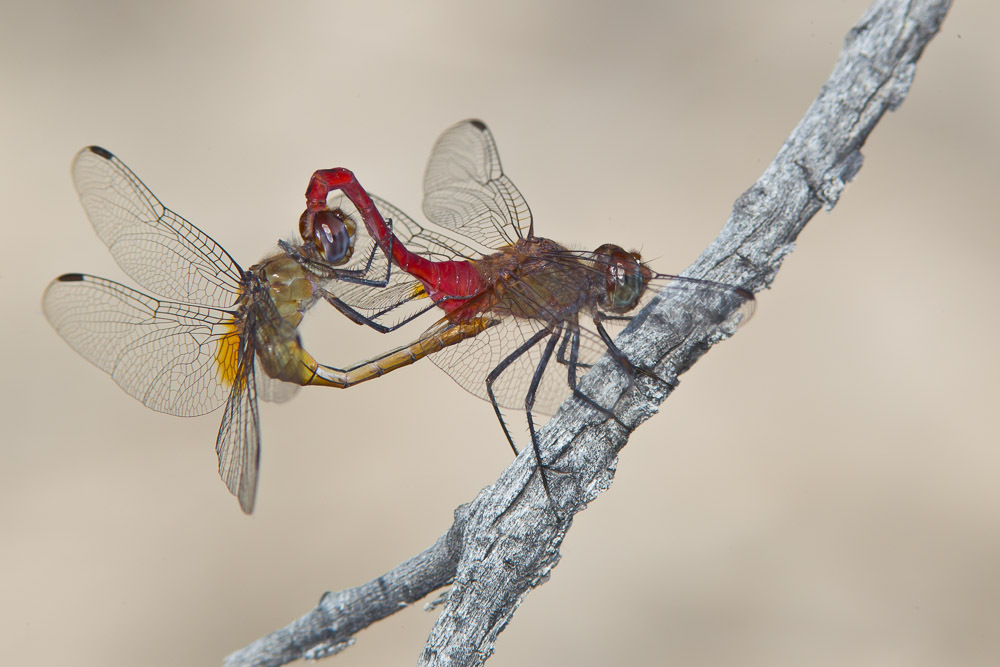
Red-tailed Pennant
Brachymesia furcata
Brachymesia furcata, commonly known as the red-tailed pennant, is part of the dragonfly order Odonata. It is a species of skimmer belonging to Libellulidae, one of the largest dragonfly families in the world. Along with Brachymesia gravida and B. herbida, two closely related species within the same genus, B. furcata is often found in semi-aquatic habitats distributed throughout the Caribbean, the Americas, Argentina, West India, Mexico, and Puerto Rico. Current populations of B. furcata are stable. The IUCN conservation status of B. furcata designates the species as "least concern" as last reviewed in 2017.
From the article Brachymesia furcata on Wikipedia (CC BY-SA), quoted section by section
Range & habitat
Similar to other dragonflies, B. furcata has a life cycle consisting of three primary stages: egg, nymph, and adult. Its eggs are laid in still-water conditions on submerged aquatic plants or directly into the water depending on the environmental conditions. Marshes, ponds, lakes, and other mildly saline aquatic habitats are all potential locations for dragonflies to colonize. Bottom debris and aquatic vegetation provide both sustenance as well as hiding spots for the newly hatched dragonfly nymphs. After undergoing a few molts, the nymph transitions to adulthood. As an adult, B. furcata still inhabits a semi-aquatic environment where it feeds on small flying insects such as flies or mosquitoes. Generation time for an entire life cycle is known to be fast but exact intervals are likely to depend on the specific local environmental setting.
Wikipedia: “Life cycle and habitat”
Listen
Looking for field recordings…
Where it lives
Recorded sightings
—
geo-referenced records in GBIF, from museums, herbaria and field observers.
Drag the globe to turn it. Dots are where records exist, not a range map; darker means more records.
In the stacks
Searching the stacks…
Every page naming Brachymesia furcata in the Biodiversity Heritage Library →
This page is assembled live from iNaturalist, GBIF, Wikipedia, the Source Library and the Internet Archive. It is not yet part of the hand-edited codex. iNaturalist taxon 95982.