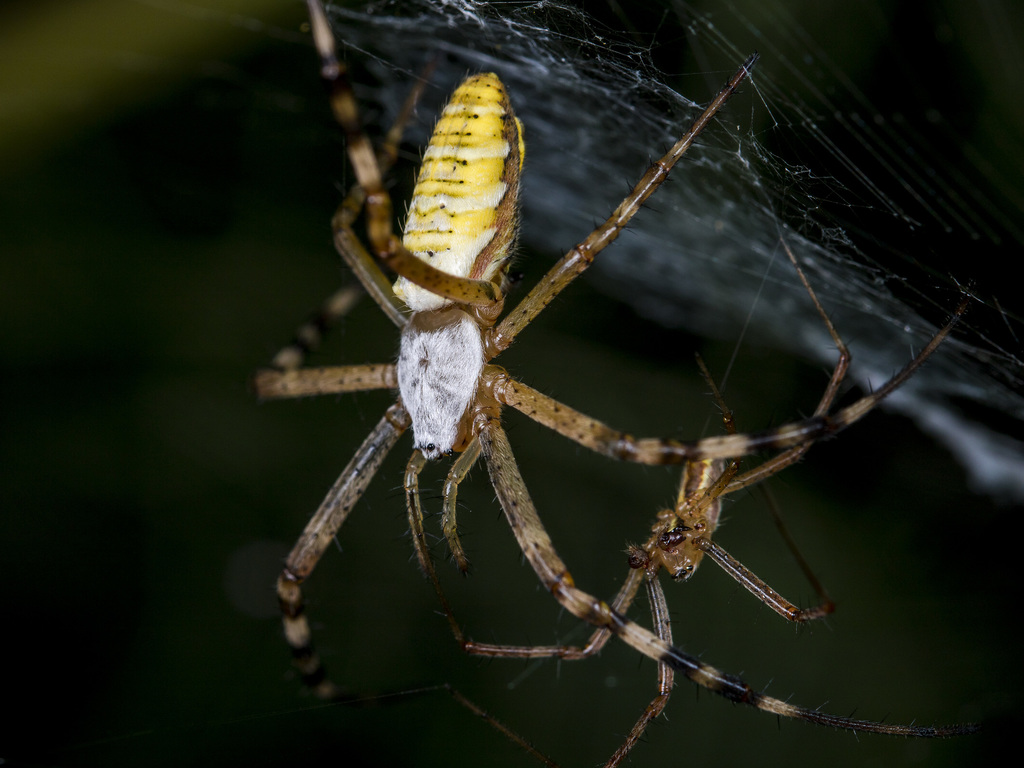
Arthropods
Arthropoda
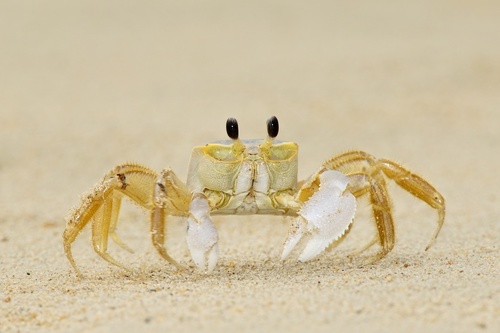
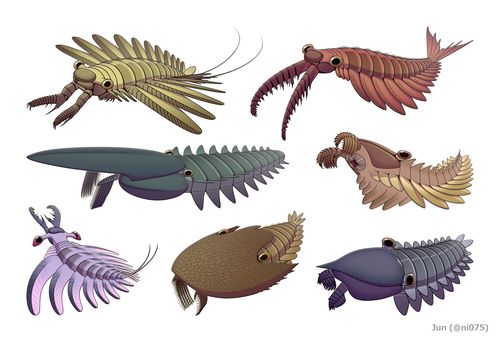
Arthropods ( AR-thrə-pod) are invertebrates in the phylum Arthropoda. They possess an exoskeleton with a cuticle made of chitin, often mineralised with calcium carbonate, a body with differentiated (metameric) segments, and paired jointed appendages. In order to keep growing, they must go through stages of moulting, a process by which they shed their exoskeleton to reveal a new one. They form an extremely diverse group of up to ten million species.
Haemolymph is the analogue of blood for most arthropods. An arthropod has an open circulatory system, with a body cavity called a haemocoel through which haemolymph circulates to the interior organs. Like their exteriors, the internal organs of arthropods are generally built of repeated segments. They have ladder-like nervous systems, with paired ventral nerve cords running through all segments and forming paired ganglia in each segment. Their heads are formed by fusion of varying numbers of segments, and their brains are formed by fusion of the ganglia of these segments and encircle the esophagus. The respiratory and excretory systems of arthropods vary, depending as much on their environment as on the subphylum to which they belong.




Where it lives
Recorded sightings
—
geo-referenced records in GBIF, from museums, herbaria and field observers.
Drag the globe to turn it. Dots are where records exist, not a range map; darker means more records.
In the stacks
Searching the stacks…
Every page naming Arthropoda in the Biodiversity Heritage Library →
This page is assembled live from iNaturalist, GBIF, Wikipedia, the Source Library and the Internet Archive. It is not yet part of the hand-edited codex. iNaturalist taxon 47120.