- Animals
- ›Chordates
- ›Vertebrates
- ›Mammals
- ›Therians
- ›Placental Mammals
- ›Primates, Rodents, and Allies
- ›Rodents
- ›Ctenohystricans
- ›Hystricognaths
- ›Degus, Hutias, Tuco-tucos, and Allies
- ›Spiny Rats and Hutias
- ›Hutias
- ›Isolobodon
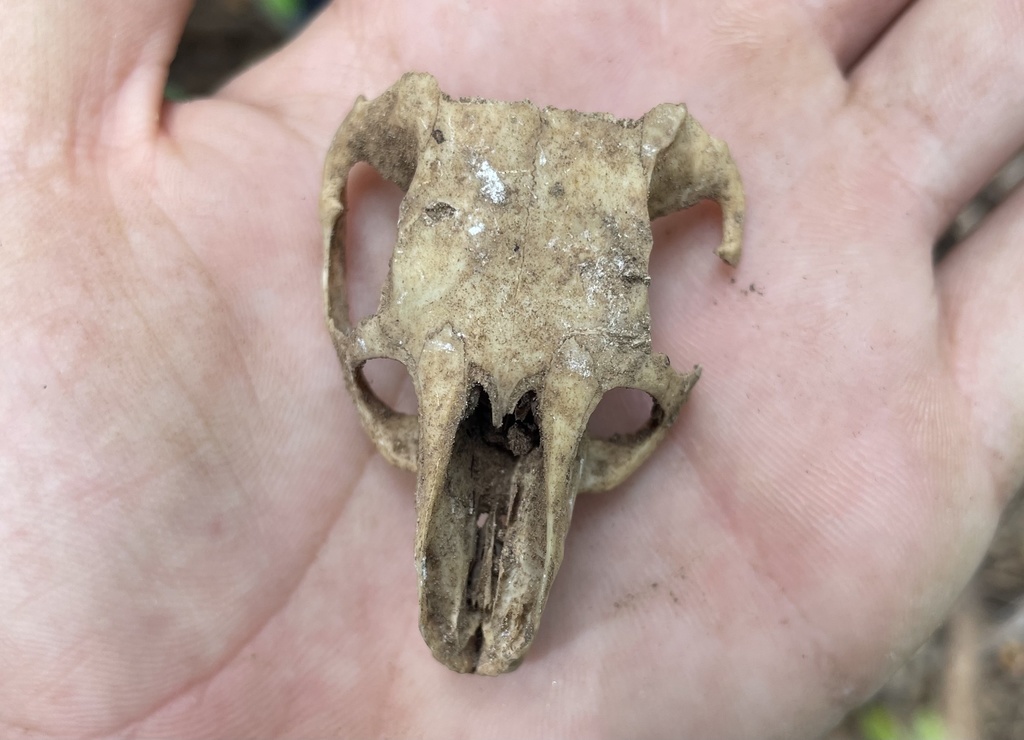
Puerto Rican Hutia
Isolobodon portoricensis
The Puerto Rican hutia (Isolobodon portoricensis) is an extinct species of rodent in the family Capromyidae. It was found on Hispaniola (today the Dominican Republic and Haiti) and Gonâve Island; it was introduced to the Virgin Islands and Puerto Rico.
From the article Puerto Rican hutia on Wikipedia (CC BY-SA), quoted section by section
In human culture
The Puerto Rican hutia was believed to be a vital food source for the Taíno for many years; despite this, they continued to survive until the arrival of early European explorers. Christopher Columbus and his crew are believed to have eaten the species upon their arrival. The species declined following European colonization of the West Indies. It is unclear whether it survived after facing threats from the early introduction of black rats (Rattus rattus) by the first European settlers around 1500, although it may have been finally wiped out by introduced small Indian mongooses (Urva auropunctata) in the 19th or early 20th century. Although commonly regarded as extinct, some researchers hold out hopes that the species still survives in undisturbed refuges.
== Sources ==
Wikipedia: “History”
Listen
Looking for field recordings…
Where it lives
Recorded sightings
—
geo-referenced records in GBIF, from museums, herbaria and field observers.
Drag the globe to turn it. Dots are where records exist, not a range map; darker means more records.
In the stacks
Searching the stacks…
Every page naming Isolobodon portoricensis in the Biodiversity Heritage Library →
This page is assembled live from iNaturalist, GBIF, Wikipedia, the Source Library and the Internet Archive. It is not yet part of the hand-edited codex. iNaturalist taxon 43789.