- kingdomAnimalia
- ›phylumChordata
- ›classMammalia
- ›orderDiprotodontia
- ›familyPhalangeridae
- ›genusSpilocuscus
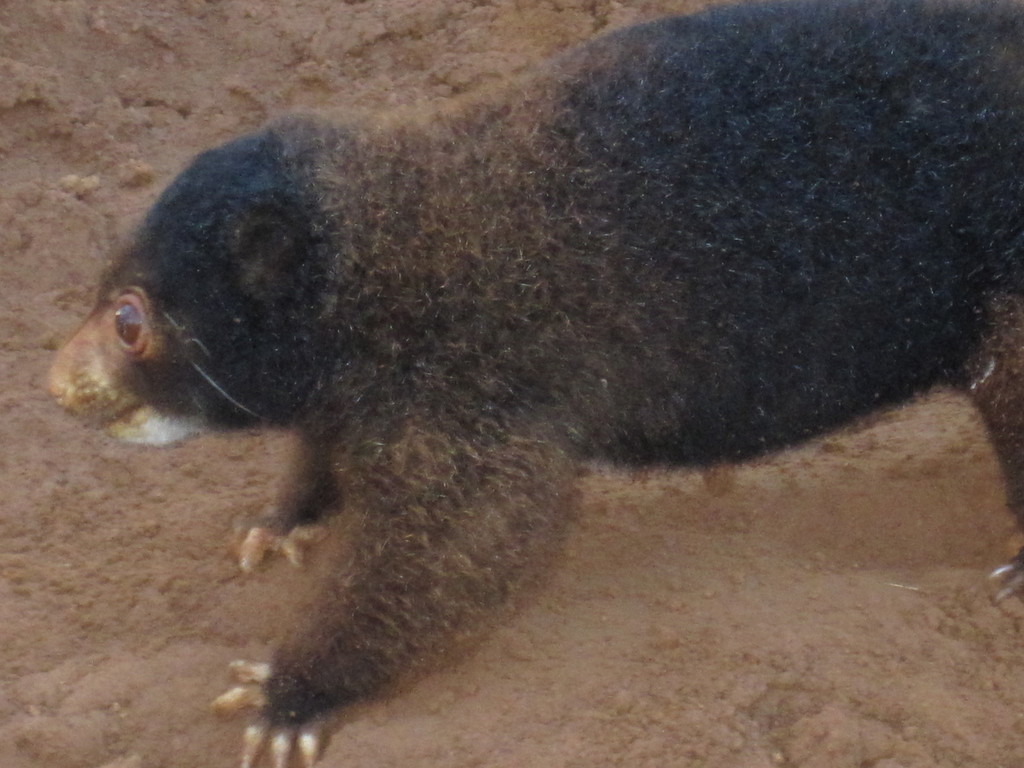


Admiralty Island Cuscus
Spilocuscus kraemeri (Schwarz, 1910)
Also calledCuscus-Manchado-de-Manus (por) · Cuscús del Archipiélago de las Manus (spa) · Manus-TUpfelkuskus (deu) · Manus-Tüpfelkuskus (deu) · Phalanger de ' Amirauté (fra) · kuskus rudohlavý (ces) · kuskus wyspiarski (pol) · Адмиралтейский кускус (rus) · كسكوس جزيرة أدميرالتي (ara) · アドミラルティブチクスクス (jpn)
First described in: Sitzb. Ges. Naturf. Fr. Berlin p.406
Descriptions from checklists and floras indexed by GBIF
discussion
The literature on this species is complex, confusing, widely scattered, and in various languages; thus we thought it useful to summarize, analyze, and annotate the published pertinent information on the species. Schwarz (1910) named “ Phalanger maculatus krämeri ” from the “ Admiraltäts- und Hermit-Inseln ” and on the basis of 35 skins and 7 skulls in the Berlin Museum [given as “ 32 specimens ” by Aplin et al. (2015: 50)] and collected by “ … THILENIUS, SCHOEDE und … KRÄMER. ” The new taxon was said to be most closely related to “ Ph [alanger]. m [aculatus]. papuensis ” [now generally regarded as a full species, Spilocuscus papuensis (Desmarest, 1822)] “ from Waigeoe ” (= Waigeo). The male of the new species was described as having a white to yellowish ground color with moderately large blackish-brown spots with faded borders. The snout, cheeks, and forehead were said to be mostly a paler rusty brown; the limbs spotted, (the spots?) somewhat paler than [on?] the back; the tail with large brown spots. The chin and throat white, the chest and belly yellowish. The female was described as unspotted with the snout and forehead reddish brown, the top of the head, nape of the neck, and t
Marsupials And Rodents Of The Admiralty Islands, Papua New Guinea
materials_examined
The colored drawing of the male, in Flannery’s 1994 book, is based on AM M 20925, from Polomou, Manus. The female depicted was acquired at the Lorengau Market on Manus. The specimen from Polomou is the only one of which we are aware which has had a fairly precise field locality published for it. Flannery (1994) provided measurements from at least two males and two females from Manus. Natural history information is provided by Flannery (1994, 1995 b). Singadan (1996) noted that S. kraemeri is a lowland animal, usually occupying lowland rainforests, usually below 1,000 m. However, the maximum elevation of Manus is only about 720 m and no other island inhabited by this species is even that high. Singadan also noted that there were at least 52 specimens held in the collections of the University of Papua New Guinea and PNGMAG. Assuming that the 80 or so specimens seen by Cohn are still in existence, then the number of available specimens is indeed impressive. Williams (1999) reported S. kraemeri remains from as far back as ca. 11,000 ybp, at the Pamwak archeological site on Manus. Anthony (2001) discussed the purchase, in a market in Kimbe, New Britain, of a skin of a cuscus which had r
Marsupials And Rodents Of The Admiralty Islands, Papua New Guinea
discussion
Discussion: Separated as a species by Flannery (1994 a), who noted that it is very distinctive, but that it does not occur in archaeological deposits, so may possibly be derived from introductions.
Order Diprotodontia
activity
Activity patterns. There is no specific information available for this species, but the Admiralty Spotted Cuscusis often seen in foliage close to the ground.
Phalangeridae
In the stacks
Searching the stacks…
Every page naming Spilocuscus kraemeri in the Biodiversity Heritage Library →
From the GBIF Backbone Taxonomy and occurrence records (GBIF.org), with Wikipedia and the Source Library. GBIF species 2440247.