 NL·0628
Herbarium of the Nature Library
- Name
- Colaptes auratus
- Family
- Picidae
- Native to
- Alaska and Canada through the US and Mexico to Nicaragua; also Cuba and Grand Cayman
- Habitat
- Open woodland, Forest edge, Gardens, Grassland with trees
On eBird ↗
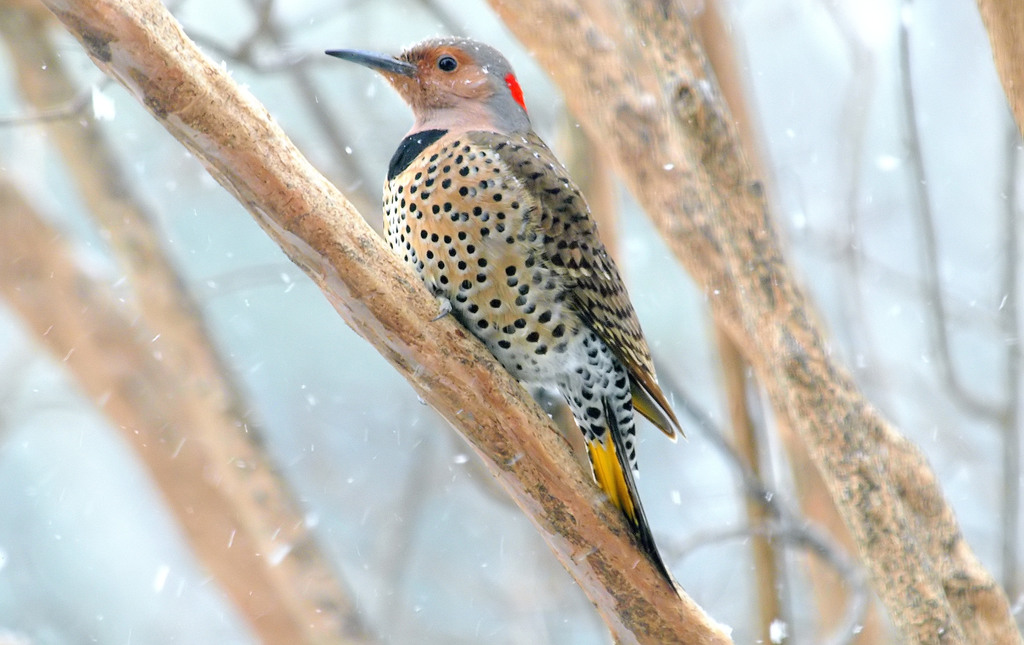
Northern Flicker
Live sightings near you, the range map, bar charts of when it is seen, and Macaulay Library photos and recordings.
Northern flicker
Colaptes auratus
Also calledCarpintero de pechera (Spanish) · Pic flamboyant (French) · Yellowhammer (Southern US English)
A large brown woodpecker that feeds mostly on the ground, licking up ants. In flight it flashes golden-yellow or salmon-red under its wings and a bold white rump.
The northern flicker or common flicker is a medium-sized bird of the woodpecker family. It is native to most of North America, parts of Central America, Cuba, and the Cayman Islands, and is one of the few woodpecker species that migrate. Over 100 common names for the northern flicker are known, including yellowhammer, clape, gaffer woodpecker, harry-wicket, heigh-ho, wake-up, walk-up, wick-up, yarrup, and gawker bird. Many of these names derive from attempts to imitate some of its calls. Wikipedia
What it can do
- iAnts and their larvae make up nearly half its diet, more than any other North American woodpecker
- iiHas a long tongue coated in sticky saliva for collecting ants from the soil
- iiiTwo forms — eastern Yellow-shafted and western Red-shafted — hybridise across a broad zone on the Great Plains
In the field
Field marks
- aBrown, black-barred back; buff breast with black spots
- bBlack crescent bib
- cWhite rump in flight
- dYellow (east) or salmon-red (west) wing and tail shafts; males have a black or red moustache
- Voice
- A long, loud 'wik-wik-wik-wik'; also a piercing 'kleer' and a soft 'wicka-wicka' in courtship.
- Not to be confused with
- Gilded Flicker (Sonoran Desert) has yellow underwings with a cinnamon crown. Red-bellied Woodpecker has a barred back without a bib. In flight the white rump can recall Red-headed Woodpecker, which has white wing patches instead.
- Where to see it
- Lawns, parks and open woods across North America; often seen feeding on the ground.
- When
- Resident in much of the US; northern birds migrate south in autumn
Listen
Looking for field recordings…
Life & habits
- Diet
- Ants and beetles; fruit and seeds in winter
- Habitat
- Open woods, parks, edges and burned forest
- Size
- 28–31 cm; 110–160 g
- Lifespan
- Banding record about 9 years
It often drums on metal chimney caps and gutters, which amplify the sound.
Where it lives
Recorded sightings
—
geo-referenced records in GBIF, from museums, herbaria and field observers.
Native range
Alaska and Canada through the US and Mexico to Nicaragua; also Cuba and Grand Cayman
Drag the globe to turn it. Dots are where records exist, not a range map; darker means more records.
In the old herbals & bestiaries
Woodcuts and engravings matched from the Source Library’s scanned books by name. Plates marked “relative” show a close kin rather than this exact species. Click a plate to read the page it came from, with translation.

In the stacks
Searching the stacks…
Every page naming Colaptes auratus in the Biodiversity Heritage Library →
Marginalia
It is Alabama's state bird; Confederate soldiers from Alabama were nicknamed 'yellowhammers' after the yellow trim on their uniforms.
Curiosity
It is one of the few North American woodpeckers that regularly migrates.
Kinship
- kingdomAnimalia
- ›phylumChordata
- ›subphylumVertebrata
- ›classAves
- ›orderPiciformes
- ›familyPicidae
- ›subfamilyPicinae
- ›tribePicini
- ›genusColaptes
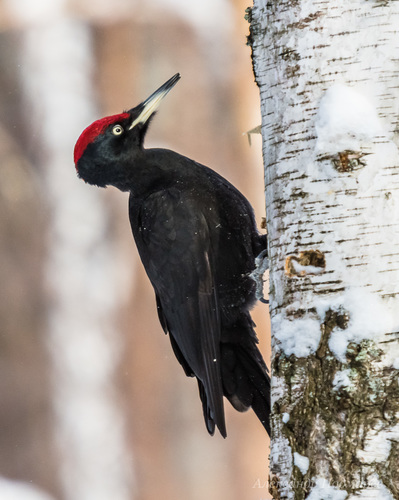
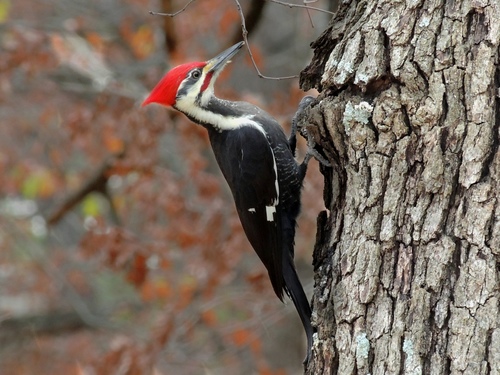
Neighbours on the shelf
Photographs: iNaturalist contributors under the licences shown. Records: GBIF.org. Historical plates: Source Library (CC BY-SA 4.0; originals public domain). Summary text: Nature Library editors and Wikipedia (CC BY-SA). Medicinal and edibility notes are historical and educational, not advice. iNaturalist taxon 18236.