- Plants
- ›Vascular Plants
- ›flowering plants
- ›Dicots
- ›beeches, oaks, walnuts, and allies
- ›beech family
- ›Quercus
- ›Quercus
- ›Quercus
- ›Galliferae
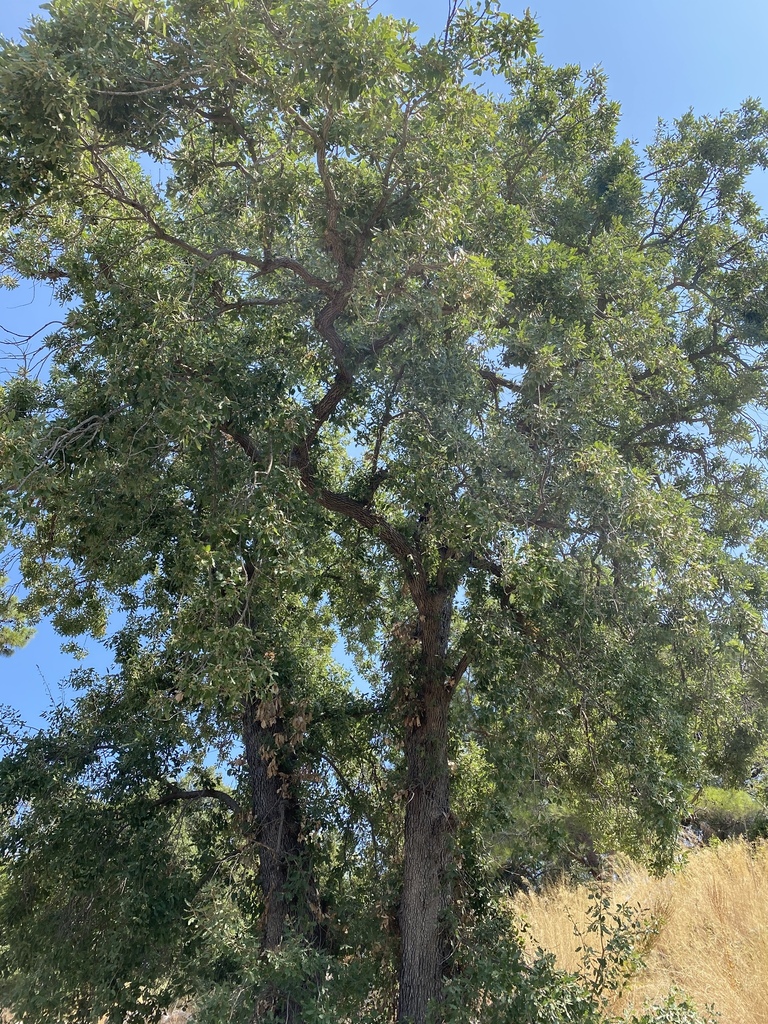
Aleppo Oak
Quercus infectoria
Quercus infectoria or the Aleppo oak is a species of oak well known for producing galls (called manjakani in Malaysia, majuphal in India) that have been traditionally used for centuries in Asia medicinally while also used in softening leather and in making black dye and ink.
From the article Quercus infectoria on Wikipedia (CC BY-SA), quoted section by section
Description
Quercus infectoria is a small tree, growing to 1 to 2 metres (4 to 6 feet) in height. The stems are crooked, shrubby looking with smooth and bright-green leaves borne on short petioles of 3–4 centimetres (1+1⁄4–1+1⁄2 inches) long. The leaves are bluntly mucronate, rounded, smooth, unequal at the base and shiny on the upper side. The galls arise on young branches of the tree when gall wasps sting the oak tree and deposit their larvae. The chemical reaction causes an abnormality in the tree, causing hard balls to be formed. They are corrugated in appearance.
Gall chemistry. The galls from Quercus infectoria contain the highest naturally occurring level of tannin, approximately 50–70%, as well as syringic acid, β-sitosterol, amentoflavone, hexamethyl ether, isocryptomerin, methyl betulate, methyl oleanate, and hexagalloyl glucose. They also contain 2–4% each of gallic and ellagic acid that are polymerized to make tannins. Tannins have been used for hundreds of years for medical purposes and are currently indispensable in dermatology and have been used for tanning of leather.
Tannins. Tannins comprise a large group of natural products widely distributed in the plant kingdom. They have a great structural diversity, but are usually divided into two basic groups: the hydrolyzable type and the condensed type. …
Range & habitat
Quercus infectoria is indigenous to parts of southern Europe (Greece and the East Aegean Islands) and the Middle East (Turkey, Cyprus, Iran, Iraq, Lebanon, Syria, Israel, Palestine, and Jordan).
Wikipedia: “Distribution”
At the table
Quercus infectoria can be used as a thickener in stews or mixed with cereals for making bread. The "Aleppo tannin" is tannic acid gained from Aleppo oak galls, which display unique chemical properties essential in the preparation of gold sols (colloids) used as markers in immunocytochemistry. Gall nut extracts are widely used in pharmaceuticals, medical laboratory techniques as well as inks which use "Aleppo tannin", food and feed additives, dyes, metallurgy, and leather tanning. The galls, locally known as manjakani in Malaysia, are used in combination with other herbs as drinking remedies by women after childbirth to restore the elasticity of the uterine wall, and in many vaginal tightening products. The extract of manjakani was claimed by the Malay Kelantanese to be highly beneficial for postpartum women. Hazardous effects of the extract were not reported so far. In addition, the Arabs, Persians, Indians, Malays and Chinese have traditionally used the galls after childbirth to treat vaginal discharge and related postpartum infections. Also known as majuphal in Indian traditional medicine, manjakani has been used as dental powder and in the treatment of toothache and gingivitis.
Wikipedia: “Uses”
In medicine
The galls of Quercus infectoria have also been pharmacologically documented to possess astringent, antidiabetic, antitremorine, local anaesthetic, antiviral, antibacterial, antifungal, larvicidal, and anti-inflammatory activities. The main constituents found in the galls of Quercus infectoria are tannin (50-70%) and small amounts of free gallic acid and ellagic acid. The wide range of pharmacological activities of this plant might support the efficacy of extract preparation of Quercus infectoria that are widely used in Malaysia for treating many kinds of health problems. The nutgalls have been pharmacologically documented on their antiamoebic, anticariogenic, and anti-inflammatory activities, to treat skin infections and gastrointestinal disorders.
Wikipedia: “Pharmacology”
Where it lives
Recorded sightings
—
geo-referenced records in GBIF, from museums, herbaria and field observers.
Drag the globe to turn it. Dots are where records exist, not a range map; darker means more records.
In the stacks
Searching the stacks…
Every page naming Quercus infectoria in the Biodiversity Heritage Library →
This page is assembled live from iNaturalist, GBIF, Wikipedia, the Source Library and the Internet Archive. It is not yet part of the hand-edited codex. iNaturalist taxon 342933.