- Plants
- ›Vascular Plants
- ›flowering plants
- ›Dicots
- ›Soapberries, Cashews, Mahoganies, and Allies
- ›Torchwoods
- ›Commiphora
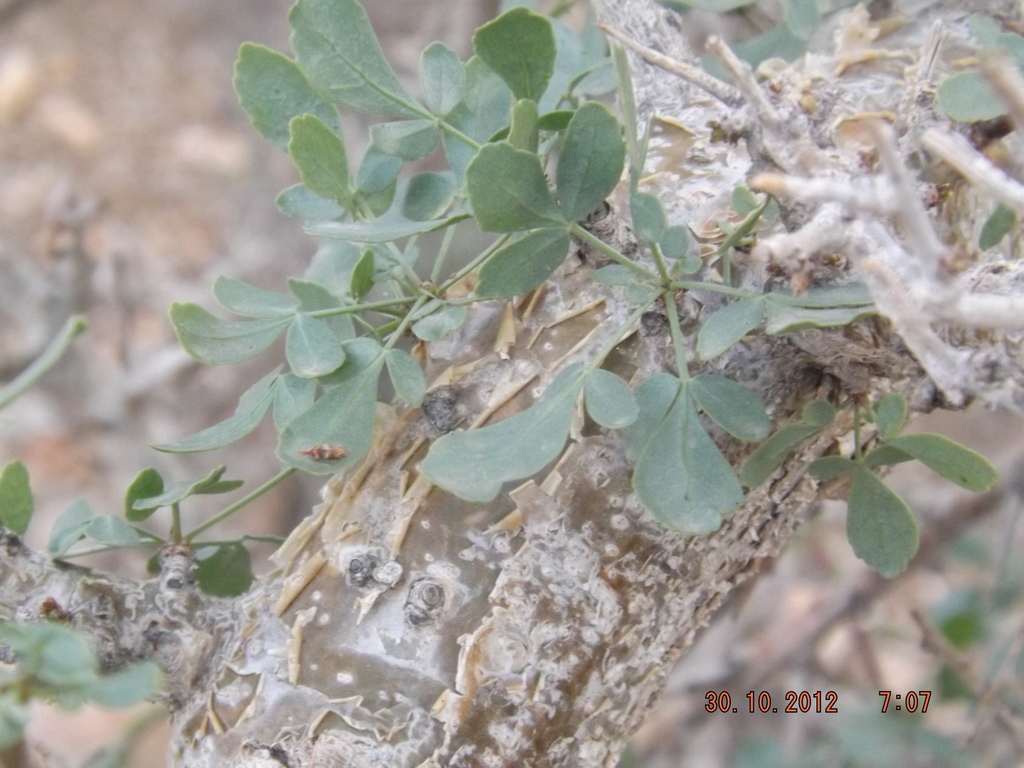
Balsam of Mecca
Commiphora gileadensis
Commiphora gileadensis, the Arabian balsam tree, is a shrub species in the family Burseraceae growing in Saudi Arabia, Yemen, southern Oman, Sudan and in southeast Egypt where it may have been introduced. Other common names for the plant include balm of Gilead and Mecca myrrh, but this is due to historical confusion between several plants and the historically important expensive perfumes and drugs obtained from them.
True balm of Gilead was very rare, and appears to have been produced from the unrelated tree Pistacia lentiscus. The Commiphora gileadensis species also used to include Commiphora foliacea, however it was identified and described as a separate species
From the article Commiphora gileadensis on Wikipedia (CC BY-SA), quoted section by section
Description
Depending on where Commiphora gileadensis is growing, it can vary in size, ranging from a small-leaved shrub to a large-leaved tree usually up to 4 m (13.1 ft) tall. It is rarely spiny, bark peeling or flaking when cut and exuding a pleasant smelling resin. Its leaves alternate on short condensed side shoots, pinnate with 3-5 leaflets. The leaflets are oblong, 5–40 millimetres (0.20–1.57 in) long and 3–35 millimetres (0.12–1.38 in) wide with acute tips and are thinly hairy. The flowers are red, sub-sessile and the plant has 1-5 of them on short condensed side shoots amongst the leaves. The fruits are dull red and marked with four longitudinal white stripes, one-seeded and splitting into 2–4 valves.
== References ==
Where it lives
Recorded sightings
—
geo-referenced records in GBIF, from museums, herbaria and field observers.
Drag the globe to turn it. Dots are where records exist, not a range map; darker means more records.
In the stacks
Searching the stacks…
Every page naming Commiphora gileadensis in the Biodiversity Heritage Library →
This page is assembled live from iNaturalist, GBIF, Wikipedia, the Source Library and the Internet Archive. It is not yet part of the hand-edited codex. iNaturalist taxon 202775.