- Animals
- ›Arthropods
- ›Hexapods
- ›Insects
- ›Winged and Once-winged Insects
- ›Dragonflies and Damselflies
- ›Dragonflies
- ›Aeshnoidea
- ›Darners
- ›Anax
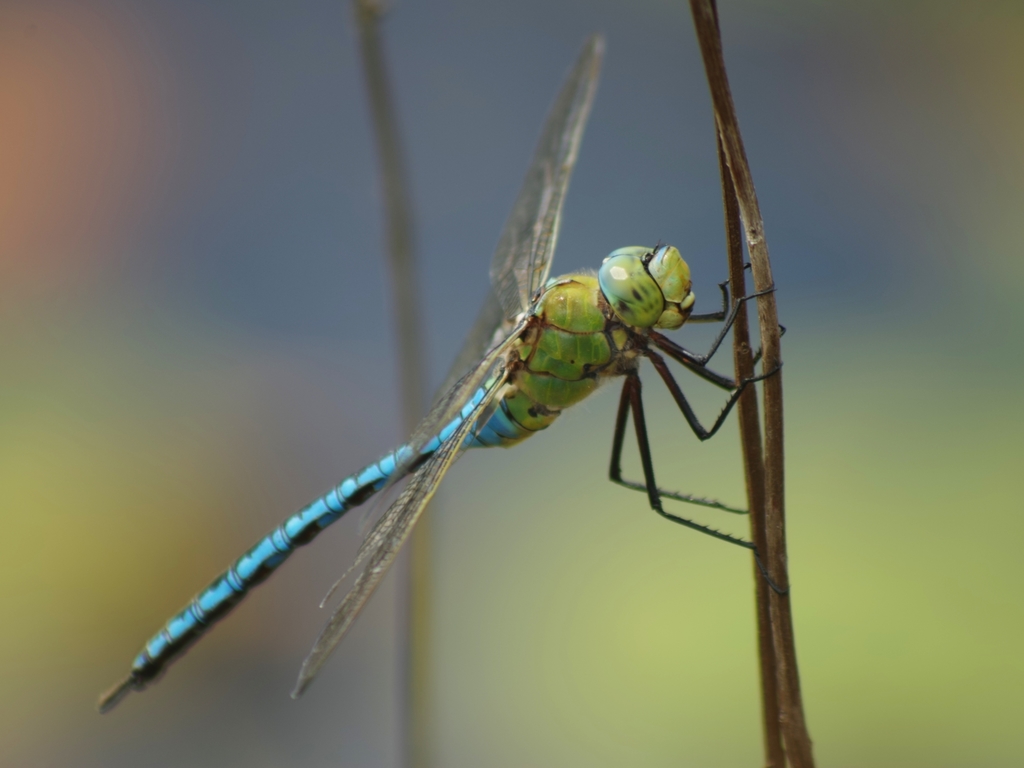
Blue Emperor
Anax imperator
The emperor dragonfly or blue emperor (Anax imperator) is a large species of hawker dragonfly of the family Aeshnidae. It is the largest dragonfly in most of Europe, including the United Kingdom, although exceeded in some areas by other species.
From the article Emperor dragonfly on Wikipedia (CC BY-SA), quoted section by section
Range & habitat
This dragonfly has a wide distribution through Afroeurasia; it is found throughout Africa and through most of Europe, the Arabian Peninsula, and south-western and central Asia. Since the 1990s, its range has expanded in Europe, both northwards and to higher altitudes. For example, the first Scandinavian record was in 1994 in Denmark; in 2002 it was first recorded in Sweden and in 2004 first in Scotland; today it is regular in all three countries. The species' northward expansion has been tied to global warming, and it is among the first odonata to do so.
Wikipedia: “Distribution”
What it does
They frequently fly high up into the sky in search of prey, which includes butterflies, other odonata and tadpoles. If their hunt is successful, they eat their smaller prey while flying. The dragonflies breed in a variety of aquatic habitats from large ponds to dikes and slow-moving rivers, but require a plentiful supply of vegetation in the water. They do sometimes breed in brackish water. The females lay the eggs into plants such as pondweed, and always lay alone. The aquatic larvae are very aggressive and are likely to influence the native species composition of freshwater ecosystems they arrive in. The larvae are also very large–around 46 millimetres (1.8 in). The adult male is highly territorial, and difficult to approach.
Wikipedia: “Behaviour”
Listen
Looking for field recordings…
Where it lives
Recorded sightings
—
geo-referenced records in GBIF, from museums, herbaria and field observers.
Drag the globe to turn it. Dots are where records exist, not a range map; darker means more records.
In the stacks
Searching the stacks…
Every page naming Anax imperator in the Biodiversity Heritage Library →
This page is assembled live from iNaturalist, GBIF, Wikipedia, the Source Library and the Internet Archive. It is not yet part of the hand-edited codex. iNaturalist taxon 94043.