- Animals
- ›Chordates
- ›Vertebrates
- ›Cartilaginous Fishes
- ›Chimaeras
- ›Chimaeras
- ›Shortnose Chimaeras
- ›Hydrolagus
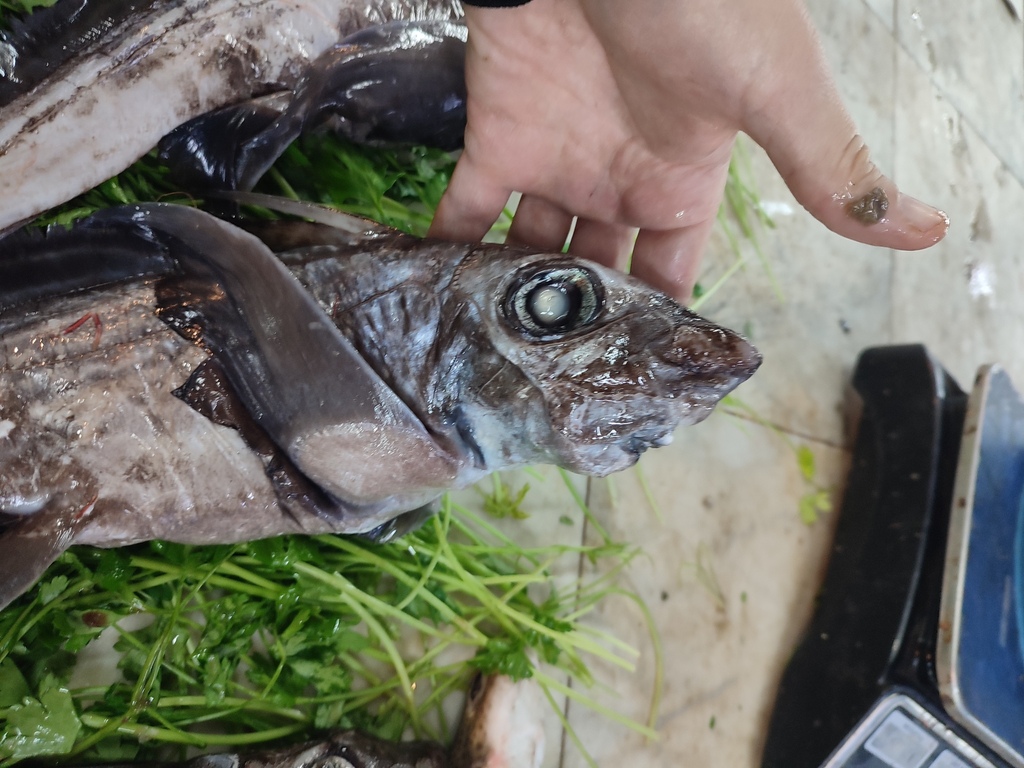
Large-eyed Chimaera
Hydrolagus mirabilis
The large-eyed rabbitfish (Hydrolagus mirabilis) is a species of fish in the family Chimaeridae. It is found in several areas of the Atlantic Ocean and within the Mediterranean Sea.
From the article Large-eyed rabbitfish on Wikipedia (CC BY-SA), quoted section by section
Description
The size of this species ranges from 600–2000 mm, displaying sexual dimorphism where the females are significantly larger than the males. The large pectoral wing like fins on the sides of its body project it through the water and allow for additional lift, whilst the long tapered tail adds to its agility in the water. Members of the family Chimaeridae carry a venomous dorsal fin spine as a defense mechanism to ward off predators. Whilst members of the family have two dorsal fins, it is only the primary one that contains venom. Said fin is not fixed in place, but can instead be lifted up in cases when the fish is threatened. The venom itself is not deadly towards humans, but there have been cases where the spine penetrated deeply enough to require surgery. The eyes of the Hydrolagus mirabilis are approximately 35% of the total length of their head. The gill line of this species has a gill cover known as an operculum, which is able to open and close, and both keeps the respiratory system safe whilst collecting further dissolved oxygen to breathe. There are mixed reports on if this species has an anal fin. …
Range & habitat
There are reported sightings of Hydrolagus mirabilis that stretch from Southern Africa on the coast of Namibia all the way to the far north of Iceland. The most recent accounts come from Syrian waters (500m) within the eastern Mediterranean Sea and the Bay of Biscay between Spain and France. The family Chimaeridae is present worldwide within temperate to tropical waters, below 200m, but prefer to swim within coastal environments. Young members have a tendency to remain at lower depths (1000m) than the older members, who are more focused on inshore mating and migrations.
Wikipedia: “Distribution”
What it does
Adults have migration patterns across coastal plains of continents, where they will find their mate. The species then reproduces uses internal fertilization, when the male uses twin pectoral fins to clasp onto the female during the mating process. The tentaculum (often seen as a white bulge on the head), extends outward to keep the female from straying away. The species is oviparous, where eggs will hatch about 5–10 months after being laid. The egg laying process takes ~18–30 hours, where tendrils hold onto the eggs, dragging them along with the female's movements.
Wikipedia: “Reproduction”
At the table
Members of this family are known to be rather distasteful in a meal, but some have placed value within the oils of the fish for commercial uses. The eggs of similar species have been commonly exploited and abused due to their long (5–10 month) hatching period. The Large Eyed Rabbit Fish was marked as near threatened due to overfishing in previous years in which caused a roughly 50% population loss, but is back to Least Concern Status.
== References ==
Wikipedia: “Uses”
Where it lives
Recorded sightings
—
geo-referenced records in GBIF, from museums, herbaria and field observers.
Drag the globe to turn it. Dots are where records exist, not a range map; darker means more records.
In the stacks
Searching the stacks…
Every page naming Hydrolagus mirabilis in the Biodiversity Heritage Library →
This page is assembled live from iNaturalist, GBIF, Wikipedia, the Source Library and the Internet Archive. It is not yet part of the hand-edited codex. iNaturalist taxon 103037.