- Plants
- ›Vascular Plants
- ›flowering plants
- ›monocots
- ›grasses, sedges, cattails, and allies
- ›grasses
- ›Paniceae, andropogoneae, paspaleae, and allies
- ›bristle, rosette, and barnyard grasses, and allies
- ›Anthephorinae
- ›Digitaria
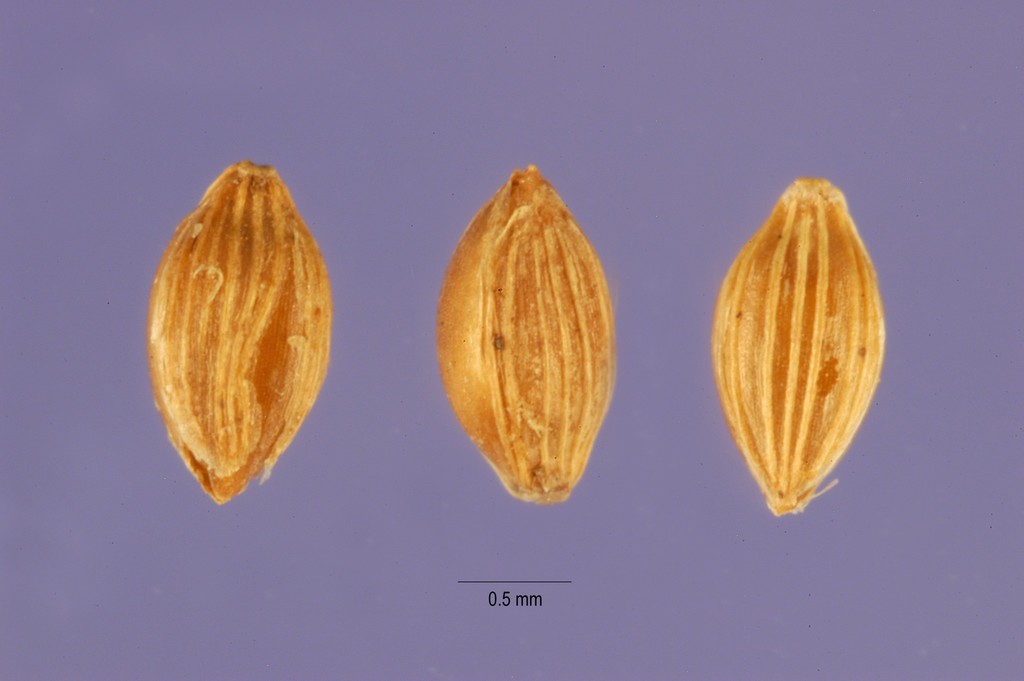
white fonio
Digitaria exilis
Digitaria exilis is a species of grass that is referred to as findi or fundi in areas of Africa such as The Gambia, with the English common names white fonio, fonio millet, hungry rice, and acha rice.
It is the most important of a diverse group of wild and domesticated Digitaria species known as fonio that are harvested in the savannas of West Africa. The grains are very small. It has potential to improve nutrition, boost food security, foster rural development and support sustainable use of the land.
From the article Digitaria exilis on Wikipedia (CC BY-SA), quoted section by section
Description
The fonio is an annual, erect herbaceous plant which reaches stature heights from 30 to 80 centimeters. The ears consist of two to five narrow part ears, which are up to 15 centimeters long. The spikelets comprise a sterile flower and a fertile flower, the latter of which gives rise to the fonio grain. The grain is a caryopsis, which remains surrounded by glumes and husks. Its size is very small, only 1.5 mm (around 2,000 seeds to 1 gram). The colour ranges from white, yellow and purple. Fonio matures faster than all other cereals. Some varieties can already be harvested 42–56 days after sowing. Others ripen more slowly, usually in 165–180 days. The genetic diversity of D. exilis varies from region to region in Africa. For example, not much genetic diversity was detected among the domesticated D. exilis landraces from Mali. In contrast, large levels of genetic diversity were detected among the domesticated D. exilis landraces of the Upper Niger River Basin of West Africa. The many different landraces of D. exilis are affected differently by the various processing methods.
Chemistry. Compared to starches like D. iburua and Eleusine coracana, D. exilis has more branched molecules. This was an important finding because although it has more branched molecules, it has fewer chains than the other starches which is unusual chemically. …
At the table
Digitaria exilis is an important part of cooking in West Africa, traditionally used for porridges and steamed cooked foods. The species is known to have high levels of carbohydrate and protein. These protein levels are seen with D. exilis being rich in essential amino acids such as methionine compared to other cereals such as wheat, rice and maize. These qualities show that D. exilis could be a good food source, and that if the right characters are chosen, it could turn into a useful crop. It can be used to make couscous, bread, and beer. Despite its valuable characteristics and widespread cultivation, fonio has generally received limited research and development attention, which is also why the species is sometimes referred to as an underutilized crop.
Nutrition. Digitaria exilis holds high nutritional value to humans. The nutritional value of hulled fonio is about 1470 kJ and for whitened fonio 1430 kJ per 100 gram. It contains methionine and cysteine, two amino acids that are important to human survival. These two amino acids, however, are lacking in wheat, rice, maize, and other cereal crops. Moving from the amino acid level to the macromolecule level, D. exilis, compared to other cereal crops, has greater protein, carbohydrate, and fiber content. Digitaria exilis has more protein and fiber content than rice. Additionally, D. …
Wikipedia: “Uses”
How it is grown
Fonio is one of the ancient African crops, possibly the oldest West African crop as its cultivation seems to have started about 7,000 years ago. The first references to fonio as food are reported from the mid-14th century. D. exilis was originally derived from the wild species D. longiflora. Significant cultivation is in West Africa from Chad to Cape Verde, south Mali, in western Burkina Faso, eastern Senegal, northern Guinea, north Benin, parts of north central Nigeria such as northern Plateau State, Southern Kaduna, parts of Niger State, Abuja (FCT), Zuru area of Kebbi State, some parts of Nasarawa State and Kogi State, as well as parts of Bauchi State. It is also found in south Niger, where the plant supplies the staple food for several million people. In some regions of Mali, Burkina Faso, Guinea and Nigeria, fonio is the most important or one of the main cereals. White fonio has its main growing region in the highland plateaus of Nigeria, where it is popularly called acha. The second fonio species, iburu or black fonio, is limited to the Jos-Bauchi Plateau in Nigeria and the northern regions of Togo and Benin. Fonio is grown in parts of the Dominican Republic, where it has already brought in 1500 from West Africa, first only grown as a weed, but it is now cultivated again. …
Wikipedia: “Cultivation”
Where it lives
Recorded sightings
—
geo-referenced records in GBIF, from museums, herbaria and field observers.
Drag the globe to turn it. Dots are where records exist, not a range map; darker means more records.
In the stacks
Searching the stacks…
Every page naming Digitaria exilis in the Biodiversity Heritage Library →
This page is assembled live from iNaturalist, GBIF, Wikipedia, the Source Library and the Internet Archive. It is not yet part of the hand-edited codex. iNaturalist taxon 482028.