- Plants
- ›Vascular Plants
- ›flowering plants
- ›Dicots
- ›Mints, Plantains, Olives, and Allies
- ›Acanthus Family
- ›Thunbergioideae
- ›Thunbergieae
- ›Thunbergia
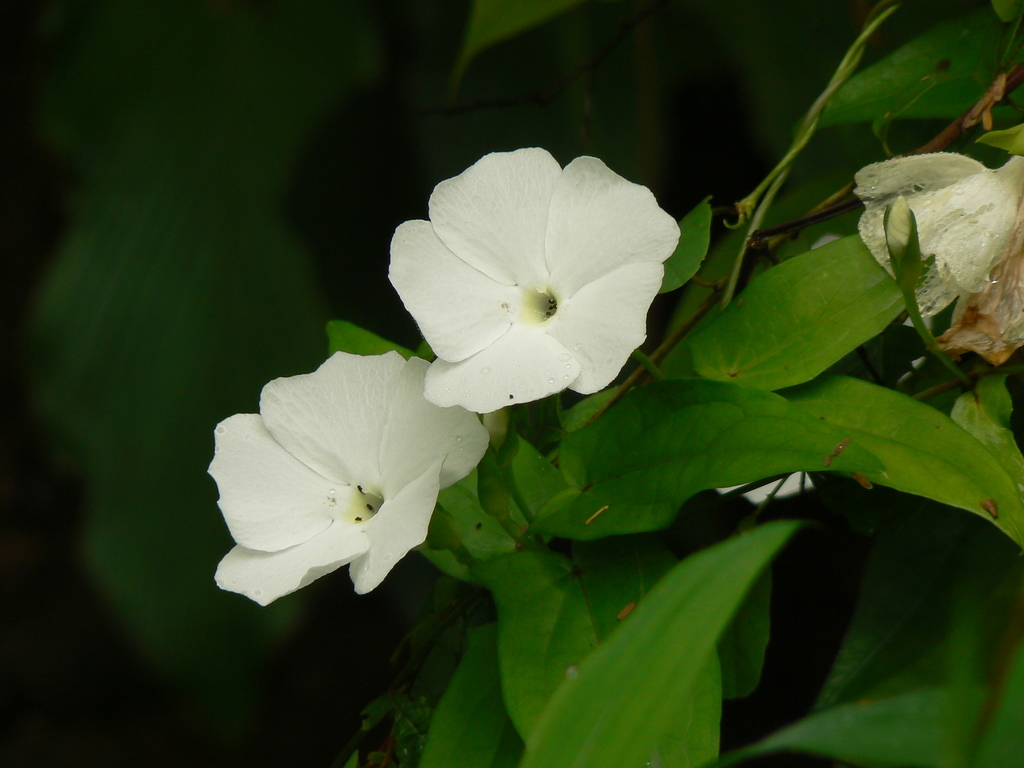
Sweet clockvine
Thunbergia fragrans
Thunbergia fragrans, the whitelady is a perennial climbing twiner in the family Acanthaceae, native to South and Southeast Asia and China.
From the article Thunbergia fragrans on Wikipedia (CC BY-SA), quoted section by section
Range & habitat
It is native to South and Southeast Asia and China. The species is also widely introduced in other tropical and subtropical areas including Florida Hawaii, Australia, New Caledonia, French Polynesia, Caribbean and Indian Ocean islands, southern Africa and Central America. In many places it is considered as an invasive species.
Usage. In Indian Siddha medicine, the species is known as indrapushapa and a paste made out of tender twigs of the is used to combat fever and sometimes applied on cuts and wounds. The leaves are used as a poultice in skin diseases, their juice can also be applied on the head to cure headaches.
== References ==
Wikipedia: “Distribution”
Where it lives
Recorded sightings
—
geo-referenced records in GBIF, from museums, herbaria and field observers.
Drag the globe to turn it. Dots are where records exist, not a range map; darker means more records.
In the stacks
Searching the stacks…
Every page naming Thunbergia fragrans in the Biodiversity Heritage Library →
This page is assembled live from iNaturalist, GBIF, Wikipedia, the Source Library and the Internet Archive. It is not yet part of the hand-edited codex. iNaturalist taxon 169742.