- Plants
- ›Vascular Plants
- ›flowering plants
- ›Dicots
- ›Mallows, Rock Roses, and Allies
- ›rock-rose family
- ›Helianthemum
- ›Helianthemum
- ›Helianthemum
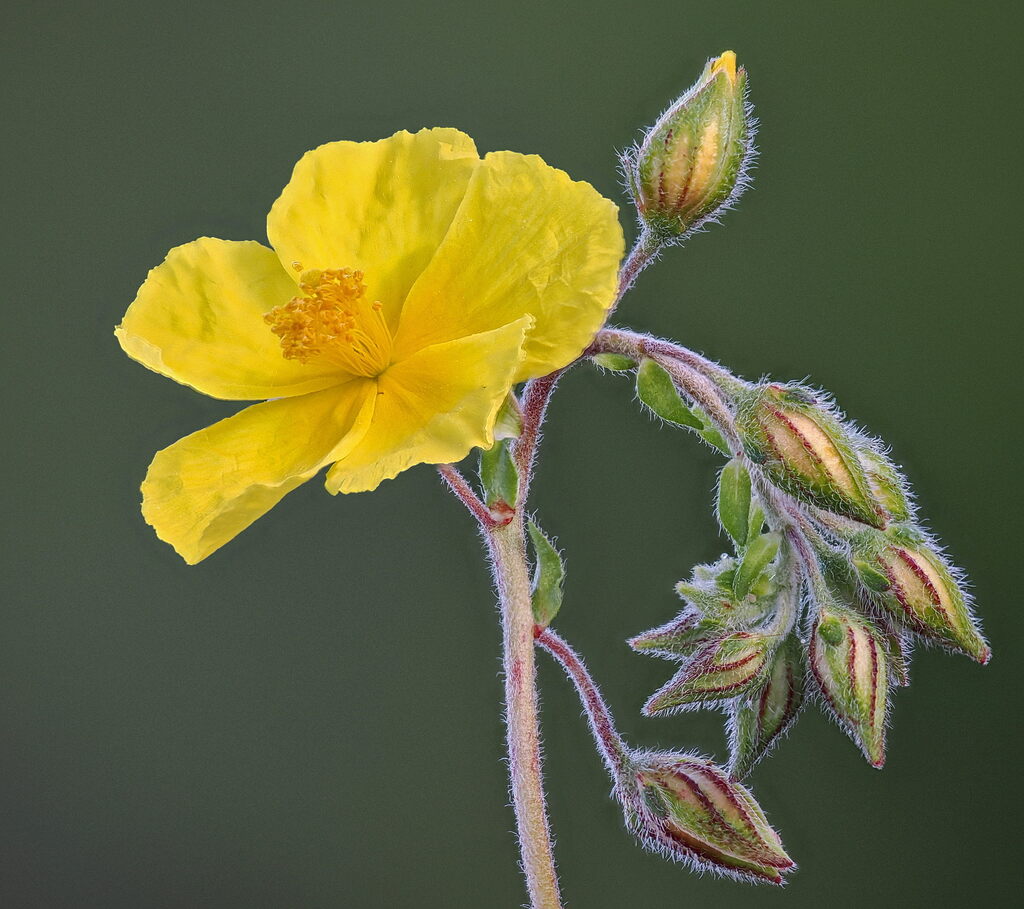
Common Rock-rose
Helianthemum nummularium
Helianthemum nummularium (known as common rock-rose) is a species of rock-rose (Cistaceae), native to most of Europe.
From the article Helianthemum nummularium on Wikipedia (CC BY-SA), quoted section by section
Description
It is an evergreen trailing plant with loose terminal clusters of bright yellow, saucer-shaped flowers. In the flower centre is a tight cluster of orange stamens, which are sensitive to the touch, and spread outwards to reveal the tall stigma in the middle. The plant is common on chalk downs, and occasional in other grasslands, always on dry, base-rich soil. The wild species has yellow flowers, but garden varieties range from white through yellow to deep red. Though the individual blooms are short-lived, the plant produces a mass of flowers through the summer. It needs a dry, sunny place, like a south-facing rockery or meadow. As the Latin name Helianthemum suggests, these are sun-flowers. This is a good pollen source for bees and there are several species of small beetle that feed on the foliage. Common rock-rose is also the food plant for the larvae of several species of moth and butterfly such as the silver-studded blue (Plebejus argus). It flowers from May until July.
Where it lives
Recorded sightings
—
geo-referenced records in GBIF, from museums, herbaria and field observers.
Drag the globe to turn it. Dots are where records exist, not a range map; darker means more records.
In the stacks
Searching the stacks…
Every page naming Helianthemum nummularium in the Biodiversity Heritage Library →
This page is assembled live from iNaturalist, GBIF, Wikipedia, the Source Library and the Internet Archive. It is not yet part of the hand-edited codex. iNaturalist taxon 84278.