 NL·0260
Herbarium of the Nature Library
- Name
- Anas poecilorhyncha
- Family
- Anatidae
- Native to
- Pakistan, India, Sri Lanka, Nepal, Bangladesh and Myanmar
- Habitat
- Wetland, Farmland
On eBird ↗
Indian Spot-billed Duck
Live sightings near you, the range map, bar charts of when it is seen, and Macaulay Library photos and recordings.
Indian spot-billed duck
Anas poecilorhyncha
Also calledSpotbill
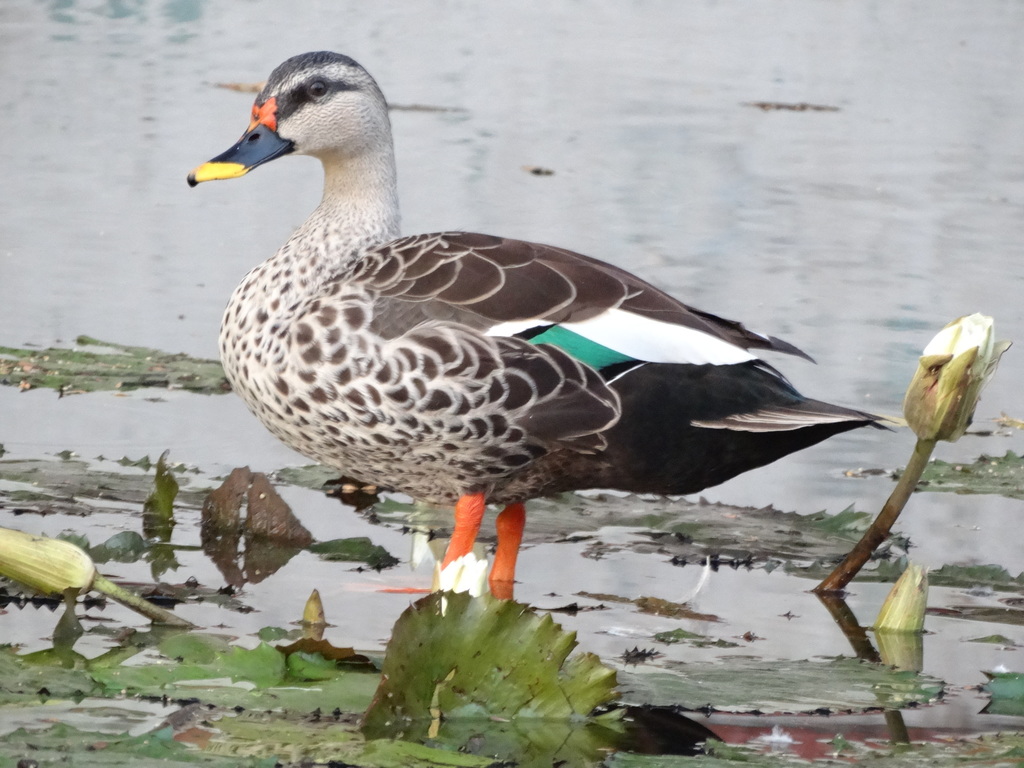
A large, scaly-brown dabbling duck of South Asian wetlands, easily known by the yellow tip of its dark bill and a red spot at the bill's base. It is one of the few ducks resident and breeding across the plains of the subcontinent.
The Indian spot-billed duck is a species of large dabbling duck that is a non-migratory breeding duck throughout freshwater wetlands in the Indian subcontinent. The name is derived from the red spot at the base of the bill that is found in the mainland Indian population. When in water it can be recognized from a long distance by the white tertials that form a stripe on the side, and in flight it is distinguished by the green speculum with a broad white band at the base. This species and the eastern spot-billed duck were formerly considered conspecific, together called the spot-billed duck. Wikipedia
What it can do
- iBreeds in the monsoon in small, vegetated wetlands
- iiUpends to feed on submerged plants
- iiiFeeds at night in rice fields
In the field
Field marks
- aLarge brown duck with a heavily scaled, spotted body
- bDark bill with a bright yellow tip
- cRed spot on the face at the base of the bill (on the Indian form)
- dPale head with a dark cap and eye-stripe; green speculum bordered white; white tertials
- Voice
- Female a loud quacking similar to a Mallard; male a softer, raspy note
- Not to be confused with
- Eastern spot-billed duck (East Asia) lacks the red loral spot and has darker body plumage; female Mallard has an orange-and-dark bill and no yellow tip.
- Where to see it
- Keoladeo National Park; Haleji and Keenjhar lakes in Sindh; wetlands of Sri Lanka
- When
- Resident year-round
Listen
Looking for field recordings…
Life & habits
- Diet
- Aquatic plants, seeds, grain and invertebrates
- Habitat
- Freshwater lakes, marshes, village ponds and rice fields
- Size
- About 55–63 cm long
Usually in pairs or small groups; ducklings are hidden in dense reeds by the female.
Where it lives
Recorded sightings
—
geo-referenced records in GBIF, from museums, herbaria and field observers.
Native range
Pakistan, India, Sri Lanka, Nepal, Bangladesh and Myanmar
Drag the globe to turn it. Dots are where records exist, not a range map; darker means more records.
In the stacks
Searching the stacks…
Every page naming Anas poecilorhyncha in the Biodiversity Heritage Library →
Marginalia
Curiosity
The red spot near the bill base is the main field mark separating it from its close East Asian relative, the Eastern spot-billed duck.
Kinship
Photographs: iNaturalist contributors under the licences shown. Records: GBIF.org. Historical plates: Source Library (CC BY-SA 4.0; originals public domain). Summary text: Nature Library editors and Wikipedia (CC BY-SA). Medicinal and edibility notes are historical and educational, not advice. iNaturalist taxon 6925.