 NL·0261
Herbarium of the Nature Library
- Name
- Cygnus atratus
- Family
- Anatidae
- Native to
- Southern and eastern Australia and Tasmania; introduced to New Zealand
- Habitat
- Wetland, Lakes and rivers, Estuary
On eBird ↗
Black Swan
Live sightings near you, the range map, bar charts of when it is seen, and Macaulay Library photos and recordings.
Black swan
Cygnus atratus
Also calledMaali (Noongar) · Kakīānau (Māori) · Cygne noir (French)
A sooty-black swan with a scarlet bill and white flight feathers, native to Australia. To Europeans it was proverbial for an impossible thing until Dutch sailors saw it on Western Australia's Swan River in 1697.
The black swan is a large waterbird, a species of swan which breeds mainly in the southeast and southwest regions of Australia. Within Australia, the black swan is nomadic, with erratic migration patterns dependent on climatic conditions. It is a large bird with black plumage and a red bill. It is a monogamous breeder, with both partners sharing incubation and cygnet-rearing duties. Wikipedia
What it can do
- iNomadic: moves long distances, often at night, to reach newly filled wetlands
- iiCan breed at almost any time of year when water conditions suit
- iiiMoults all its flight feathers at once and is briefly flightless
In the field
Field marks
- aAll-black body with curled, ruffled wing feathers on the back
- bBright red bill with a white band near the tip
- cWhite primary and secondary flight feathers, flashing in flight
- dVery long neck held in an S-curve
- Voice
- A high, musical, bugling 'whoo-ah' given on the water and in flight; hisses when threatened.
- Not to be confused with
- Mute swan (introduced in Western Australia and elsewhere) is white with an orange bill. No other black-bodied bird of its size has a red bill and long neck.
- Where to see it
- Swan River and Herdsman Lake (Perth), Coorong (South Australia), Lake Ellesmere / Te Waihora (New Zealand), Albert Park Lake (Melbourne)
- When
- Resident or nomadic
Listen
Looking for field recordings…
Life & habits
- Diet
- Aquatic plants, algae and pasture grasses
- Habitat
- Lakes, swamps, estuaries and coastal lagoons, fresh to brackish
- Size
- 110–142 cm; wingspan 1.6–2 m; 4–9 kg
- Lifespan
- Commonly over 20 years in the wild; up to about 40 in captivity
Pairs build huge floating or reed-island nests and share incubation; the downy grey cygnets often ride on a parent's back.
Where it lives
Recorded sightings
—
geo-referenced records in GBIF, from museums, herbaria and field observers.
Native range
Southern and eastern Australia and Tasmania; introduced to New Zealand
Drag the globe to turn it. Dots are where records exist, not a range map; darker means more records.
In the stacks
Searching the stacks…
Every page naming Cygnus atratus in the Biodiversity Heritage Library →
Marginalia
The Roman poet Juvenal called a perfect wife 'a rare bird in the lands, very like a black swan', and the phrase stood for the impossible until Willem de Vlamingh's crew saw black swans in 1697. It is the state emblem of Western Australia.
Curiosity
It appears on the flag and coat of arms of Western Australia, whose capital stands on the Swan River named after it.
Kinship
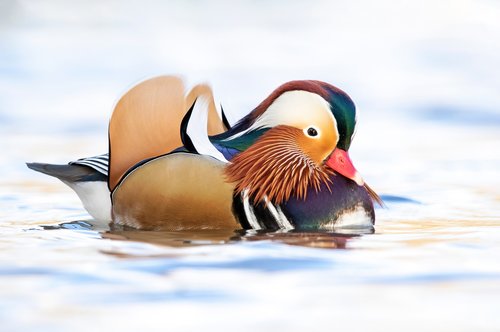
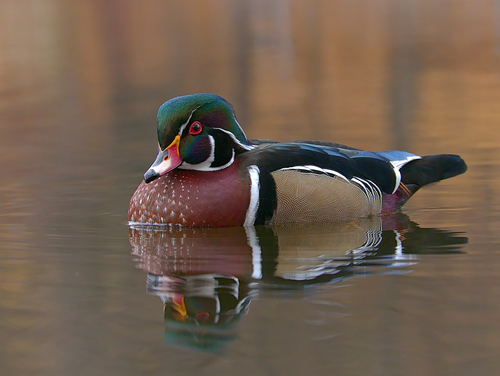
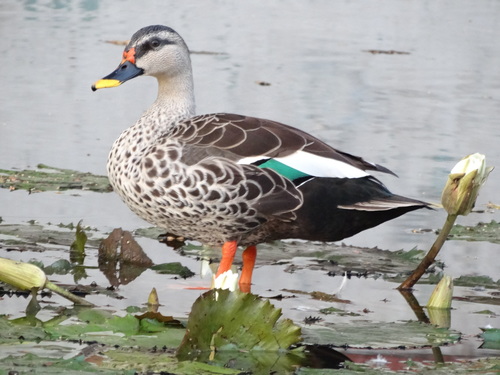
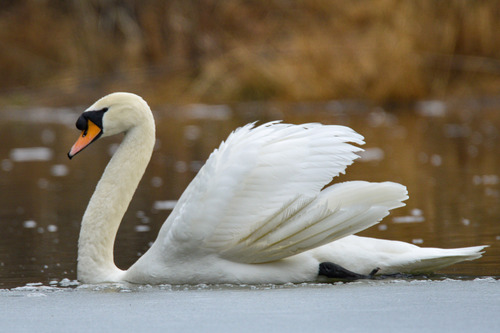
Photographs: iNaturalist contributors under the licences shown. Records: GBIF.org. Historical plates: Source Library (CC BY-SA 4.0; originals public domain). Summary text: Nature Library editors and Wikipedia (CC BY-SA). Medicinal and edibility notes are historical and educational, not advice. iNaturalist taxon 6914.