 NL·0558
Herbarium of the Nature Library
- Name
- Acryllium vulturinum
- Family
- Numididae
- Native to
- Dry north-eastern Africa: Ethiopia, Somalia, Kenya and north-eastern Tanzania
- Habitat
- Dry thornbush, Semi-desert scrub, Savanna
On eBird ↗
Vulturine Guineafowl
Live sightings near you, the range map, bar charts of when it is seen, and Macaulay Library photos and recordings.
Vulturine guineafowl
Acryllium vulturinum
Also calledPintade vulturine (French)
The largest guineafowl, with a vulture-like bare head and long cobalt-and-white hackle feathers. Researchers found that it lives in a multilevel society, a social structure once thought limited to large-brained mammals.
The vulturine guinea fowl is the largest extant species of guinea fowl. Systematically, it is only distantly related to other guinea fowl genera. Its closest living relative, the white breasted guinea fowl, Agelastes meleagrides inhabit primary forests in Central Africa. It is a member of the bird family Numididae, and is the only member of the genus Acryllium. It is a resident breeder in northeast Africa, from southern Ethiopia and Somalia through Kenya and just into northern Tanzania. Wikipedia
What it can do
- iForms stable groups that associate in a structured multilevel society
- iiCan survive with little drinking water, getting moisture from its food
- iiiGroup decisions about direction are influenced by many members rather than only dominants
In the field
Field marks
- aBare blue-grey head with a chestnut nape patch
- bLong cobalt-blue, white and black striped hackles over the neck and back
- cCobalt-blue breast
- dLong tail and slender build
- eRed eye
- Voice
- Harsh, chinking 'chink-chink-chink' alarms and loud scolding chatter.
- Not to be confused with
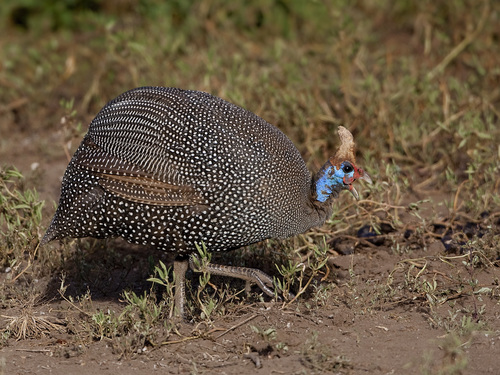
- Helmeted guineafowl is dumpier, with a bony casque and evenly spotted grey plumage, and lacks the striped hackles and blue breast.
- Where to see it
- Samburu, Buffalo Springs and Shaba (Kenya), Tsavo East, Meru, Awash (Ethiopia)
- When
- Resident year-round
Listen
Looking for field recordings…
Life & habits
- Diet
- Seeds, fruit, leaves and invertebrates
- Habitat
- Dry bush and grassland, often along riverine woodland
- Size
- About 60–72 cm; 1–1.6 kg
Groups of 15–60 birds roost together in trees and merge into larger supergroups at certain times.
Where it lives
Recorded sightings
—
geo-referenced records in GBIF, from museums, herbaria and field observers.
Native range
Dry north-eastern Africa: Ethiopia, Somalia, Kenya and north-eastern Tanzania
Drag the globe to turn it. Dots are where records exist, not a range map; darker means more records.
In the old herbals & bestiaries
No plate in the Source Library names this exact species, so these show its closest relatives as the old naturalists drew them: same genus, or the same kind of animal. Click a plate to read the page it came from, with translation.

In the stacks
Searching the stacks…
Every page naming Acryllium vulturinum in the Biodiversity Heritage Library →
Marginalia
Research at Mpala Research Centre in Kenya, published in 2019, described the first known multilevel society in a bird, comparing vulturine guineafowl to primates and elephants.
Curiosity
Its 'vulture' head lacks feathers, a probable adaptation for losing heat in hot dry country.
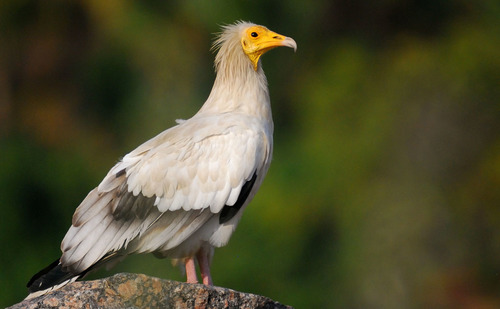
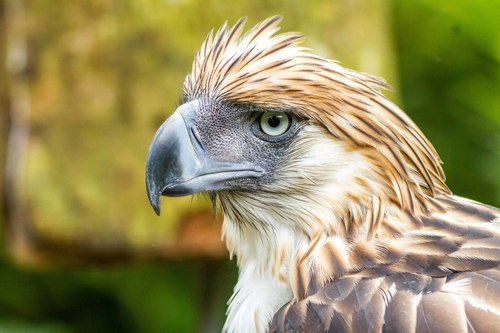
Kinship



Photographs: iNaturalist contributors under the licences shown. Records: GBIF.org. Historical plates: Source Library (CC BY-SA 4.0; originals public domain). Summary text: Nature Library editors and Wikipedia (CC BY-SA). Medicinal and edibility notes are historical and educational, not advice. iNaturalist taxon 1449.