 NL·0242
Herbarium of the Nature Library
- Name
- Anax junius
- Family
- Aeshnidae
- Native to
- North America from Canada to Central America and the Caribbean; also Hawaii and parts of East Asia
- Habitat
- Ponds, Marshes, Meadows
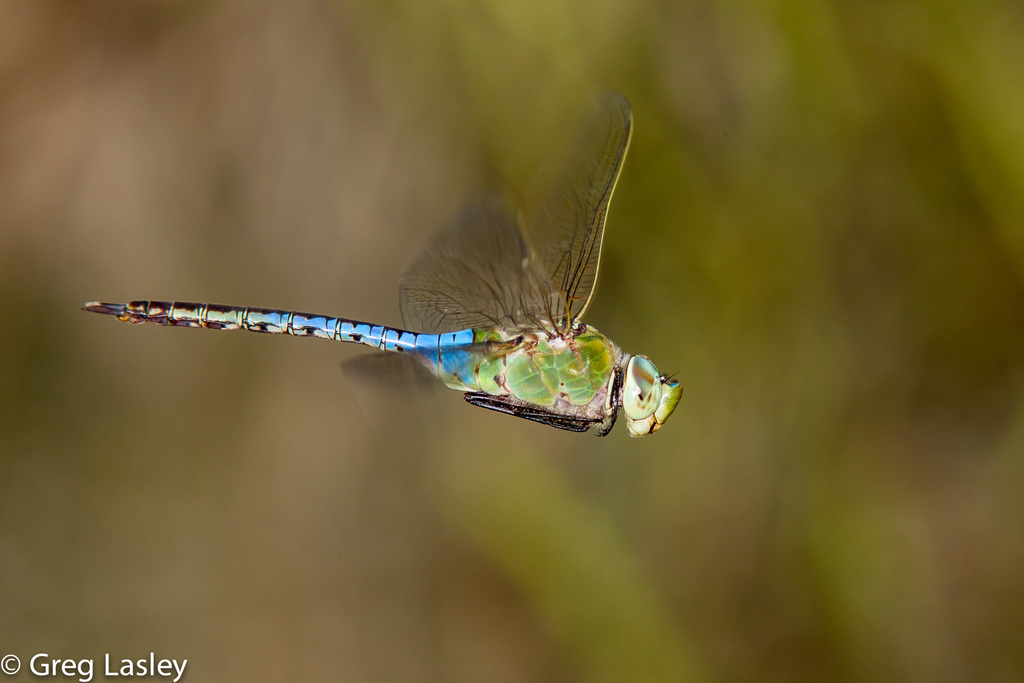
Common green darner
Anax junius
Also calledDarner (English) · Libélula verde (Spanish) · Aeschne précoce (French) · Mosquito hawk (American folk)
A large dragonfly of North America whose populations make a multigenerational migration, revealed in 2018 by chemical markers in its wings. Adults hunt other insects in the air with very high success.
The green darner or common green darner, after its resemblance to a darning needle, is a species of dragonfly in the family Aeshnidae. One of the most common and abundant species throughout North America, it also ranges south to Panama. It is well known for its great migration distance from the northern United States south into Texas and Mexico. It also occurs in the Caribbean, Tahiti, and Asia from Japan to mainland China. It is the official insect for the state of Washington in the United States. Wikipedia
What it can do
- iMigrates south each autumn and north each spring over three generations
- iiCaptures flying prey with a high success rate, intercepting rather than chasing
- iiiHas nearly 360° vision from compound eyes
- ivAquatic nymphs hunt with a hinged, extendable lower lip
In the field
Field marks
- aLarge darner with a bright green thorax
- bMales have a blue abdomen; females and young males greenish to purplish-brown
- cA dark 'bullseye' spot on top of the face in front of the eyes
- dPatrols ponds on long, steady beats
- Not to be confused with
- Comet darner (Anax longipes) has a bright red abdomen in males and no bullseye. Giant darner (A. walsinghami) is larger and longer-bodied. Other darners (Aeshna) have striped thoraxes.
- Where to see it
- Ponds and lakes across North America; spectacular autumn migration along coasts, e.g. Cape May Point, New Jersey
- When
- Resident broods breed in summer; migrants arrive in the north in spring and fly south Aug–Oct
Listen
Looking for field recordings…
Life & habits
- Diet
- Flying insects; nymphs eat aquatic insects, tadpoles and small fish
- Habitat
- Ponds, lakes and slow streams
- Size
- Length ~7–8 cm; wingspan up to 10 cm
- Lifespan
- Up to about a year, mostly as a nymph
Pairs often fly in tandem while the female lays eggs into plant stems underwater.
Where it lives
Recorded sightings
—
geo-referenced records in GBIF, from museums, herbaria and field observers.
Native range
North America from Canada to Central America and the Caribbean; also Hawaii and parts of East Asia
Drag the globe to turn it. Dots are where records exist, not a range map; darker means more records.
In the stacks
Searching the stacks…
Every page naming Anax junius in the Biodiversity Heritage Library →
Marginalia
It is the state insect of Washington. Hydrogen isotopes in its wings, studied in 2018, revealed a three-generation annual cycle from Canada to Mexico and back.
Curiosity
Some were fitted with tiny radio transmitters and followed by small aircraft as they migrated.
Kinship





Fact-checked: 1 correction made to this sheet. Photographs: iNaturalist contributors under the licences shown. Records: GBIF.org. Historical plates: Source Library (CC BY-SA 4.0; originals public domain). Summary text: Nature Library editors and Wikipedia (CC BY-SA). Medicinal and edibility notes are historical and educational, not advice. iNaturalist taxon 67731.