 NL·0272
Herbarium of the Nature Library
- Name
- Architeuthis dux
- Family
- Architeuthidae
- Native to
- Deep waters of all oceans; most records from Newfoundland, Norway, New Zealand, South Africa, Japan and the Bay of Biscay
- Habitat
- Deep sea, Continental slope
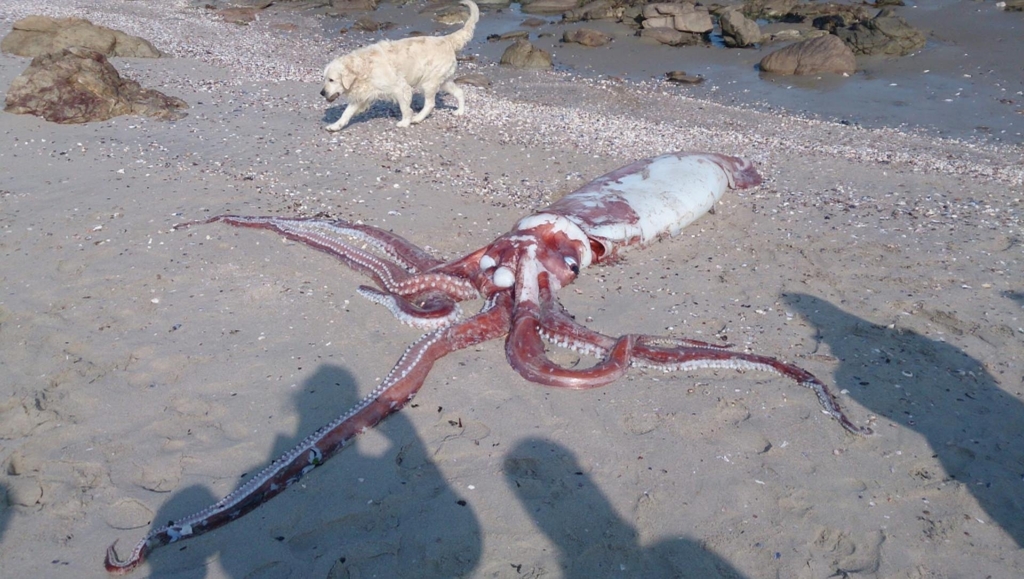
Giant squid
Architeuthis dux
Also calledDaiōika (Japanese) · Dàwáng wūzéi 大王乌贼 (Chinese) · Calamar gigante (Spanish) · Kraken (Norwegian legend)
A deep-sea squid that can reach about 12–13 m including its long feeding tentacles, almost certainly the source of the kraken legend. It was not photographed alive in its own habitat until 2004.
The giant squid is a species of deep-ocean dwelling squid in the family Architeuthidae. It can grow to a tremendous size, offering an example of abyssal gigantism; recent estimates put the maximum body size at around 5 m (16 ft) for females, with males slightly shorter, from the posterior fins to the tip of its long arms. This makes it longer than the colossal squid at an estimated 4.2 m (14 ft), but substantially lighter, as it is less robust and its arms make up much of the length. The mantle of the giant squid is about 2 m long, and the feeding tentacles of the giant squid, concealed in life, are 10 m (33 ft). Claims of specimens measuring 20 m (66 ft) or more have not been scientifically documented. Wikipedia
What it can do
- iHas eyes up to ~27 cm across, the largest in the animal kingdom alongside the colossal squid's
- iiGrips prey with hundreds of suckers lined with toothed rings
- iiiStays buoyant using ammonium-rich tissues lighter than seawater
- ivSurvives as a staple prey of sperm whales, which bear sucker scars from fighting them
In the field
Field marks
- aHuge squid with eight arms and two very long feeding tentacles
- bEyes as large as dinner plates
- cSmall fins
- dRed-brown skin
- Not to be confused with
- Colossal squid (Antarctic) is heavier with hooks on its suckers.
Life & habits
- Diet
- Carnivore: deep-sea fish and other squid
- Habitat
- Mid-depths, roughly 300–1,000 m
- Size
- Females up to ~12–13 m total length, ~275 kg; males smaller
- Lifespan
- Probably about 5 years or less
Its vast eyes are thought to help it spot the glow that sperm whales stir up in bioluminescent plankton from over 100 m away.
Where it lives
Recorded sightings
—
geo-referenced records in GBIF, from museums, herbaria and field observers.
Native range
Deep waters of all oceans; most records from Newfoundland, Norway, New Zealand, South Africa, Japan and the Bay of Biscay
Drag the globe to turn it. Dots are where records exist, not a range map; darker means more records.
In the old herbals & bestiaries
No plate in the Source Library names this exact species, so these show its closest relatives as the old naturalists drew them: same genus, or the same kind of animal. Click a plate to read the page it came from, with translation.

Vlyssis Aldrovandi Philosophi Ac Medici Bononiensis Historiam Naturalem in Gymnasio ibidem olim profitentis De Reliquis Animalibus exanguibus, utpote De Mollibus, De Crustaceis, De Testaceis & De Zoophytis Libri Quatuor Post mortem eius editi
Relative · Aldrovandi, Ulisse · 1623 · p.16

Hokusai Manga (北斎漫画), Vol. 1
Relative · Katsushika Hokusai · 1814 · p.23

History of Animals, Book II: On Oviparous Quadrupeds
Relative · Conrad Gessner · 1586 · p.556

Books on Marine Fishes
Relative · Guillaume Rondelet · 1554 · p.540

Books on Marine Fishes
Relative · Guillaume Rondelet · 1554 · p.529

History of Animals, Book II: On Oviparous Quadrupeds
Relative · Conrad Gessner · 1586 · p.559
In the stacks
Searching the stacks…
Every page naming Architeuthis dux in the Biodiversity Heritage Library →
Marginalia
Bishop Erik Pontoppidan's Natural History of Norway (1752–53) described the kraken, a sea monster big enough to be mistaken for an island. Japetus Steenstrup named the genus in 1857 from a beak washed ashore in Denmark, and Jules Verne used it in Twenty Thousand Leagues Under the Seas.
Curiosity
Its doughnut-shaped brain surrounds the oesophagus, so swallowing large food could damage it; it cuts food into small pieces with its beak.
Kinship




Photographs: iNaturalist contributors under the licences shown. Records: GBIF.org. Historical plates: Source Library (CC BY-SA 4.0; originals public domain). Summary text: Nature Library editors and Wikipedia (CC BY-SA). Medicinal and edibility notes are historical and educational, not advice. iNaturalist taxon 253698.