 NL·0012
Herbarium of the Nature Library
- Name
- Conium maculatum
- Family
- Apiaceae
- Native to
- Europe, North Africa and western Asia; invasive in the Americas, Australia and New Zealand
- Habitat
- Disturbed ground, Riverbanks, Field edges and roadsides
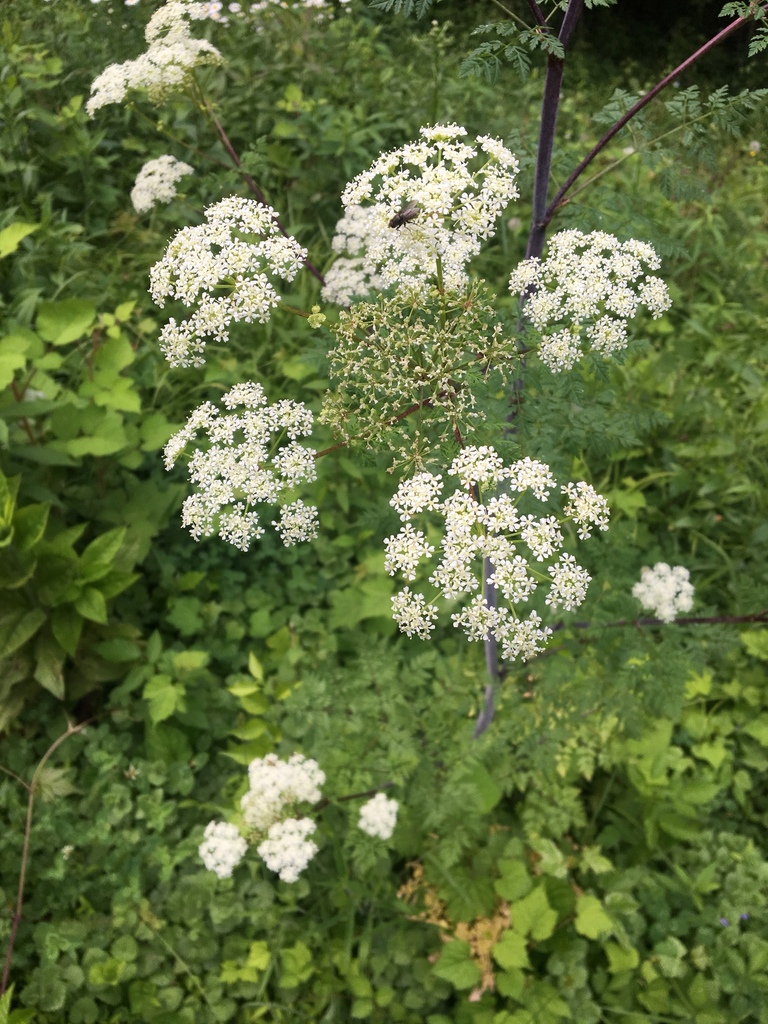
Poison hemlock
Conium maculatum
Also calledKoneion (Ancient Greek) · Cicuta (Latin, classical) · Ciguë (French) · Gefleckter Schierling (German) · Cicuta mayor (Spanish) · Shawkaran (Arabic/Persian)
The poison that killed Socrates. Poison hemlock looks like a tall, lacy wild carrot or parsley, but every part contains coniine and related alkaloids that paralyse muscles from the legs upward, ending in respiratory failure while the mind stays clear.
Conium maculatum, commonly known as hemlock or poison hemlock, is a highly poisonous flowering plant and a nitrophile weed species in the carrot family Apiaceae. Wikipedia
What it can do
- iMakes piperidine alkaloids (coniine, γ-coniceine) that block nicotinic receptors at the nerve–muscle junction
- iiGrows as a biennial to 2–3 m tall, forming dense stands along ditches
- iiiGives off a musty, mouse-like smell when crushed, from its alkaloids
- ivConiine was the first alkaloid ever synthesised in a lab (by Albert Ladenburg, 1886)
At the table
All parts are deadly, especially seeds and roots; leaves are most toxic in spring before flowering. Symptoms begin 30 minutes to a few hours after eating: burning mouth, salivation, dilated pupils, tremors, then ascending muscle paralysis, slowing heart and death from respiratory failure. Lookalikes: wild carrot/Queen Anne's lace (hairy stem, no purple blotches, carrot smell), parsley, chervil, fennel, cow parsley and wild parsnip. Key signs of hemlock: smooth hollow stem with purple-red blotches and a mousy smell. Even handling can irritate; wash after contact.
In the medicine cabinet
| Tradition | Use |
|---|---|
| Greco-Roman and medieval European medicine | Applied externally for tumours and swellings and as a sedative; used in Athens as a method of execution |
Weight of evidence
Traditional. Long historical use; little or no modern clinical evidence.
Active compounds
coniine, γ-coniceine, N-methylconiine, conhydrine
Fruit & seed


Fruit
Schizocarp
Ripens: Summer–autumn
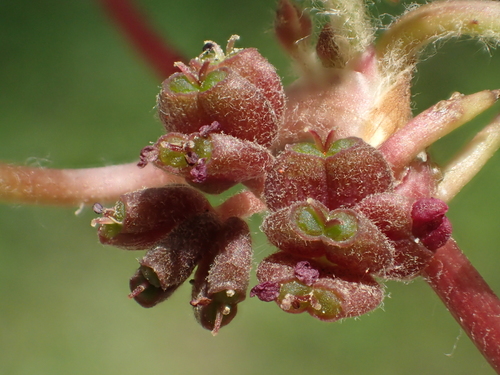
Small, grey-brown ribbed fruits with wavy ridges, in umbels.


Seed
~2–3 mm
Ridged mericarps, ~2–3 mm
- Dispersal
- Wind, water, animals and machinery
- Germination
- Not for cultivation; controlled as a noxious weed in many places
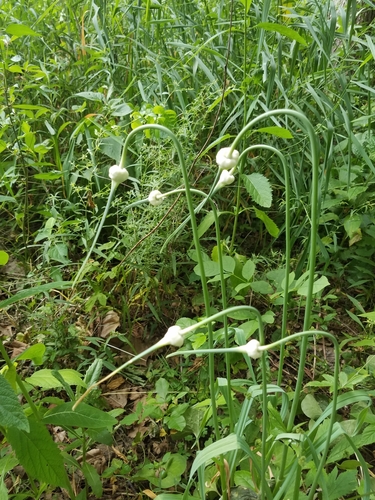
Photographs from Wikimedia Commons under open licences; hover for the photographer, click for the file.
Where it lives
Recorded sightings
—
geo-referenced records in GBIF, from museums, herbaria and field observers.
Native range
Europe, North Africa and western Asia; invasive in the Americas, Australia and New Zealand
Drag the globe to turn it. Dots are where records exist, not a range map; darker means more records.
In the old herbals & bestiaries
Woodcuts and engravings matched from the Source Library’s scanned books by name. Plates marked “relative” show a close kin rather than this exact species. Click a plate to read the page it came from, with translation.

A New Distribution of Umbelliferous Plants
Robert Morison · 1672 · p.135

On the Virtues of Herbs
Macer Floridus · 1150 · p.283

Ortus sanitatis
1491 · p.110

Garden of Health
1507 · p.90

Notable Commentaries on the History of Plants
Leonhart Fuchs · 1542 · p.440

Notable Commentaries on the History of Plants
Leonhart Fuchs · 1549 · p.438

On Medical Materials in Six Books
Dioscorides · 1550 · p.574

On the Names of Plants
Hieronymus Bock (Tragus) · 1552 · p.546

De medicinali materia libri sex
Dioscorides · 1552 · p.582

Commentaries on the Six Books of Dioscorides
Pietro Andrea Mattioli · 1560 · p.701
In the stacks
Searching the stacks…
Every page naming Conium maculatum in the Biodiversity Heritage Library →
Marginalia
Plato's Phaedo describes Socrates' death in 399 BCE after drinking hemlock, the numbness creeping upward from his feet. Hemlock was named among the ingredients of the witches' brew in Macbeth: 'Root of hemlock digg'd i' the dark'.
Curiosity
Migrating quail that eat hemlock seeds have reportedly poisoned people who ate the birds, a syndrome called coturnism.
Kinship
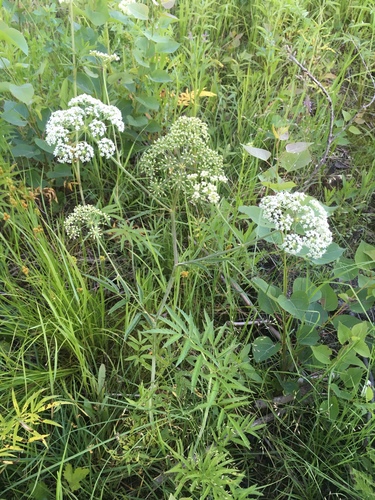
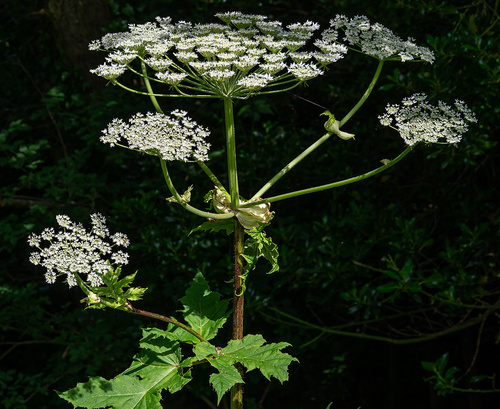


Photographs: iNaturalist contributors under the licences shown. Records: GBIF.org. Historical plates: Source Library (CC BY-SA 4.0; originals public domain). Summary text: Nature Library editors and Wikipedia (CC BY-SA). Medicinal and edibility notes are historical and educational, not advice. iNaturalist taxon 52998.