 NL·0634
Herbarium of the Nature Library
- Name
- Hippoglossus hippoglossus
- Family
- Pleuronectidae
- Native to
- North Atlantic from Virginia to Greenland and from the Bay of Biscay to the Barents Sea
- Habitat
- Continental shelf, Cold temperate seas
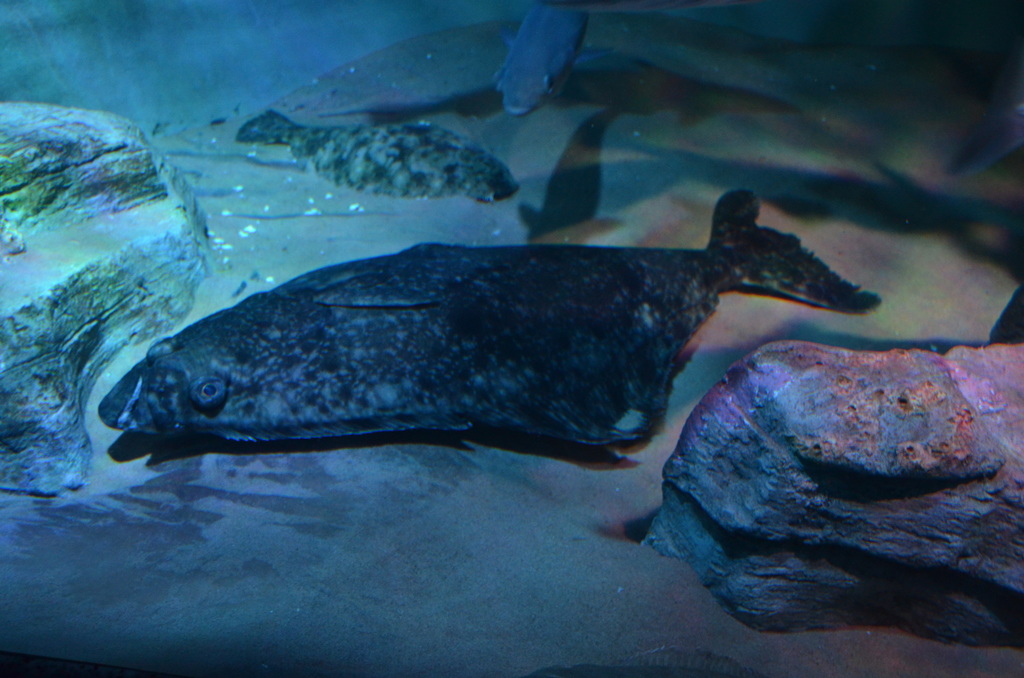
Atlantic halibut
Hippoglossus hippoglossus
Also calledKveite (Norwegian) · Flétan (French) · Heilbot (Dutch) · Lúða (Icelandic) · Fletán (Spanish)
The world's largest flatfish, a right-eyed giant that can grow longer than a person. It starts life as a normal symmetrical larva, then one eye migrates across its head as it settles to the seabed.
The Atlantic halibut is a flatfish of the family Pleuronectidae. They are demersal fish living on or near sand, gravel or clay bottoms at depths of between 50 and 2,000 m. The halibut is among the largest teleost (bony) fish in the world, and is a threatened species owing to a slow rate of growth and overfishing. Halibut are strong swimmers and are able to migrate long distances. Halibut size is not age-specific, but rather tends to follow a cycle related to halibut abundance. Wikipedia
What it can do
- iDuring metamorphosis the left eye migrates over the head to the right side
- iiSwims actively in midwater to chase fish, unlike most flatfish
- iiiFemales can reach 50 years and produce millions of eggs
In the field
Field marks
- aDiamond-shaped, thick flatfish with both eyes on the right side
- bLarge mouth reaching to below the eye
- cUniform dark olive-brown upper side, white underside
- dConcave (crescent) tail
- eLateral line arches strongly over the pectoral fin
- Not to be confused with
- Greenland halibut (Reinhardtius hippoglossoides) has one eye on the edge of the head and a dark underside; Pacific halibut (H. stenolepis) lives in the Pacific.
- Where to see it
- Norwegian coast (Lofoten, Saltstraumen), Iceland, Gulf of Maine, Nova Scotia
- When
- Resident; nearshore in summer
Life & habits
- Diet
- Cod, haddock, herring, sand eels, crabs
- Habitat
- Sand, gravel and clay bottoms at 50–2,000 m
- Size
- Up to about 2.5–3 m and 320 kg
- Lifespan
- Up to about 50 years
Migrates to deep, warm slope waters to spawn in winter and spring.
Where it lives
Recorded sightings
—
geo-referenced records in GBIF, from museums, herbaria and field observers.
Native range
North Atlantic from Virginia to Greenland and from the Bay of Biscay to the Barents Sea
Drag the globe to turn it. Dots are where records exist, not a range map; darker means more records.
In the old herbals & bestiaries
Woodcuts and engravings matched from the Source Library’s scanned books by name. Plates marked “relative” show a close kin rather than this exact species. Click a plate to read the page it came from, with translation.


In the stacks
Searching the stacks…
Every page naming Hippoglossus hippoglossus in the Biodiversity Heritage Library →
Marginalia
Its English name comes from 'haly butte', the 'holy flatfish' eaten on Christian holy days in medieval England.
Curiosity
Halibut was so overfished that the IUCN listed it Endangered in 1996; its 2021 reassessment improved to Near Threatened.
Kinship
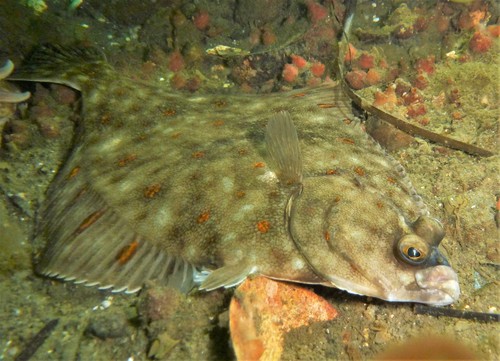


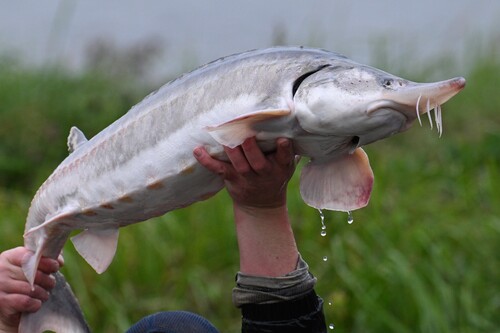

Photographs: iNaturalist contributors under the licences shown. Records: GBIF.org. Historical plates: Source Library (CC BY-SA 4.0; originals public domain). Summary text: Nature Library editors and Wikipedia (CC BY-SA). Medicinal and edibility notes are historical and educational, not advice. iNaturalist taxon 82349.