 NL·0534
Herbarium of the Nature Library
- Name
- Menura novaehollandiae
- Family
- Menuridae
- Native to
- South-eastern Australia; introduced to Tasmania
- Habitat
- Temperate rainforest, Eucalyptus forest
On eBird ↗
Superb Lyrebird
Live sightings near you, the range map, bar charts of when it is seen, and Macaulay Library photos and recordings.
Superb lyrebird
Menura novaehollandiae
Also calledBuln buln (Woiwurrung) · Lyrebird (English) · Ménure superbe (French)
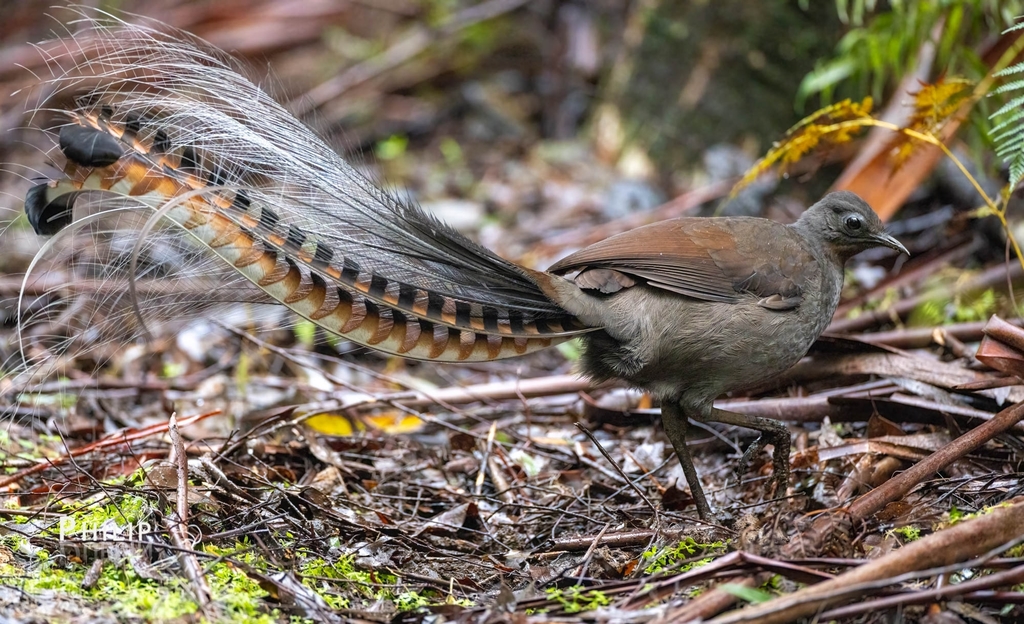
A pheasant-sized songbird of south-eastern Australia and one of the greatest vocal mimics on Earth. Males copy the calls of dozens of other species, and occasionally human-made sounds.
The superb lyrebird is an Australian passerine songbird, one of two species from the family Menuridae, with the other being the much rarer Albert's lyrebird. One of the world's largest songbirds, the superb lyrebird is renowned for its elaborate tail and courtship displays, and for its excellent mimicry. The species is endemic to Australia and is found in forest in the southeast of the country. According to David Attenborough, the superb lyrebird displays one of the most sophisticated voice skills within the animal kingdom—"the most elaborate, the most complex, and the most beautiful". Wikipedia
What it can do
- iMimics the calls of many other birds with near-perfect accuracy
- iiHas been recorded imitating camera shutters, chainsaws and car alarms
- iiiMales choreograph songs to specific dance movements
- ivRakes enormous volumes of forest litter, an important ecosystem engineer
In the field
Field marks
- aPheasant-sized brown ground bird
- bMales have a long tail of 16 feathers, including two lyre-shaped outer feathers
- cFemales have a long, plainer tail
- dStrong legs; scratches leaf litter
- Voice
- Loud, powerful song full of near-perfect imitations of other birds and sometimes mechanical sounds, mixed with its own ringing calls
- Not to be confused with
- Albert's lyrebird of the NSW–Queensland border rainforests is more rufous and males lack the lyre-shaped outer tail feathers.
- Where to see it
- Sherbrooke Forest (Dandenong Ranges) near Melbourne, the Blue Mountains and Royal National Park near Sydney
- When
- Resident; most song and display in winter (Jun–Aug)
Listen
Looking for field recordings…
Life & habits
- Diet
- Earthworms, insects, spiders and other invertebrates from the forest floor
- Habitat
- Wet forests and gullies
- Size
- Males up to ~1 m including tail
- Lifespan
- Up to about 30 years
Males sing on cleared mounds, spreading the lyre-shaped tail over their heads in a shimmering display.
Where it lives
Recorded sightings
—
geo-referenced records in GBIF, from museums, herbaria and field observers.
Native range
South-eastern Australia; introduced to Tasmania
Drag the globe to turn it. Dots are where records exist, not a range map; darker means more records.
In the old herbals & bestiaries
Woodcuts and engravings matched from the Source Library’s scanned books by name. Plates marked “relative” show a close kin rather than this exact species. Click a plate to read the page it came from, with translation.

In the stacks
Searching the stacks…
Every page naming Menura novaehollandiae in the Biodiversity Heritage Library →
Marginalia
It appears on the reverse of the Australian 10-cent coin. A lyrebird population in New England National Park is said to sing a flute tune taught to captive birds in the 1930s.
Curiosity
A single lyrebird can move around 155 tonnes of soil and litter per hectare per year.
Kinship




Photographs: iNaturalist contributors under the licences shown. Records: GBIF.org. Historical plates: Source Library (CC BY-SA 4.0; originals public domain). Summary text: Nature Library editors and Wikipedia (CC BY-SA). Medicinal and edibility notes are historical and educational, not advice. iNaturalist taxon 12700.