 NL·0329
Herbarium of the Nature Library
- Name
- Micropterus nigricans
- Family
- Centrarchidae
- Native to
- Eastern and central North America: Great Lakes, Mississippi basin and Atlantic and Gulf slope drainages (peninsular Florida fish are now treated as the separate Florida bass); introduced worldwide
- Habitat
- Lakes, Ponds, Reservoirs, Slow rivers
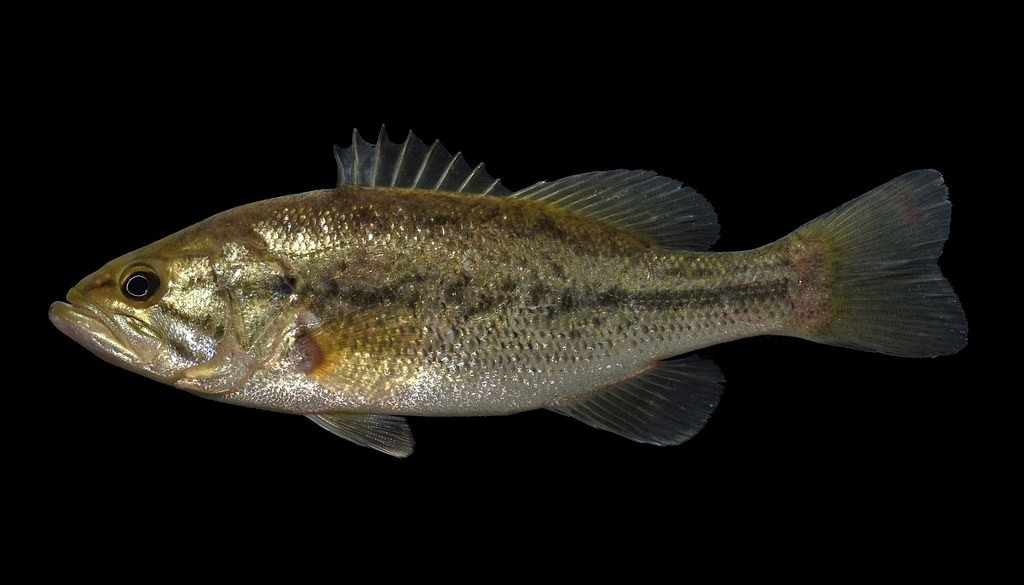
Largemouth bass
Micropterus nigricans
Also calledBlack bass · Burakku basu ブラックバス (Japanese) · Lobina negra (Spanish) · Achigã (Portuguese) · Bucketmouth
North America's most popular sport fish and the centre of a multibillion-dollar bass-fishing industry. It is a big-mouthed ambush hunter of weedy lakes, and introductions have made it a damaging invader in Japan, southern Africa and Europe.
The largemouth bass is a carnivorous, freshwater, ray-finned fish in the Centrarchidae (sunfish) family, native to the eastern and central United States, southeastern Canada and northern Mexico. It is known by a variety of regional names, such as the widemouth bass, bigmouth bass, black bass, largie, potter's fish, Florida bass or Florida largemouth, green bass, bucketmouth bass, green trout, growler, Gilsdorf bass, Oswego bass, southern largemouth, northern largemouth, Alabama bass or Alabama largemouth, marsh bass, and swamp bass. Wikipedia
What it can do
- iIts jaw opens wide enough to swallow prey nearly half its own length, including frogs, mice and small birds
- iiMales sweep out a nest and guard eggs and fry aggressively for weeks
- iiiHunts by ambush from cover, using vision and lateral-line senses
In the field
Field marks
- aUpper jaw extends behind the rear edge of the eye (in adults)
- bDark, ragged horizontal band or row of blotches along each green flank
- cSpiny and soft dorsal fins almost separated by a deep notch
- dGreenish-olive back and pale belly
- Not to be confused with
- Smallmouth bass (M. dolomieu) is bronze-brown with vertical bars, and its jaw ends below the eye. Spotted bass (M. punctulatus) has rows of small dark spots on the lower flanks and a tooth patch on the tongue. Florida bass (M. floridanus) is told apart mainly by genetics and range.
- Where to see it
- Lake Okeechobee (Florida bass); Lake Guntersville (Alabama); Lake Biwa (Japan, introduced); reservoirs of the US South
- When
- Resident; spawns in spring once water reaches about 16–20 °C (Feb in the south to June in the north)
Life & habits
- Diet
- Carnivore: fish, crayfish, frogs and insects; occasionally snakes, mice and ducklings
- Habitat
- Warm, clear to slightly turbid lakes, ponds, reservoirs and slow rivers with plants, logs and other cover
- Size
- Commonly 30–55 cm; up to about 75 cm and 10 kg
- Lifespan
- Up to about 16 years, rarely over 20
In spring the male fans a saucer-shaped nest in the shallows, drives off intruders, and guards the swarm of fry until they disperse.
Where it lives
Recorded sightings
—
geo-referenced records in GBIF, from museums, herbaria and field observers.
Native range
Eastern and central North America: Great Lakes, Mississippi basin and Atlantic and Gulf slope drainages (peninsular Florida fish are now treated as the separate Florida bass); introduced worldwide
Drag the globe to turn it. Dots are where records exist, not a range map; darker means more records.
In the stacks
Searching the stacks…
Every page naming Micropterus nigricans in the Biodiversity Heritage Library →
Marginalia
George Perry caught a 22 lb 4 oz (10.1 kg) largemouth in Montgomery Lake, Georgia, in 1932, the most famous record in American angling. Manabu Kurita equalled it at Lake Biwa, Japan, in 2009.
Curiosity
Most field guides still call it Micropterus salmoides. A recent taxonomic review concluded that the older name M. nigricans belongs to the largemouth, and iNaturalist has adopted it.
Kinship

Fact-checked: 1 correction made to this sheet. Photographs: iNaturalist contributors under the licences shown. Records: GBIF.org. Historical plates: Source Library (CC BY-SA 4.0; originals public domain). Summary text: Nature Library editors and Wikipedia (CC BY-SA). Medicinal and edibility notes are historical and educational, not advice. iNaturalist taxon 1439808.