 NL·0552
Herbarium of the Nature Library
- Name
- Nasikabatrachus sahyadrensis
- Family
- Nasikabatrachidae
- Native to
- Western Ghats of India (Kerala, Tamil Nadu and Karnataka)
- Habitat
- Tropical moist forest, Monsoon streams, Plantations
Purple frog
Nasikabatrachus sahyadrensis
Also calledPignose frog · Indian purple frog · Pathala thavala (Malayalam, 'underworld frog') · Mahabali frog
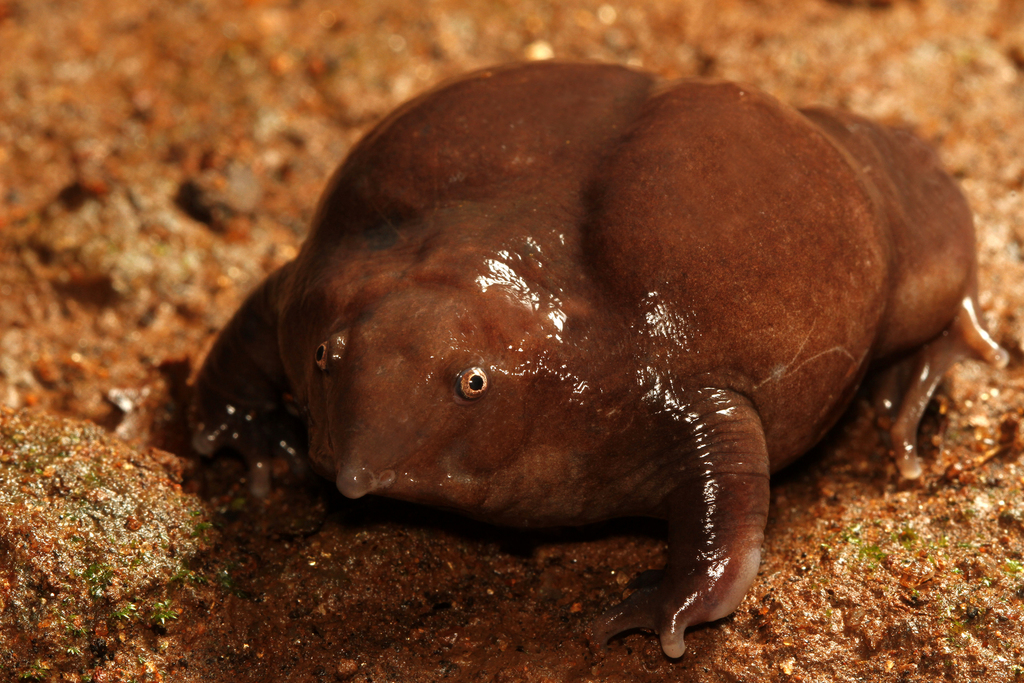
A bloated, purple-grey frog with a pointed pig-like snout that spends most of its life underground in India's Western Ghats, surfacing only for a few days in the monsoon to breed. Its closest relatives live in the Seychelles, a link to the breakup of Gondwana.
The purple frog, also known commonly as the Indian purple frog, the Mahabali frog, and the pignose frog, is a frog species in the family Nasikabatrachidae. The species is endemic to the Western Ghats in India. Although the adult frog was formally described in October 2003, the juvenile form of the species had been described earlier in 1917. Wikipedia
What it can do
- iLives buried up to several metres underground for most of the year
- iiFeeds on termites and ants in their underground tunnels, probing with its pointed snout
- iiiTadpoles cling to rocks in fast monsoon streams with sucker-like mouths
- ivIts lineage split from its Seychelles relatives tens of millions of years ago
In the field
Field marks
- aBloated, purplish-grey body
- bSmall head with a pointed pig-like snout
- cShort limbs adapted for digging
- dSmall eyes
- Voice
- A soft, chicken-like 'cluck', given from underground or at stream edges in the early monsoon
- Not to be confused with
- No other Indian frog looks like it. The Bhupathy's purple frog (N. bhupathi), described in 2017, is similar and lives in the eastern slopes of the southern Western Ghats; it breeds later, during the northeast monsoon.
- Where to see it
- Monsoon streams in Kerala's Idukki district and the Western Ghats; rarely seen
- When
- Emerges for a few days in May–June to breed
Listen
Looking for field recordings…
Life & habits
- Diet
- Termites, also ants
- Habitat
- Moist forest and plantations near seasonal streams
- Size
- ~5–9 cm; females larger
Emerges for a few days in the pre-monsoon or early monsoon to breed in fast-flowing streams. The small male clings to the larger female's back.
Where it lives
Recorded sightings
—
geo-referenced records in GBIF, from museums, herbaria and field observers.
Native range
Western Ghats of India (Kerala, Tamil Nadu and Karnataka)
Drag the globe to turn it. Dots are where records exist, not a range map; darker means more records.
In the stacks
Marginalia
S. D. Biju and Franky Bossuyt described the purple frog in Nature in 2003, revealing a new family of frogs. In Kerala it has been proposed as the state frog, and local people call it 'Mahabali' after the legendary king who returns from the underworld once a year.
Curiosity
Local people knew the purple frog long before scientists; its tadpoles are collected and eaten in parts of Kerala.
Kinship





Photographs: iNaturalist contributors under the licences shown. Records: GBIF.org. Historical plates: Source Library (CC BY-SA 4.0; originals public domain). Summary text: Nature Library editors and Wikipedia (CC BY-SA). Medicinal and edibility notes are historical and educational, not advice. iNaturalist taxon 25307.