 NL·0467
Herbarium of the Nature Library
- Name
- Okapia johnstoni
- Family
- Giraffidae
- Native to
- Rainforests of northern, central and eastern Democratic Republic of the Congo, especially the Ituri Forest
- Habitat
- Tropical rainforest
Okapi
Okapia johnstoni
Also calledO'api (Lese/Mbuti) · Huòjiāpí 㺢㹢狓 (Chinese) · Okapi (French)
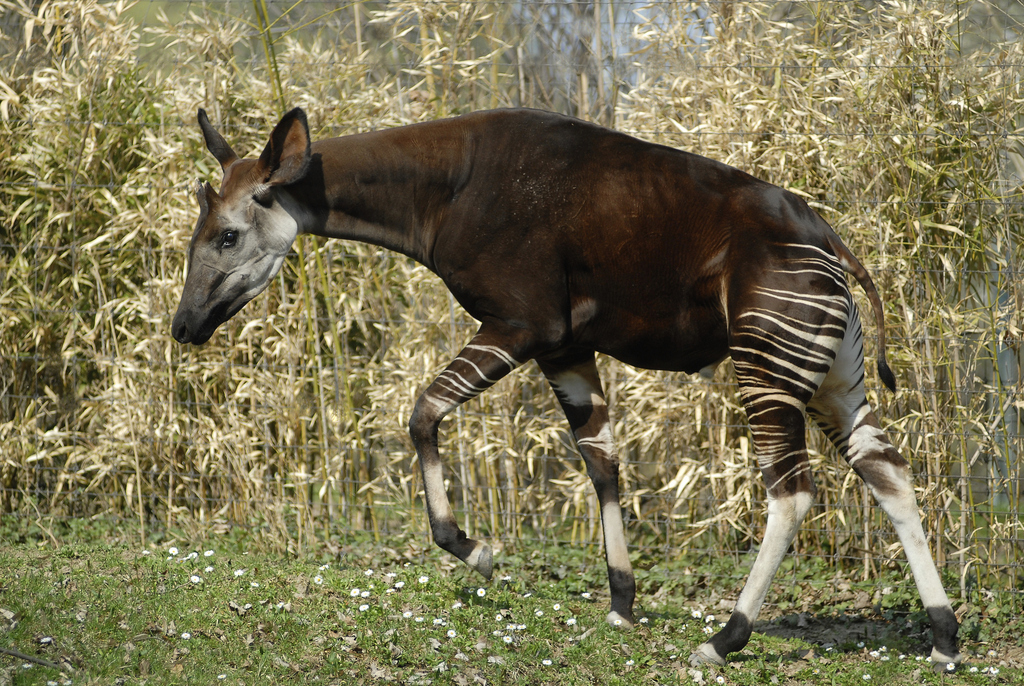
The only living relative of the giraffe, a shy forest animal with a reddish body and zebra-striped legs, found only in the Democratic Republic of the Congo. It was unknown to Western science until 1901.
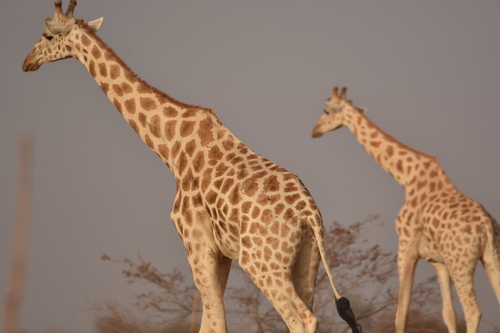
The okapi, also known as forest giraffe and zebra giraffe, is an artiodactyl mammal that is endemic to the northeast Democratic Republic of the Congo. It is the only species in the genus Okapia. Although the okapi has striped markings reminiscent of zebras, it is most closely related to the giraffe. The okapi and the giraffe are the only living members of the family Giraffidae. Wikipedia
What it can do
- iStrips leaves with a long, dark, prehensile tongue it can also use to clean its eyes and ears
- iiCalls to its calf with infrasound below human hearing
- iiiStriped hindquarters break up its outline in the dappled forest light
- ivEats over a hundred species of plants, including some that are poisonous to people
In the field
Field marks
- aDark velvety body
- bZebra-striped legs and rump
- cGiraffe-like head
- dLong blue tongue
- Not to be confused with
- Its striped legs suggest a zebra, but zebras are striped all over; its only close relative, the giraffe, lives in open savanna.
- Where to see it
- Okapi Wildlife Reserve (Epulu)
- When
- Resident
Listen
Looking for field recordings…
Life & habits
- Diet
- Herbivore: leaves, buds, shoots, ferns, fruit and fungi; eats clay and charcoal for minerals
- Habitat
- Dense tropical rainforest at 500–1,500 m
- Size
- 1.5 m at shoulder; 200–350 kg
- Lifespan
- 20–30 years
Newborn calves hide in a nest for weeks and do not defecate for the first month or two, which may help keep predators from finding them.
Where it lives
Recorded sightings
—
geo-referenced records in GBIF, from museums, herbaria and field observers.
Native range
Rainforests of northern, central and eastern Democratic Republic of the Congo, especially the Ituri Forest
Drag the globe to turn it. Dots are where records exist, not a range map; darker means more records.
In the stacks
Searching the stacks…
Every page naming Okapia johnstoni in the Biodiversity Heritage Library →
Marginalia
Henry Morton Stanley heard of a forest 'donkey' in the 1890s, and in 1901 Harry Johnston sent skin to London, where it was named for him. The okapi is a national symbol of the DRC and appears on its banknotes.
Curiosity
It was first named as a horse species, Equus johnstoni, before skulls showed it was a giraffid.
Kinship




Fact-checked: 1 correction made to this sheet. Photographs: iNaturalist contributors under the licences shown. Records: GBIF.org. Historical plates: Source Library (CC BY-SA 4.0; originals public domain). Summary text: Nature Library editors and Wikipedia (CC BY-SA). Medicinal and edibility notes are historical and educational, not advice. iNaturalist taxon 42155.