 NL·0673
Herbarium of the Nature Library
- Name
- Oncorhynchus tshawytscha
- Family
- Salmonidae
- Native to
- North Pacific: rivers from central California to Alaska and from Kamchatka to the Anadyr; introduced to New Zealand, Chile and the Great Lakes
- Habitat
- North Pacific, Large rivers, Cold streams
Chinook salmon (king salmon)
Oncorhynchus tshawytscha
Also calledChavycha чавыча (Russian) · Masunosuke マスノスケ (Japanese) · Tyee (Chinook Jargon, large fish) · Spring salmon (British Columbia) · Quinnat (New Zealand)
The largest Pacific salmon. Yukon River fish swim some 3,000 km upstream to their spawning grounds, and southern resident orcas depend on Chinook for most of their diet.
The Chinook salmon is the largest and most valuable species of Pacific salmon. Its common name is derived from the Chinookan peoples. Other vernacular names for the species include king salmon, quinnat salmon, tsumen, spring salmon, blackmouth, and tyee salmon. The scientific species name is based on the Russian common name chavycha (чавыча). Wikipedia
What it can do
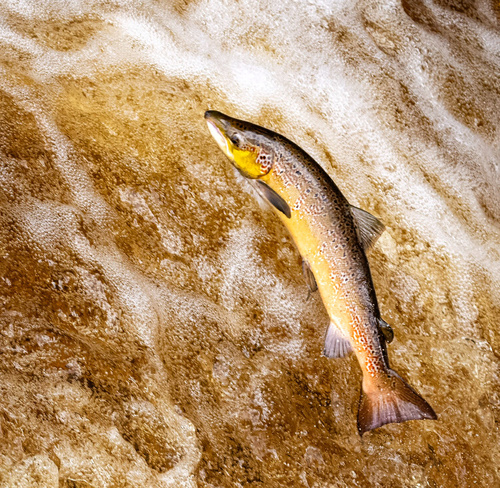
- iMakes one of the longest freshwater migrations of any salmon, up the Yukon to headwaters in Canada
- iiSeparate spring, summer and fall runs use the same river at different times
- iiiCan exceed 45 kg, making it the largest of all Pacific salmon
In the field
Field marks
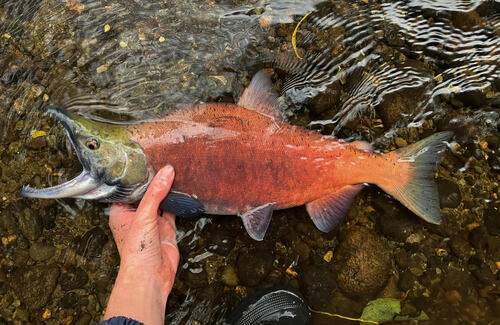
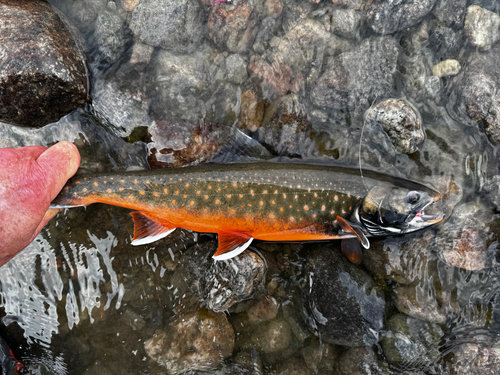
- aBlack gums along the lower jaw (hence 'blackmouth')
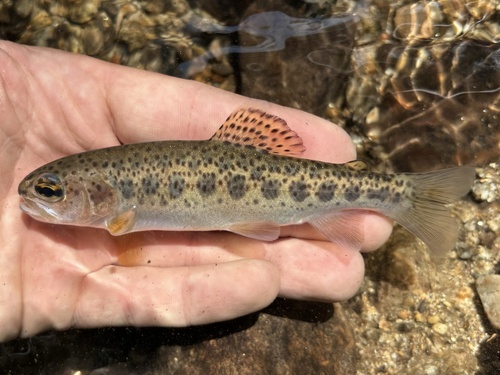
- bIrregular black spots on the back, dorsal fin and both lobes of the tail
- cSilvery sides and blue-green to purplish back; spawners darken to olive, maroon or blackish
- dLarge size and a thick tail stalk
- Not to be confused with
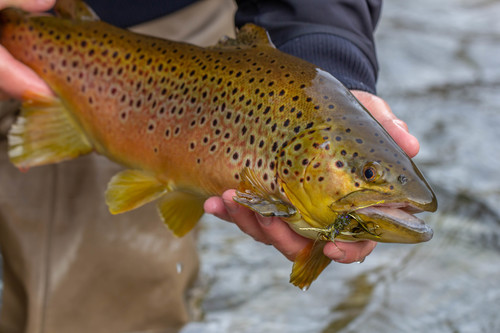
- Coho salmon has white gums and spots only on the upper lobe of the tail. Steelhead has a smaller mouth, white mouth lining, and the jaw does not reach far past the eye.
- Where to see it
- Kenai River, Alaska; Yukon River at Whitehorse fishway; Columbia River at Bonneville Dam fish ladder; Rakaia and Waimakariri rivers, New Zealand (introduced)
- When
- Runs vary by stock: spring (Mar–Jun), summer (Jun–Aug) and fall (Aug–Nov)
Life & habits
- Diet
- Insects and crustaceans in rivers; at sea, herring, anchovies, sand lance, squid and krill
- Habitat
- North Pacific Ocean; large, cold rivers with deep pools and gravel for spawning
- Size
- Commonly 75–90 cm and 9–20 kg; up to about 1.5 m and 60 kg
- Lifespan
- Usually 3–7 years (dies after spawning)
Adults stop feeding when they enter fresh water. Females dig deep redds in large gravel in main-stem rivers, and the dying fish feed bears, eagles and the river itself.
Where it lives
Recorded sightings
—
geo-referenced records in GBIF, from museums, herbaria and field observers.
Native range
North Pacific: rivers from central California to Alaska and from Kamchatka to the Anadyr; introduced to New Zealand, Chile and the Great Lakes
Drag the globe to turn it. Dots are where records exist, not a range map; darker means more records.
In the old herbals & bestiaries
No plate in the Source Library names this exact species, so these show its closest relatives as the old naturalists drew them: same genus, or the same kind of animal. Click a plate to read the page it came from, with translation.


In the stacks
Searching the stacks…
Every page naming Oncorhynchus tshawytscha in the Biodiversity Heritage Library →
Marginalia
The Columbia River Chinook fishery at Celilo Falls was a gathering place for Native peoples for thousands of years until The Dalles Dam flooded the falls in 1957. The scientific name tshawytscha comes from the Kamchatkan name, recorded by Johann Walbaum in 1792.
Curiosity
The sport-caught record is a 44 kg (97 lb 4 oz) Chinook taken from Alaska's Kenai River in 1985.
Kinship

Photographs: iNaturalist contributors under the licences shown. Records: GBIF.org. Historical plates: Source Library (CC BY-SA 4.0; originals public domain). Summary text: Nature Library editors and Wikipedia (CC BY-SA). Medicinal and edibility notes are historical and educational, not advice. iNaturalist taxon 54191.