 NL·0579
Herbarium of the Nature Library
- Name
- Osteoglossum bicirrhosum
- Family
- Osteoglossidae
- Native to
- Amazon basin and the Rupununi and Oyapock rivers (Guyana, French Guiana); introduced to parts of North America and Asia via aquarium releases
- Habitat
- Flooded forest (igapó and várzea), Floodplain lakes, Slow rivers
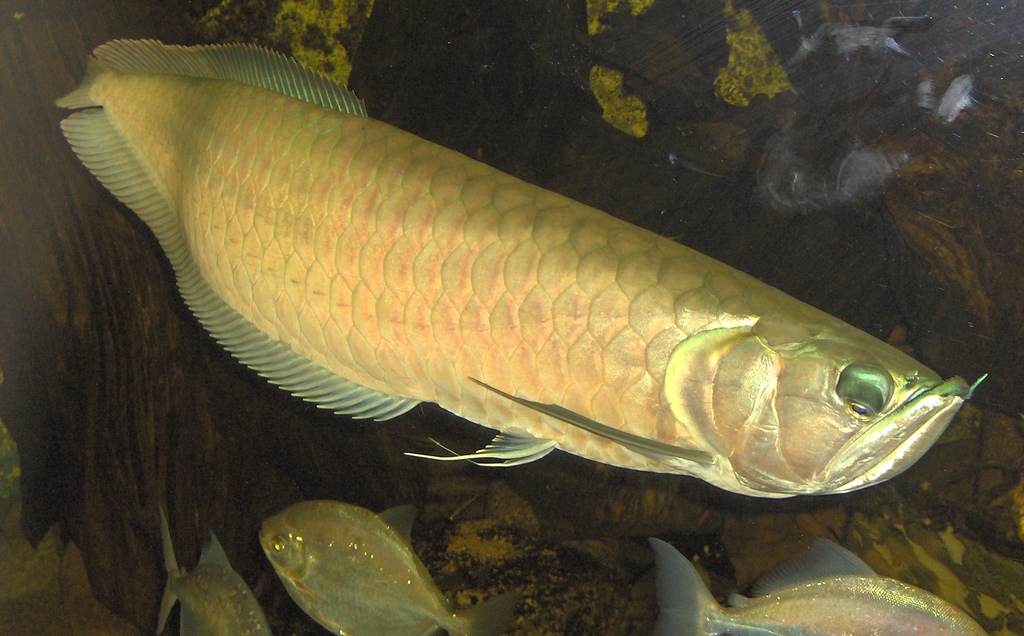
Silver arowana
Osteoglossum bicirrhosum
Also calledAruanã (Portuguese) · Arahuana (Spanish, Peru) · Macaco-d'água ('water monkey', Portuguese)
A long, silver bonytongue that cruises just under the surface of Amazonian flooded forests and leaps up to 2 m to snatch beetles, spiders, birds and even bats from overhanging branches. Males brood the eggs and young in their mouths.
The silver arowana is a South American freshwater bony fish of the family Osteoglossidae. Silver arowanas are sometimes kept in aquariums, but they are predatory and require a very large tank. Wikipedia
What it can do
- iLeaps clear of the water to catch insects, spiders and small birds and bats on branches, which earns it the name 'water monkey'
- iiMales mouth-brood eggs and then shelter the fry in their mouths for weeks
- iiiTwo chin barbels sense ripples from prey falling onto the surface
In the field
Field marks
- aLong, laterally compressed, tapering silver body with very large scales
- bDorsal and anal fins long and set far back, almost meeting the small tail
- cSteeply upturned mouth with two forward-pointing barbels on the chin tip
- dJuveniles carry a large yolk sac under the belly
- Not to be confused with
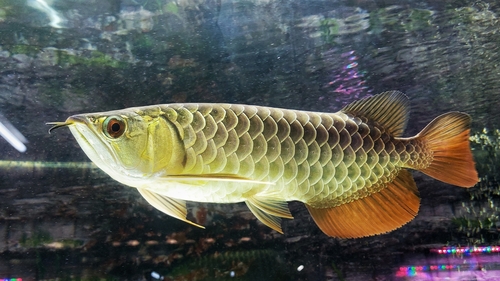
- Black arowana (O. ferreirai) of the Rio Negro is very similar but its juveniles are black with a yellow stripe. Asian arowana (Scleropages) is deeper-bodied, with a shorter anal fin and larger, often coloured scales.
- Where to see it
- Floodplain lakes near Iquitos (Peru) and Manaus (Brazil); Mamirauá Reserve
- When
- Resident; breeds at the start of the flood season (roughly December–February)
Life & habits
- Diet
- Carnivore: insects, spiders, crustaceans, fish, and occasionally birds, bats and snakes
- Habitat
- Surface waters of flooded forests, lakes and slow rivers
- Size
- Usually 60–90 cm; up to about 1.2 m
- Lifespan
- 10–15 years or more
Patrols just under the surface with its large upturned mouth. During the flood season it spreads into the forest canopy layer of flooded trees to hunt.
Where it lives
Recorded sightings
—
geo-referenced records in GBIF, from museums, herbaria and field observers.
Native range
Amazon basin and the Rupununi and Oyapock rivers (Guyana, French Guiana); introduced to parts of North America and Asia via aquarium releases
Drag the globe to turn it. Dots are where records exist, not a range map; darker means more records.
In the stacks
Searching the stacks…
Every page naming Osteoglossum bicirrhosum in the Biodiversity Heritage Library →
Marginalia
Georges Cuvier described the species in 1829 from Brazilian specimens. Across Amazonian Brazil the aruanã appears in riverside folklore as a guardian of the flooded forest, and the Karajá people of the Araguaia river hold an Aruanã festival with masked dancers.
Curiosity
Osteoglossum means 'bony tongue' in Greek: like the arapaima, the arowana has a toothed bony tongue that it uses to crush prey against the roof of its mouth.
Kinship



Photographs: iNaturalist contributors under the licences shown. Records: GBIF.org. Historical plates: Source Library (CC BY-SA 4.0; originals public domain). Summary text: Nature Library editors and Wikipedia (CC BY-SA). Medicinal and edibility notes are historical and educational, not advice. iNaturalist taxon 215207.