 NL·0724
Herbarium of the Nature Library
- Name
- Pampus argenteus
- Family
- Stromateidae
- Native to
- Indo-West Pacific: Persian Gulf, Arabian Sea and Bay of Bengal to the South China Sea and Japan
- Habitat
- Coastal waters, Continental shelf, Muddy seabeds
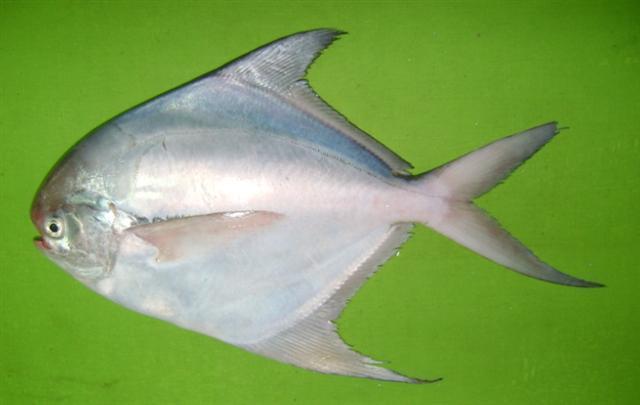
Silver pomfret
Pampus argenteus
Also calledPaplet (Marathi/Hindi) · Saranga (Konkani) · Rupchanda (Bengali) · Zubaidi (Arabic, Gulf) · Vawal (Tamil) · Chāng yú (Chinese)
A flat, diamond-shaped silvery fish beloved across Pakistan, India, Bangladesh and the Gulf, where whole fried or curried pomfret is a classic. Heavy demand has driven sharp declines in parts of its range.
Pampus argenteus, the silver pomfret or white pomfret is a species of butterfish that lives in the Indo-West Pacific, spanning the coastal waters of the Middle East, Eastern Africa, South Asia, Southeast Asia, and East Asia. The species has been reported only twice, one hundred years apart, from the central Mediterranean Sea. Wikipedia
What it can do
- iHighly compressed, deep body for manoeuvring in turbid coastal water
- iiFeeds on jellyfish and ctenophores as well as plankton
- iiiLacks pelvic fins entirely as an adult
In the field
Field marks
- aVery deep, rhomboid, laterally compressed silver body
- bSmall mouth with a blunt, rounded snout
- cLong, sickle-shaped dorsal and anal fins
- dNo pelvic fins; deeply forked tail with lower lobe longer
- Not to be confused with
- Black pomfret (Parastromateus niger) is grey-black with pelvic fins in young; Chinese silver pomfret (Pampus chinensis) has a short, barely forked tail; Indian/Gulf 'white' pomfret markets mix several Pampus species.
- Where to see it
- Karachi Fish Harbour, Sassoon Dock (Mumbai), Kuwait's Sharq fish market
- When
- Year-round; catches rise after the southwest monsoon closes
Life & habits
- Diet
- Zooplankton, jellyfish, ctenophores, small invertebrates
- Habitat
- Muddy coastal bottoms and estuaries, 5–110 m
- Size
- Usually 15–30 cm; up to about 60 cm
Moves in schools over muddy shelf grounds and into coastal waters during the spawning season.
Where it lives
Recorded sightings
—
geo-referenced records in GBIF, from museums, herbaria and field observers.
Native range
Indo-West Pacific: Persian Gulf, Arabian Sea and Bay of Bengal to the South China Sea and Japan
Drag the globe to turn it. Dots are where records exist, not a range map; darker means more records.
In the old herbals & bestiaries
No plate in the Source Library names this exact species, so these show its closest relatives as the old naturalists drew them: same genus, or the same kind of animal. Click a plate to read the page it came from, with translation.


In the stacks
Searching the stacks…
Every page naming Pampus argenteus in the Biodiversity Heritage Library →
Marginalia
Known as 'zubaidi' in Kuwait, where it is considered the national fish; in Bengali its name 'rupchanda' evokes a silver moon.
Curiosity
The Persian Gulf population has been assessed by IUCN as Vulnerable due to overfishing.
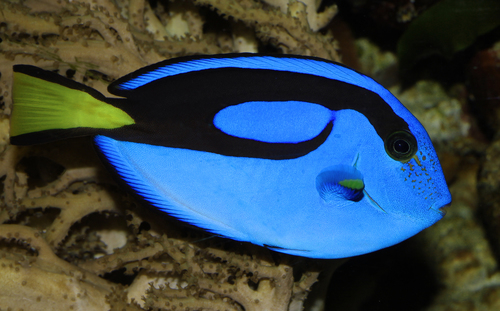
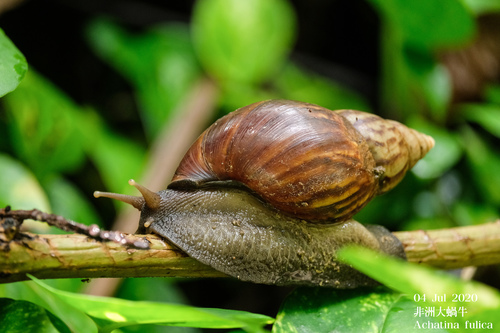
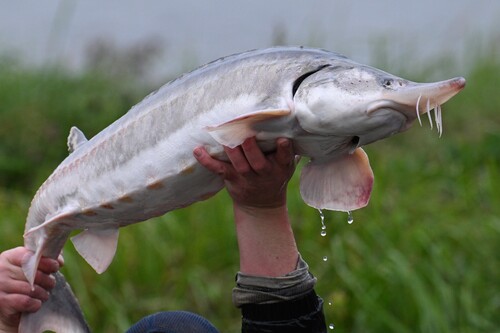
Kinship


Fact-checked: 1 correction made to this sheet. Photographs: iNaturalist contributors under the licences shown. Records: GBIF.org. Historical plates: Source Library (CC BY-SA 4.0; originals public domain). Summary text: Nature Library editors and Wikipedia (CC BY-SA). Medicinal and edibility notes are historical and educational, not advice. iNaturalist taxon 52731.