 NL·0517
Herbarium of the Nature Library
- Name
- Pantala flavescens
- Family
- Libellulidae
- Native to
- Tropics and warm temperate zones worldwide
- Habitat
- Rain pools, Grassland, Coastal plains, Open ocean (in transit)
Globe skimmer
Pantala flavescens
Also calledWandering glider (English) · Huáng qīngtíng (Chinese) · Usubaki tonbo (Japanese)
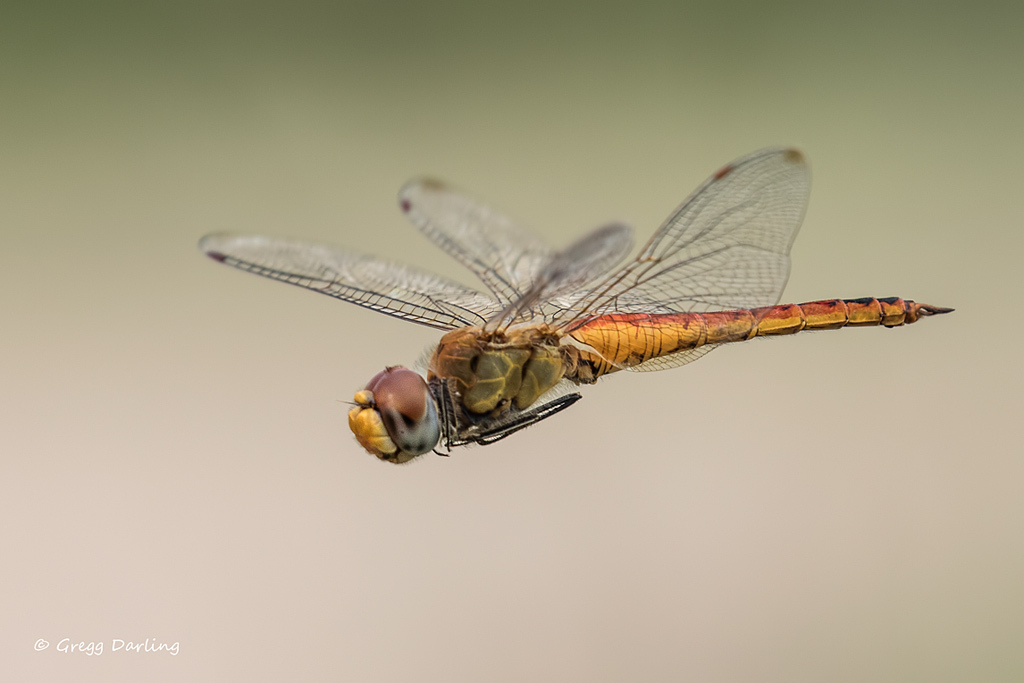
A golden dragonfly found on every continent except Antarctica, holding the record for the longest insect migration. Generations cross the Indian Ocean between India and East Africa, riding monsoon winds.
Pantala flavescens, the globe skimmer, globe wanderer or wandering glider, is a wide-ranging dragonfly of the family Libellulidae. This species and Pantala hymenaea, the "spot-winged glider", are the only members of the genus Pantala. It was first described by Johan Christian Fabricius in 1798. It is considered to be the most widespread dragonfly on the planet, with good populations on every continent except Antarctica, although rare in Europe. Globe skimmers make an annual multigenerational journey of some 18,000 km ; to complete the migration, individual globe skimmers fly more than 6,000 km ; one of the farthest known migrations of all insect species. Wikipedia
What it can do
- iMultigenerational migration estimated at 14,000–18,000 km round trip across the Indian Ocean
- iiFlies for days with little effort, gliding on broad hindwings
- iiiBreeds in temporary rain pools, with larvae developing in ~5 weeks
- ivGenetic studies show near-global gene flow between continents
In the field
Field marks
- aGolden-yellow to orange skimmer about 4.5 cm long
- bWings clear and very broad at the hindwing base
- cLarge reddish eyes take up most of the head
- dFlies for hours on end, gliding high over open ground
- Not to be confused with
- Spot-winged glider (Pantala hymenaea) has an obvious brown spot at the base of each hindwing and is slightly darker; saddlebags (Tramea) have a dark band at the hindwing base.
- Where to see it
- Open ground and paddy fields across the tropics; notable on the Maldives during its ocean crossing between India and East Africa
- When
- Follows the rains; in India swarms arrive with the monsoons, and the return from Africa reaches India's west coast from May
Listen
Looking for field recordings…
Life & habits
- Diet
- Small flying insects; aquatic larvae eat mosquito larvae and other invertebrates
- Habitat
- Open areas near temporary freshwater pools
- Size
- About 4.5–5 cm long; wingspan ~8 cm
- Lifespan
- Several months
Swarms gather ahead of rain fronts, following winds to new rains where pools will form.
Where it lives
Recorded sightings
—
geo-referenced records in GBIF, from museums, herbaria and field observers.
Native range
Tropics and warm temperate zones worldwide
Drag the globe to turn it. Dots are where records exist, not a range map; darker means more records.
In the old herbals & bestiaries
No plate in the Source Library names this exact species, so these show its closest relatives as the old naturalists drew them: same genus, or the same kind of animal. Click a plate to read the page it came from, with translation.

In the stacks
Searching the stacks…
Every page naming Pantala flavescens in the Biodiversity Heritage Library →
Marginalia
Biologist Charles Anderson noticed swarms arriving in the Maldives every October with no fresh water for breeding, and in 2009 proposed the transoceanic migration. In Japan it is associated with the Obon festival as 'spirit dragonfly'.
Curiosity
It is the highest-flying dragonfly recorded, seen at about 6,200 m in the Himalaya.
Kinship




Photographs: iNaturalist contributors under the licences shown. Records: GBIF.org. Historical plates: Source Library (CC BY-SA 4.0; originals public domain). Summary text: Nature Library editors and Wikipedia (CC BY-SA). Medicinal and edibility notes are historical and educational, not advice. iNaturalist taxon 108344.