 NL·0404
Herbarium of the Nature Library
- Name
- Tor putitora
- Family
- Cyprinidae
- Native to
- Himalayan and sub-Himalayan rivers of Pakistan, India, Nepal, Bhutan, Bangladesh and northern Myanmar (Indus, Ganges and Brahmaputra basins)
- Habitat
- Mountain rivers, Rocky rapids, Foothill lakes
Golden mahseer
Tor putitora
Also calledMahasher مہاشیر (Urdu/Punjabi) · Mahseer महसीर (Hindi) · Sahar (Nepali) · Tor (Assamese)
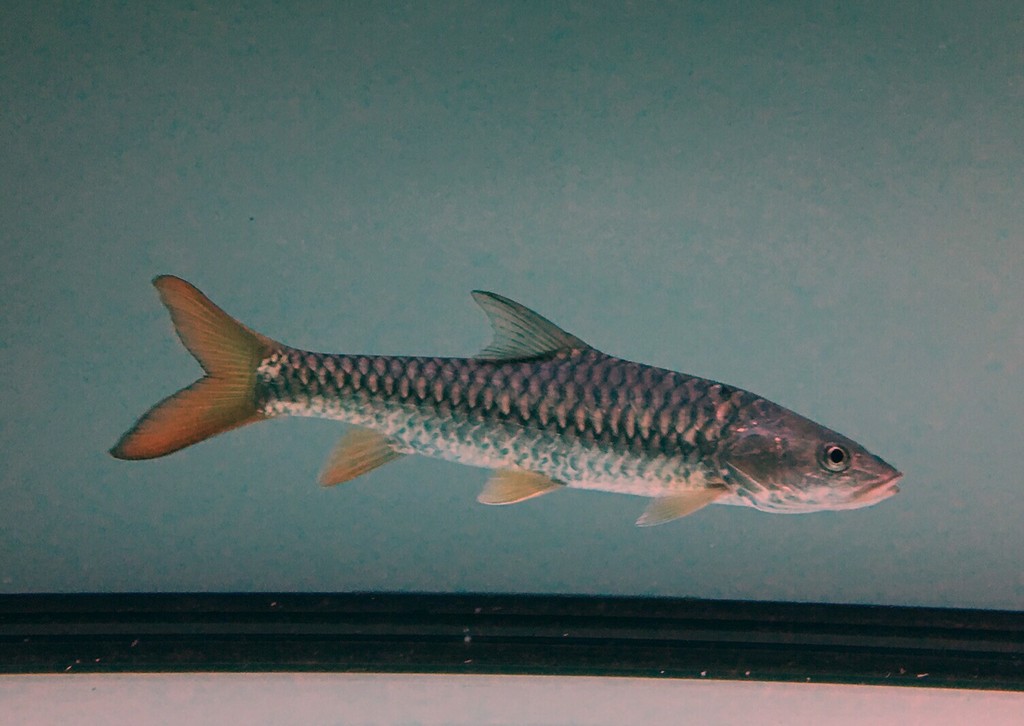
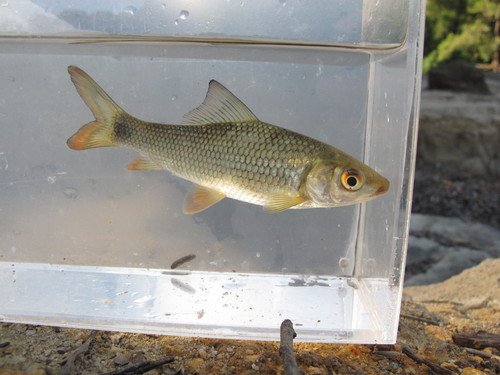
A huge, golden-scaled barb of fast Himalayan rivers, called the 'tiger of the water' by anglers. It is Pakistan's national fish, and dams and overfishing have pushed it to Endangered.
Tor putitora, known as the golden mahseer, putitor mahseer, or Himalayan mahseer, is an endangered species of cyprinid fish that is found in rapid streams, riverine pools, and lakes in the Himalayan region. Its native range is within the basins of the Indus, Ganges and Brahmaputra rivers. Wikipedia
What it can do
- iMigrates upstream into cool tributaries to spawn during the monsoon and drops back to lower, warmer reaches in winter
- iiHolds station in powerful rapids with a thick, muscular body and large scales
- iiiEats almost anything: algae, fruit that falls into the water, insects, crabs and smaller fish
- ivGrows very large: historical fish reportedly reached over 2 m and about 50 kg
In the field
Field marks
- aThick, torpedo-shaped body with very large scales
- bGolden-bronze flanks shading to a dark back; fins often reddish-orange or golden
- cTwo pairs of barbels and thick, fleshy, rubbery lips
- dHead long, with its length greater than the body depth
- Not to be confused with
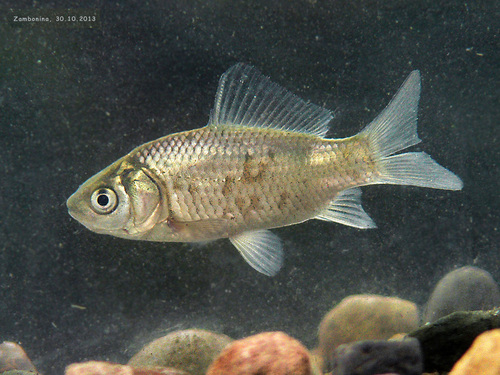
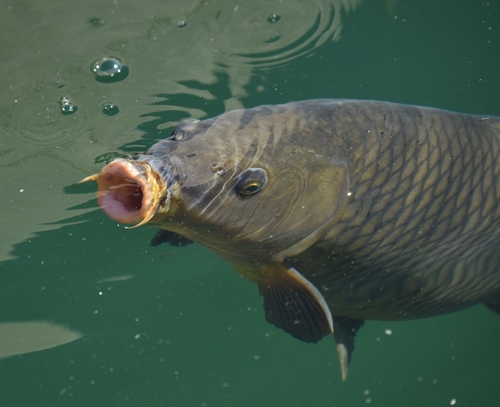
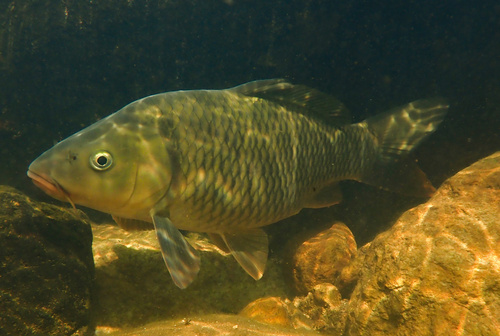
- Other mahseers, especially the tor mahseer (Tor tor), have a deeper body, so the head is shorter than the body is deep, and they are more silvery. Indian carps such as rohu have much smaller scales and a fringed or small mouth without thick lips.
- Where to see it
- Temple pools and ghats at Rishikesh and Haridwar on the Ganges; the Ramganga in Corbett National Park; the Poonch and Jhelum rivers (Pakistan/Kashmir); Manas River (Bhutan/Assam)
- When
- Resident all year; spawning migrations upstream during the monsoon (roughly June–September), with some populations also breeding in spring
Life & habits
- Diet
- Omnivore: algae, plant matter, fallen fruit, insects, molluscs, crustaceans and fish
- Habitat
- Clear, fast, rocky rivers and pools in hills and foothills; also some lakes and reservoirs
- Size
- Commonly 50–100 cm; historically over 2 m
- Lifespan
- Several decades in large fish (exact maximum not well established)
Adults run up snow- and rain-fed tributaries to spawn on gravel during the monsoon. Large fish hunt and feed in the white water at the head of pools.
Where it lives
Recorded sightings
—
geo-referenced records in GBIF, from museums, herbaria and field observers.
Native range
Himalayan and sub-Himalayan rivers of Pakistan, India, Nepal, Bhutan, Bangladesh and northern Myanmar (Indus, Ganges and Brahmaputra basins)
Drag the globe to turn it. Dots are where records exist, not a range map; darker means more records.
In the stacks
Searching the stacks…
Every page naming Tor putitora in the Biodiversity Heritage Library →
Marginalia
Henry Sullivan Thomas's 'The Rod in India' (1873) made mahseer the legendary sport fish of British India. At Hindu temples and ghats, mahseer in sacred pools are fed by pilgrims and protected from fishing, which has kept some of the last large fish alive.
Curiosity
One explanation for the name is Hindi 'maha-sher', meaning 'great tiger'; another traces it to 'maha-shalka', 'great-scaled'.
Kinship


Photographs: iNaturalist contributors under the licences shown. Records: GBIF.org. Historical plates: Source Library (CC BY-SA 4.0; originals public domain). Summary text: Nature Library editors and Wikipedia (CC BY-SA). Medicinal and edibility notes are historical and educational, not advice. iNaturalist taxon 114230.