 NL·0776
Herbarium of the Nature Library
- Name
- Ursus maritimus
- Family
- Ursidae
- Native to
- Circumpolar Arctic: Canada, Alaska (USA), Greenland, Norway (Svalbard) and Russia
- Habitat
- Sea ice, Tundra, Arctic coast
Polar bear
Ursus maritimus
Also calledNanuq (Inuktitut) · Umka (Chukchi) · Isbjørn (Norwegian/Danish) · Belyy medved' (Russian) · Hokkyokuguma (Japanese) · Běijíxióng 北极熊 (Chinese)
The largest land carnivore, a bear that lives on Arctic sea ice and hunts seals. It is classed as a marine mammal, and the loss of summer sea ice is its greatest threat.
The polar bear is a large bear native to the Arctic and nearby areas. It is closely related to the brown bear, and the two species can interbreed. The polar bear is the largest extant species of bear and land carnivore by body mass, with adult males weighing 300–800 kg (660–1,760 lb). The species is sexually dimorphic, as adult females are much smaller. The polar bear is white or yellowish-furred with black skin and a thick layer of fat. It is more slender than the brown bear, with a narrower skull, longer neck and lower shoulder hump. Its teeth are sharper and more adapted to cutting meat. The paws are large and allow the bear to walk on ice and paddle in the water. Wikipedia
What it can do
- iSmells seals through snow and ice from about a kilometre away
- iiSwims for days; one female swam 687 km over nine days without rest
- iiiSurvives Arctic cold with up to 11 cm of fat, black skin and hollow, colourless guard hairs
- ivFasts for months during ice-free summers, slowing its metabolism
In the field
Field marks
- aLarge white bear
- bLong neck and small head
- cBlack nose and skin
- dHuge furry paws
- Not to be confused with
- Brown bears have a shoulder hump and brown fur. Never approach on foot; watch from a vehicle, boat or hide, or with a licensed guide.
- Where to see it
- Churchill (Manitoba) by tundra vehicle; Svalbard by boat
- When
- Churchill Oct–Nov
Listen
Looking for field recordings…
Life & habits
- Diet
- Carnivore: mainly ringed and bearded seals; also walrus, whale carcasses, birds' eggs
- Habitat
- Sea ice over continental shelves; coasts in summer
- Size
- Males 350–700 kg and up to ~2.5–3 m; females 150–300 kg
- Lifespan
- 20–25 years in the wild
Pregnant females dig snow dens and give birth in midwinter, nursing cubs for months without eating before leading them out to the ice in spring.
Where it lives
Recorded sightings
—
geo-referenced records in GBIF, from museums, herbaria and field observers.
Native range
Circumpolar Arctic: Canada, Alaska (USA), Greenland, Norway (Svalbard) and Russia
Drag the globe to turn it. Dots are where records exist, not a range map; darker means more records.
In the old herbals & bestiaries
No plate in the Source Library names this exact species, so these show its closest relatives as the old naturalists drew them: same genus, or the same kind of animal. Click a plate to read the page it came from, with translation.

In the stacks
Searching the stacks…
Every page naming Ursus maritimus in the Biodiversity Heritage Library →
Marginalia
Inuit hunters treat nanuq with great respect in story and ritual; one Inuit name, Pihoqahiak, means 'the ever-wandering one'. In 1252 King Henry III kept a polar bear, a gift from Norway, at the Tower of London, where it fished in the Thames on a long chain.
Curiosity
Eating polar bear liver can kill a person, because it holds a toxic concentration of vitamin A.
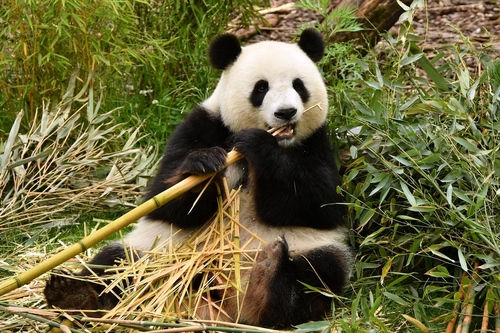
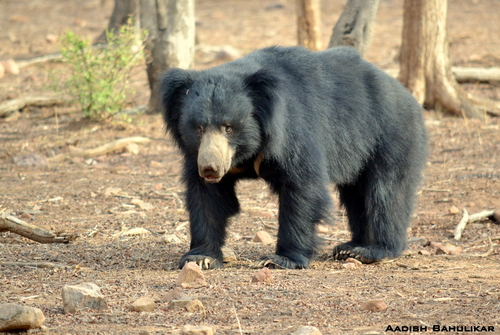
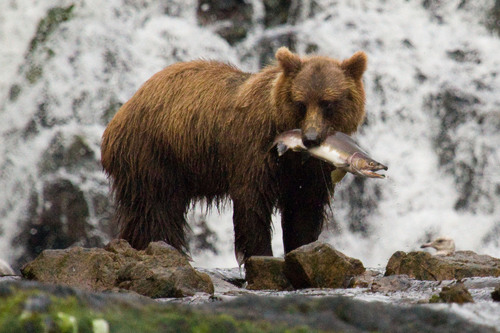
Kinship



Photographs: iNaturalist contributors under the licences shown. Records: GBIF.org. Historical plates: Source Library (CC BY-SA 4.0; originals public domain). Summary text: Nature Library editors and Wikipedia (CC BY-SA). Medicinal and edibility notes are historical and educational, not advice. iNaturalist taxon 41644.